13 Reasons why Skytrak Misses Shots – with Fixes!
Posted in Launch Monitors
You flush a drive, look up, and the screen shows nothing. A SkyTrak misses shots for one of four reasons: the camera cannot see the ball properly (placement, height, light, ball markings), the shot leaves the capture window too fast or too steep (driver tee position, lobs, chips, putts), the data never arrives (Wi-Fi drops, a Ready light that never went green), or the equipment around it works against it (mat, case, firmware). Work the numbered causes in order and most misreads disappear. Missed reads are now the single most-discussed SkyTrak complaint across all three generations — what follows is the diagnostic, rebuilt for the original, the SkyTrak+ and the ST MAX.
I’ve spent a lot of time researching the reasons behind Skytrak failing to register shots, and how to fix each problem. This article is the culmination of that research. I will also link to other sites where you can buy some of the simulator components. Some of these links may be affiliate links, which means if you click them I gain a small commission at no extra cost to you. This really helps out me and my site so thank you in advance! Alex @ MyGolfSimulator
In a Nutshell
A SkyTrak misses shots when its camera can’t see the ball cleanly, the shot leaves the small capture window too fast or too steep, the data never reaches your device, or the mat, case or firmware works against it. Work the 13 causes in order and most misreads disappear; a small number of units are simply faulty.
👉 Four things stop a SkyTrak from reading a shot: the camera cannot see the ball (placement, height, alignment, lens, light, ball, contrast), the shot escapes the capture window (drivers teed wrong, lobs, chips, putts), the data never arrives (connection, Ready light, timing), or the equipment around it works against it (mat, case, firmware). The numbered causes below run in the order that clears the most misreads first.
In this guide: 1. Ball not on the red dot · 2. Unit not level with the mat · 3. Alignment · 4. A dirty lens · 5. Lighting · 6. Ball type and markings · 7. White tees, white shafts, white walls · 8. The shot itself · 9. Connection drops · 10. The mat · 11. The protective case · 12. Timing and the Ready light · 13. Firmware and app version · When it is not you
- The fixes owners report cutting misreads most: ball on the red dot, a marked ball with the logo toward the lens, a lit ball against a dark background, and no white tees, white shafts or white walls.
- Some misreads are the unit’s own limits: the short game and putts on every generation.
- A small number of units are simply faulty — the warranty terms are below.
Jargon, once: photometric = camera-based capture of the ball at impact (every SkyTrak). The red dot = the laser mark that shows where the camera is looking. No-read = the unit never registers a shot; misread = it registers a wrong one. Direct Mode = the unit’s own Wi-Fi network; Network Mode = your router or hotspot.
| Your miss looks like this | Check these causes first |
|---|---|
| Drivers miss, irons read | 1, 7, 12 |
| Wedges, chips or putts miss | 8, 1, 6 |
| Random misses on every club | 9, 2, 4, 5 |
| Everything misses, or the unit freezes | 9, 13, then “When it is not you” |

How this has changed
- October 2025: the ST MAX released; owners still report a handful of no-reads per round.
- April 2025 / March 2025 / January 2024: three SkyTrak+ firmware releases changed capture behavior (cause 13).
- 2023: the SkyTrak+ manual introduced a tee tolerance the original and ST MAX manuals do not carry (cause 1).
- Correction — club color does matter: owners trace no-reads to white graphite shafts (cause 7).
- Correction — lens cleaning: the wording now follows each generation’s manual (cause 4).
- Correction — USB reliability: stated per generation, with the ST MAX cable connection Windows-only (cause 9).
- 2026 lineup: the SkyTrak+ is discontinued (SkyTrak now sells it only certified pre-owned), and the original is off the lineup page but still sold new on SkyTrak’s store; misread reports on the original are rising.
How SkyTrak sees a shot (all three generations)
Every SkyTrak reads the ball with a camera, so every optical rule below applies to all three. The unit sits beside the ball, level with the hitting surface, and projects the red laser dot as the placement reference. The SkyTrak+ and ST MAX added a Dual Doppler radar, but SkyTrak credits it only with club data — the ball is still captured photometrically, which is why a sunlit lens or a white tee bothers the MAX exactly as it bothered the original.
The capture window is small. Picture a shoebox of space just in front of the dot, down your target line; the ball has to pass through it in view of the lens. Anything that makes the ball invisible in that box, or gets it out of the box too quickly, produces a no-read.
The Ready light is your go signal. All three lights green plus the laser dot means the unit is armed. A red Ready light means wait a few seconds — a waggle can trigger it — and if it stays red, check the Wi-Fi connection and restart the app.
The 13 causes, in the order to check them
1. Ball not on the red dot
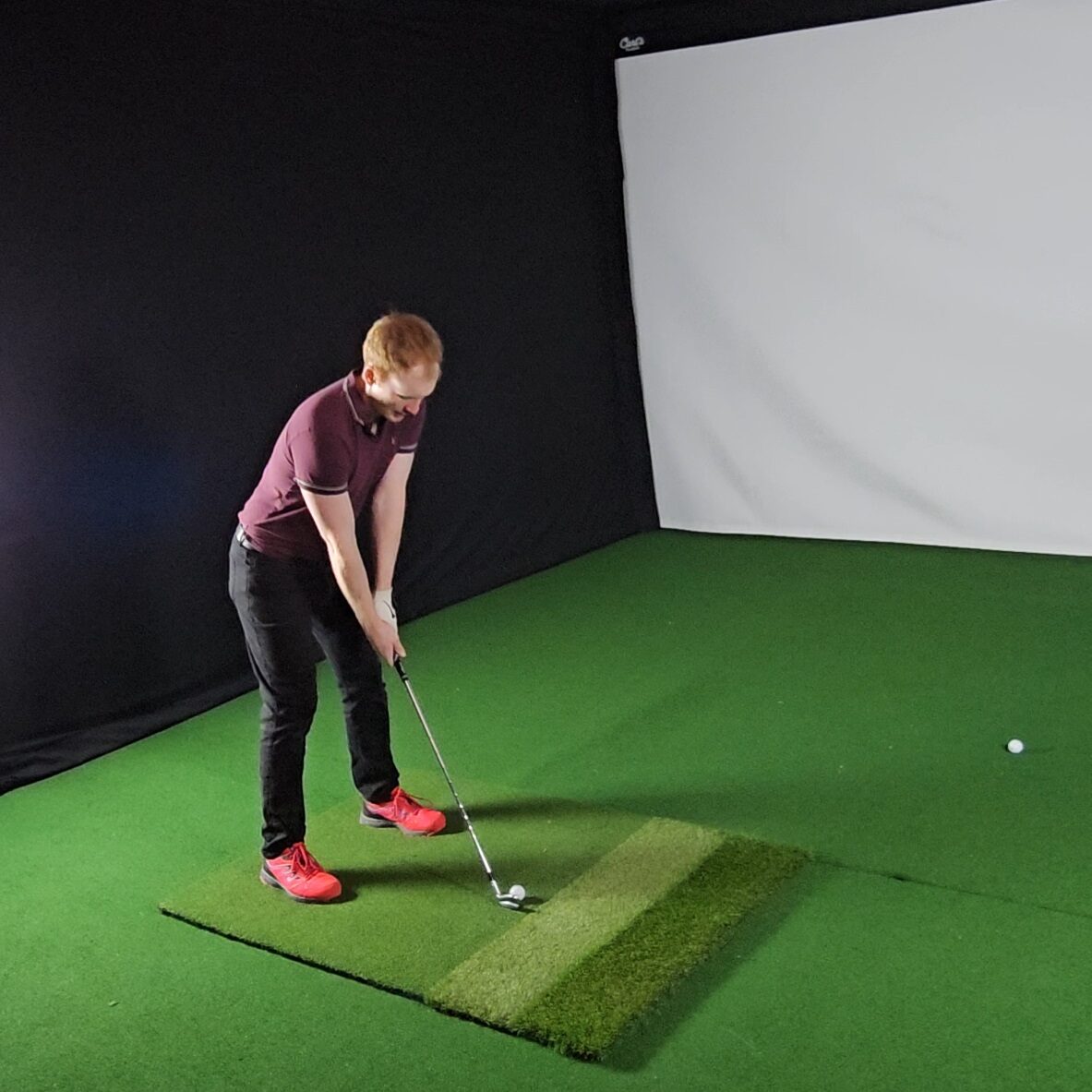
Fix: a clean white ball on the dot; for tee shots, the base of the tee on the dot — the SkyTrak+ manual also allows up to 3 inches behind it, never in front. The original and ST MAX manuals hold to the dot. Owners who lose driver reads at speed use the same nudge — one owner twice this summer: “Drivers read best with black tees, placed a little behind the red dot, for example”.
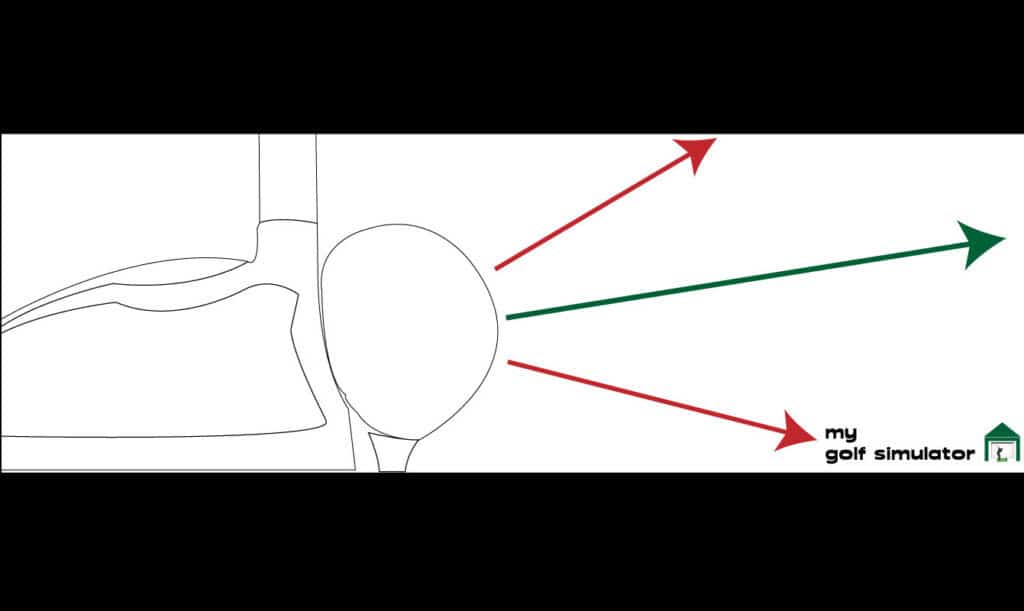

Please note that advice regarding tee positions as in the image above is my own personal experience, supported by the experience of other users. It is not official Skytrak troubleshooting advice. If it doesn’t work then there is no harm in just reverting back to teeing up the ball on the red dot as instructed to by the manufacturer. It’s worth a go if you’re having problems. I suspect this is because the Skytrak doesn’t quite have time to make it’s measurements before the ball has left the field of view. A touch in front of the dot helps some slower swingers — anecdotes to try, not rules.
2. Unit not level with the mat
Fix: raise the unit level with the hitting surface — the laser 11.5 to 12.5 inches above it on the original and SkyTrak+. The ST MAX manual gives no inch figure, only that being too far above or below the hitting surface can affect consistent shot capture, so level with the mat is the target. Put the unit on a platform just off the mat: impacts send vibrations through the mat that a stable base avoids, and the protective case’s adjustable feet make the height easy. One owner’s September calibration write-up levels to a 15-inch laser-to-camera distance — a different measurement from the manual’s height figure; use the manual’s number.
3. Alignment
Fix: lay alignment sticks or clubs parallel to the unit, mark the target line on the mat, and mark the unit’s position. Horizontal alignment mostly decides whether your readings are accurate rather than whether a shot registers at all, but a badly skewed unit adds no-reads to the wrong numbers. The marker trick only works with a mat that does not shift.
Professional Golf Instruction Youtube Channel
4. A dirty lens
Fix: wipe the lens once, with a damp cotton cloth or a lens microfiber, and never with chemicals. The wording differs slightly by generation, so quote the manual you own:
| Generation | Manual’s lens-care instruction |
|---|---|
| Original SkyTrak | Clean with a clean, damp cotton cloth in a single wipe; do not use any chemicals |
| SkyTrak+ | A microfiber towel made for glass lenses, or a clean damp cotton cloth, in a single wipe; no chemicals |
| ST MAX | Advanced optics sit behind the lens — clean only with a damp cotton cloth or microfiber, no chemicals |
A dusty lens cover blurs the high-speed frames, and blurred frames mean no-reads. This takes a minute.
5. Lighting
Fix: a well-lit ball, and no light into the lens. My golf simulator room is quite dark but I have a spot light aimed at the ball, which is positioned behind the Skytrak launch monitor. This means the light doesn’t directly strike the lens but provides lots of light to the hitting area. Balance that against a washed-out screen image. Outdoors the rule hardens: the manual says to avoid direct sunlight into the optics lens and to hit from a covered area if one is available, because sun into the lens causes inconsistent capture — owners describe slower registration and more misses outdoors. The outdoor protocol is at How to use Skytrak Outside (see our 11 Point Checklist).

6. Ball type and markings
Fix: a clean white ball with a logo or line, positioned so the marking faces the lens. The manual asks for the marking toward the lens for spin; owners go further and report that patterned or logo-heavy balls read noticeably better while certain balls cause runs of no-reads (a half-dozen owners). One owner’s grumble this July — “Having to rotate your ball so the logo is facing the unit is also annoying.” — is the price of a camera that reads spin off the markings. Two screen-safety notes: no freshly drawn Sharpie lines, no damaged balls. Foam and practice balls sit outside the design envelope: a new ST MAX read “about 9/10 shots” with foam balls into a bedsheet, and whether that data means anything is another question.
7. White tees, white shafts, white walls
Fix: colored tees, a dark background behind you, and no white or shiny shafts in the camera’s view. Contrast runs through the setup fixes owners share most (ten owners, all positive). I imagine this is because Skytrak needs contrast between the ball and its surroundings in order to see the beginning of the ball’s motion. On the wall: I had originally thought this was a purely aesthetic decision. However then I learned that several Skytrak users had fixed their problems with missed shots my making a change here. A curtain or a bed sheet behind you does it.

Club color matters too. This spring an owner found “I was having a lot of no reads but that turned out to be because I was using white graphite shafts. If I used an orange ball it had no issues”. Black tees close the loop — “since I got black plastic ones, I’ve had no issues”.
8. The shot itself: lobs, chips and putts
Fix: accept the short game as the unit’s weakest read, and nudge ball position for the shots that escape the window. High lobs exit the capture box early; chips and putts barely move. SkyTrak’s own troubleshooting note concedes putts: the unit “is more likely to have trouble with putts, it should not miss more than three in a row, even if they are very short”. Chips divide owners — “It also can’t read short chips at all.” against “I don’t know where people get the won’t read short chips thing. I can hit it 5 yards and never have an issue.” — with a third estimating “about a 5% no read situation.” Two anecdotal nudges owners have tried: a lob wedge a centimeter or two forward; a putt a millimeter or two toward the unit, logo facing it. Putting depth is at Skytrak Putting – Problems, Tips & Ideas.
9. Connection drops that look like misreads
Fix: test the same shots in another connection mode — if the reads return, it was the connection. Before I did my research I thought that a wired USB connection would be the most stable and reliable connection. However, this is not the case. The 2026 picture:
- SkyTrak’s own answer for missed shots in Network Mode is signal strength — move closer to the router or add a repeater — and Network Mode needs 2.4 GHz.
- Owners’ fixes for mid-session drops: a dedicated network for the unit, Direct Mode over Network Mode, and the USB fallback (seven reports from six owners).
- USB is the loudest current recommendation — “USB connection will solve most of your problems. Forget direct or network. You need to hardwire it.” — ideally with “a boosted USB 3.0 cable in your signal path”.
- Generation trap: a plain micro-USB data cable on the original; the supplied USB-C cable through a splitter on the SkyTrak+; USB-C on the ST MAX, where the cable connection is Windows-only.

The full fix guide, light decoder included, is at Skytrak Connection Problems – The Ultimate Guide.
10. The mat
Fix: hit off a mat, indoors and out, and suspect the mat only after everything above. No fact in SkyTrak’s documentation ties any mat brand to misreads; the manual’s only mat rule is to use one, because divot debris off grass confuses the capture. During my research into this topic, I found that there were a lot of golfers having missed shots with the Real Feel Country Club Elite Mat. Some cut out the hitting section for a Fiberbuilt insert and reported fewer misses — an owner-era account, untested. If anyone reading this article has any data on launch monitor mis-reads measured against the golf mat being used, I’d be very interested to hear about it!
11. The protective case
Fix: keep the case on. No fact row ties the case to misreads either. Protecting your Skytrak is, in my opinion, essential. My research showed me that some golfers felt that they were missing shots on Skytrak when the older versions of the case were used and achieving reads on every shot where Skytrak was unprotected. This seems to have improved in recent years as newer versions of cases have come out. I have not seen proper data regarding this and I do not recommend removing your Skytrak from its protective case. You could experiment with alternative cases but my recommendation is to stick with the branded case and try every other method on this list. SkyTrak protective case

12. Timing and the Ready light
Fix: wait for green. The unit needs a moment between shots; a red Ready light means it is not armed, and a swing before green is a guaranteed no-read. The processing delay on the SkyTrak+ is a second or two, and most owners call it forgettable once you have a routine — the delay story is at SkyTrak Shot Delay? – How to Fix a Slow SkyTrak. Use the pause. I love this video from the excellent youtube golf coaches at Me and My Golf. It has helped my golf game dramatically in that I don’t think I make as many silly mistakes on the course.
13. Firmware and app version
Fix: keep the app current — SkyTrak+ firmware ships inside it, and three releases changed capture behavior.
| Firmware | Date | What changed |
|---|---|---|
| v.101 | January 2024 | Improved launch-angle measurement; Network Mode stability; fixed a high-speed 7/8-iron spin bug |
| v0.107 | March 2025 | Improved capture rates for chip shots; Wi-Fi performance in some regions |
| v0.108 | April 2025 | Addressed a spin-rate cap |
No ST MAX firmware build number has been published in the app changelog yet: version 6.2 (15 September 2026) shipped a firmware update for the SkyTrak+ and ST MAX “aimed at providing better connection stability” without one. The data side of these updates is at Skytrak Data – What Data does Skytrak Measure?.

When it is not you: directional bias and faulty units
Some misreads are the unit’s. A few units show a persistent pull, push or phantom draw that owners cure only by re-angling the unit against its factory alignment — a rising complaint — and SkyTrak+ club-speed readings under-read draws and hooks for some owners. The accuracy verdict lives at How Accurate is Skytrak? – 8 Easy Ways to Maximise Skytrak Accuracy.
And some units are faulty. The per-generation misread record, counted once:
| Generation | Misread and no-read reports | Trend |
|---|---|---|
| Original SkyTrak | 14 reports from 14 owners | Rising |
| SkyTrak+ | 16 reports from 13 owners | Stable |
| ST MAX | 6 reports from 5 owners | Stable |
Alongside that:
- ST MAX units arriving dead, freezing or failing early are a rising report.
- A couple of detailed accounts describe the ST MAX warranty process as repair-not-replace, with return shipping on the owner and a restocking fee of up to 40%.
- Original-SkyTrak owners describe support experiences that erode trust (a rising report) — balanced by long-term owners who report five to eight years and tens of thousands of shots without a failure.
What to do: the SkyTrak+ manual’s warranty is 6 months or 25,000 shots, whichever comes first, and opening the case voids it; SkyTrak’s current return and warranty policy gives new units the same 6 months or 25,000 shots and certified pre-owned units 90 days (checked 21 October 2026). Escalate through support.skytrakgolf.com or 1-833-SKYTRAK, with the light sequence in front of you — the decoder is at Skytrak Connection Problems – The Ultimate Guide.
The 13-point checklist
- Red dot — ball on it; tee base on it (the SkyTrak+ tolerance is in cause 1).
- Level and height — unit level with the mat, on a platform, laser 11.5–12.5 inches up (original and Plus).
- Alignment — sticks parallel, line marked, unit position marked.
- Lens — one wipe, damp cotton or microfiber, no chemicals.
- Light — on the ball, never into the lens; shade outdoors.
- Ball — clean, white, marked, logo to the lens.
- Contrast — colored tees, dark background, no white or shiny shafts.
- Shot type — lobs, chips and putts are the known limits.
- Connection — another mode as the test; USB or a dedicated network as the fix; 2.4 GHz.
- Mat — always a mat; suspect it last.
- Case — keep it on.
- Ready light — green before you swing.
- Firmware — app current.
Which SkyTrak do you have?
| Model | Status (21 October 2026) | Money | Misread note |
|---|---|---|---|
| Original SkyTrak | Off the lineup page, still sold new by SkyTrak | New $695 on sale (list $1,995); used $450–1,000, commonly $550–750 | Reports rising; durable long-term for many |
| SkyTrak+ | Discontinued; no longer sold new | Certified pre-owned $895 at SkyTrak (list $2,495) | Three firmware fixes since 2024 |
| ST MAX | Current since October 2025 | $1,695 on sale (list $2,995) | Owners call it a minimal upgrade — same reads as the Plus |
Before buying the MAX, weigh the rising view among shoppers that Square’s Omni, Uneekor’s EYE MINI and Garmin’s R50 or R10 are better value at the price — one August verdict: “Readings are too unreliable compared to the other options around the price range.” The full weighing is at Skytrak Pros and Cons – 17 Key Points.
SkyTrak misread FAQ
Why does SkyTrak miss driver shots but read irons?
The driver leaves the capture window fastest. Tee base on the dot (the SkyTrak+ manual allows up to 3 inches behind it), and try a black tee.
Why does SkyTrak miss wedge and chip shots?
High launch exits the window early and chips barely move; it is the family’s known soft spot. A slight forward ball position helps some owners.
Does a dirty lens cause missed shots?
Yes. One wipe with a damp cotton cloth or lens microfiber, no chemicals.
Does the ball logo really matter?
The manual wants the marking toward the lens for spin; owners report fewer no-reads with patterned balls.
Is it the Wi-Fi or the SkyTrak?
Check the Ready light, then repeat the shots in Direct Mode or over USB. If the reads return, it was the connection.
How many misreads are normal?
Owners report a handful per round on the ST MAX; SkyTrak says more than three missed putts in a row is abnormal.
What if nothing works?
Suspect the unit: the warranty has run 6 months or 25,000 shots, opening the case voids it, and support is at support.skytrakgolf.com or 1-833-SKYTRAK.
Bottom line
If you own a SkyTrak, these thirteen fixes get you most of the way — the camera wants a lit, marked ball on the dot against a dark background, and the rest is patience with the Ready light. If you are still choosing, buy with the misread record in front of you.
Bushnell Launch Pro vs SkyTrak ST MAX (2026)
Golf Simulator Packages vs Building Your Own: Which Is Better Value?
ABOUT THE AUTHOR
Hello! My name is Alex and it is my mission to bring you all the information you need to build your own home golf simulator! I hope mygolfsimulator.com helps you on your journey to better golf at home!
LEGAL INFORMATION
On this site, you'll find articles on all aspects of building a golf simulator. I will also link to other sites where you can buy some of the simulator components. Some of these links may be affiliate links, which means if you click them I gain a small commission at no extra cost to you. This really helps out me and my site so thank you in advance! mygolfsimulator.com and all related social media accounts are property of Awonline LTD.