Putting with Hackmotion – Step by Step Guide
Posted in Launch Monitor Data
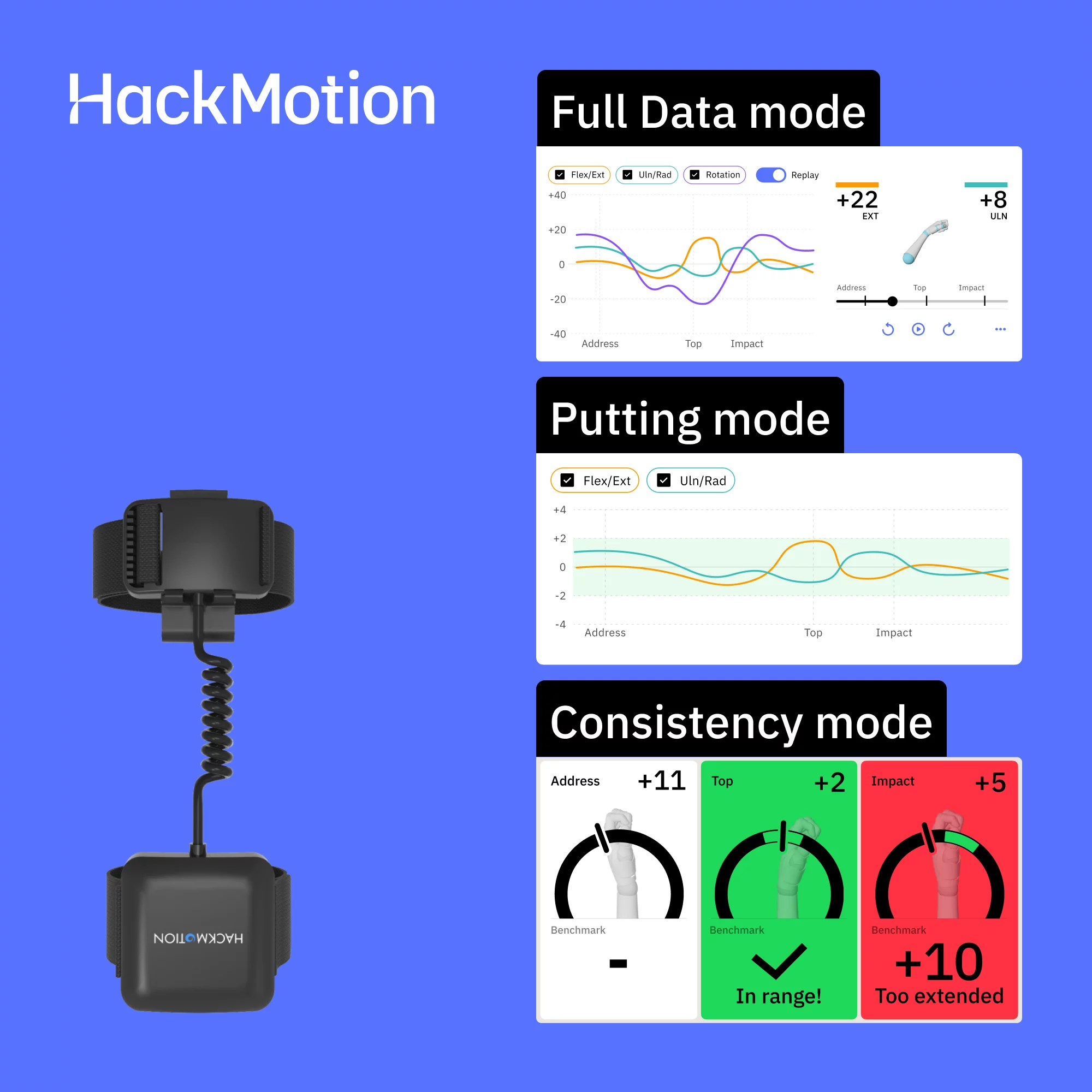
HackMotion’s putting mode reads the lead wrist through the stroke, three angles and a tempo drill; it comes with the Plus and Pro tiers, not Core, and owners split on whether the upgrade is worth it. The sensor cannot feel the ball. It reads whether the wrist bowed, hinged or rotated between address and impact, and buzzes when the stroke leaves its window.
In a Nutshell
HackMotion’s putting mode, on the Plus and Pro tiers only, reads three lead-wrist angles and runs a two-to-one tempo drill with sound and haptic cues; it runs beside a launch monitor rather than through it, and owners split on whether the upgrade pays.
👉 Bottom line: buy Plus for putting, calibrate every session, and treat the tempo cue as the feature that lasts.
In this guide: In a Nutshell · How this has changed · What it records · Which tier · Setting up · Does it work · In a simulator bay · Sharing and buying used · FAQ · Summary
- Three wrist numbers and a tempo drill: flexion and extension, radial and ulnar deviation, rotation, plus a two-to-one tempo cue.
- The tier: Plus or Pro; Core is the full swing only.
- The split: owners who say it caught a rotation they could not feel, against one who says skip it.
- The account lock: one license, one account, no documented transfer.
- No subscription: the license is one payment, with free updates for life.
The author’s 2024 promise still opens the piece:
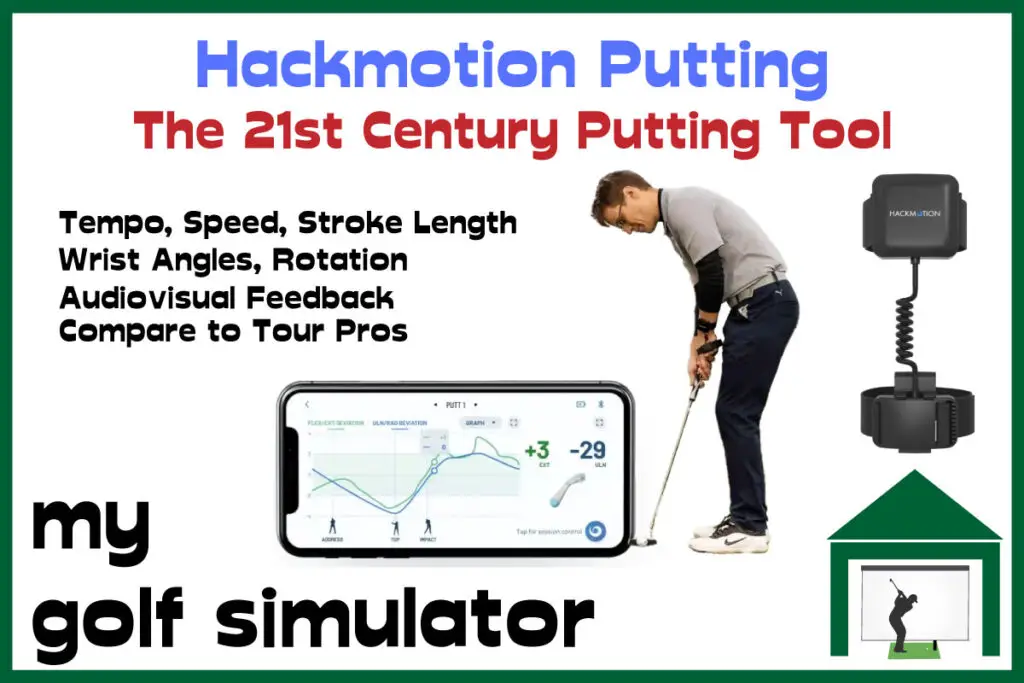
I am going to tell you how Hackmotion can revolutionize your putting game.
Jargon, once:
- Flexion and extension — bowing or cupping the wrist.
- Radial and ulnar deviation — hinging the wrist up toward the thumb or down toward the little finger.
- Rotation — turning the forearm, which opens or closes the putter face.
- Lead wrist — the left wrist for a right-hander.
- Tempo ratio — backswing time against downswing time.
How This Has Changed Since 2024
- August 2026: a used sensor bought on eBay arrived still tied to its seller’s account.
- August 2026: one owner tells buyers to skip the putting option.
- August 2026: the Sensor 4 adds a haptic cue and slims down to fit under a glove.
- July 2026: the fading-bonus view: putting mode loses its value once the fault is fixed, until the fault returns.
- Checked 2026-09-11: three tiers at $275–$985 (unchanged on 21 October 2026), the Sensor 4 $70 over the Sensor 3.
- Unchanged: no subscription; the license is one payment.
What HackMotion Records on a Putt
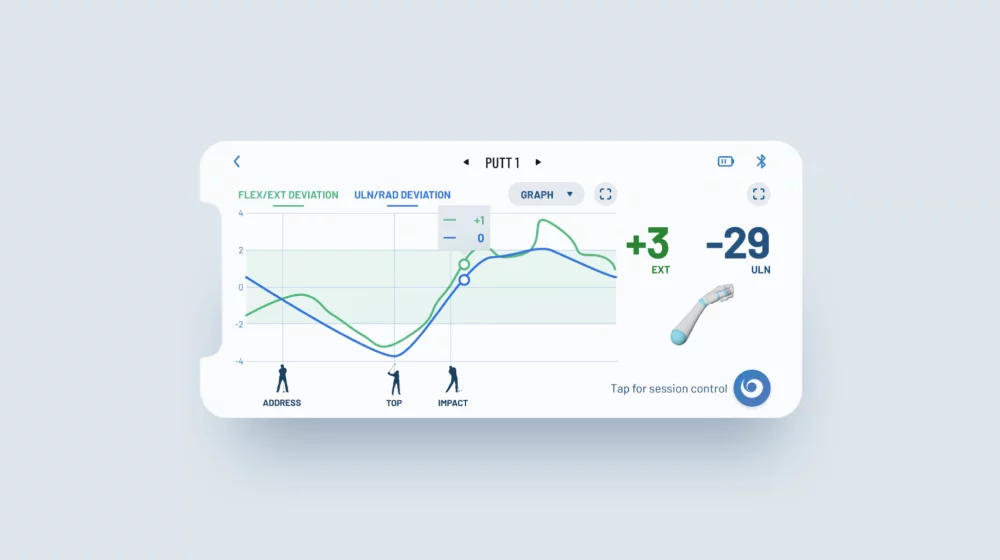
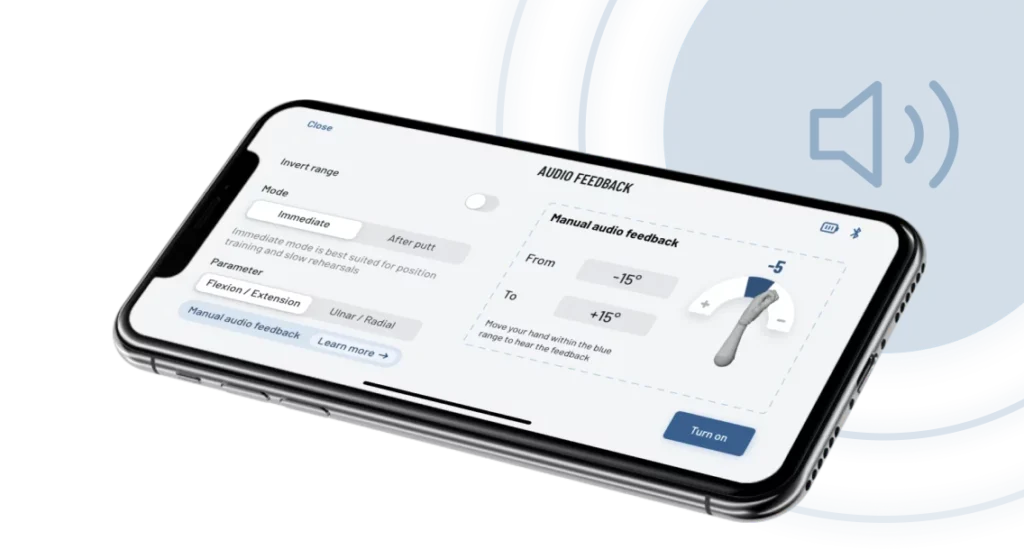
The sensor sits on the lead wrist and samples it at 800 frames a second, marking address, the top of the stroke and impact on its own. The three angles are the product; the site lists them as HackMotion describes them. Tempo is taught as a drill rather than shown as a metric card: the backswing should take twice as long as the downswing. The 2024 original also listed stroke length and consistency, and the live site tracks neither as a named metric; stroke length appears only inside drill copy. Feedback comes as sound, a haptic cue on the Sensor 4, and the app’s picture of the stroke.
| Metric | What it shows | Note |
|---|---|---|
| Flexion and extension | “Bowing or cupping the wrist changes the loft you deliver at impact.” | HackMotion’s Plus page (WC-7) |
| Radial and ulnar deviation | “Hinging and unhinging the wrist changes where you strike the ball on the face” | HackMotion’s Plus page (WC-6) |
| Rotation | “Rotation twists the putter face open or closed, which sets the ball’s starting line.” | HackMotion’s Plus page (WC-5) |
| Tempo | A two-to-one ratio drill: “Tour players keep their backswing twice as long as their downswing.” | A drill, not a metric card (WC-8) |
The author’s own note on tempo still belongs here, exclamation and all:
It’s not just about wrist angles! Tempo is massively important too,
Which Tier Has Putting
Putting lives on Plus and Pro. Core covers the full swing. Plus adds the putting virtual coach, analysis and drills. Pro adds tour comparisons, advanced wrist metrics and multiple profiles. Buyers get the tier wrong most often (7 reports from 6 owners); one owner named only Core and Pro. A Black Friday putting add-on at about $120–125 is owner-reported. The trade-in is $195 flat, $125 less with a tier upgrade, and the old sensor is deactivated for good.
Hackmotion Packages – Core, Plus, and Pro Compared
| Tier | Putting | Sensor 4 price | Sensor 3 price |
|---|---|---|---|
| Core | No | $345 | $275 |
| Plus | Virtual coach, analysis, drills | $490 | $420 |
| Pro | Plus, plus tour data, advanced metrics, profiles | $985 | $915 |
Sensor 4 prices are HackMotion’s own list prices, $70 over the Sensor 3 packages, as its store showed them on 21 October 2026 (WC-1); no tier carries a subscription (WC-4).
Setting Up a Putting Session
The sensor goes on the lead wrist, the left for a right-hander, chosen in the app before calibration. Calibration takes a few seconds: a flat wrist parallel to the ground, no rotation, the arm raised straight up, repeated every session and whenever the sensor shifts. HackMotion’s tolerance is five degrees either way between sessions; most errors come from moving the arm wrongly. The app is free on iOS and Android and pairs by a button press with Bluetooth and a network connection. The author’s two lines on the cues take it from there:
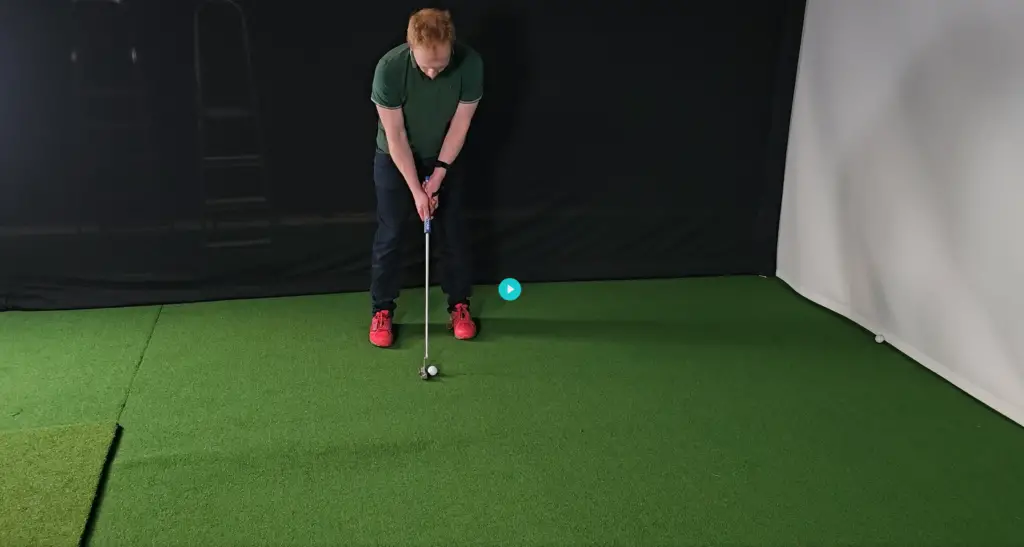
The real-time audio feedback helps me adjust my stroke immediately, ensuring consistent tempo and speed.
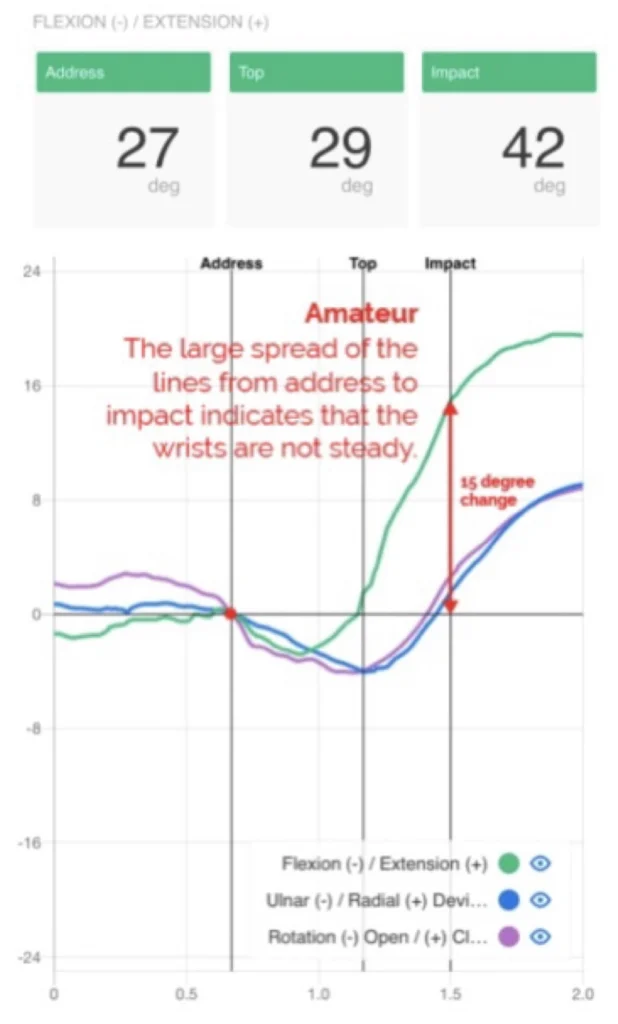
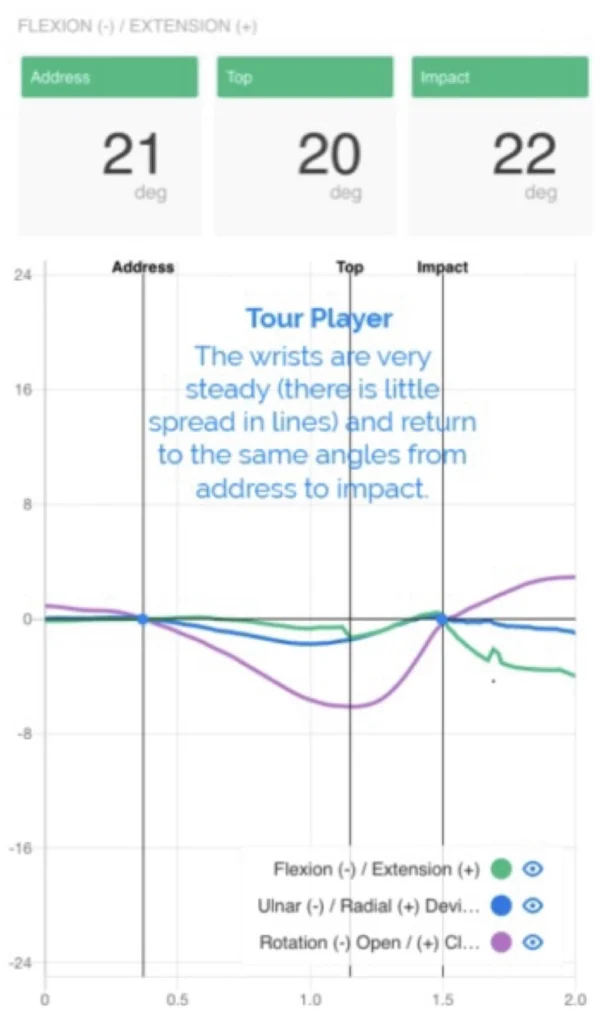
The visual data provided by the app has been instrumental in understanding and correcting my stroke length.
Does It Work? The Split
The author’s verdict has not moved:
I think one of Hackmotion’s biggest strengths is its putting capability. I use it all the time for putting and have seen huge improvements.
By integrating Hackmotion into my practice routine, I’ve significantly reduced my putting inconsistencies and improved my overall performance on the green.
Reviewers who agree say the sensor caught a wrist rotation they could not feel and taught them tempo and face control (4 reports from 3 reviewers). The site’s tier guide carries the other side, that putting mode is mostly a tempo tool. The two verdicts are linked rather than repeated here. One 2026 buyer’s advice went the other way:
“One note – if you’re deciding, skip the putting option.” (u/AdeGamisou2020, 2026-08-06)
Another owner’s view is that the value fades once the issues are fixed and returns when they creep back:
“It’s nice to have for when they creep back in though” (u/TFinley90, 2026-07-27)
Reliability complaints run alongside the praise (5 reports from 5 owners), and the sensor reads only the wrist, so a coach or a mat still has to read the rest.
Hackmotion Packages – Core, Plus, and Pro Compared
| What owners and reviewers report | Reports / owners and reviewers | Which way it cuts |
|---|---|---|
| Scores or distance control improved, full swing | 17 / 12 | For, on the full swing rather than putting |
| Worth the money at the entry tier | 7 / 6 | Against, on price |
| Best used inside lessons with a coach | 6 / 6 | For, with a coach |
| Compared with rivals such as deWiz | 6 / 5 | Faded; deWiz no longer comes up |
| The putting add-on itself | 4 / 2 | For |
| Reads only the wrist | 4 / 4 | A limit, not a fault |
| Works best beside coaching | 3 / 3 | For, with a coach |
| Owners who stopped using it played worse | 3 / 3 | For, if it is used |
In a Simulator Bay
HackMotion talks to no launch monitor or simulator program. In a bay it runs as a second app beside the unit’s own putting. No 2026 thread covers putting mode in a bay. This is the site’s framing. A Mevo+ registers a 6 ft putt only when the ball rolls 10–12 ft; a SkyTrak putts only through connected software. Generous gimmes inflate scores (14 reports from 14 owners); match the gimme to real stats.
Simulator putting improves distance control for some (7 reports from 7 owners); others report erosion or no transfer. Read the wrist against the roll.
HackMotion in a Golf Simulator: All the Data you need!
Golf Simulator Putting Greens – Add a Putting Green to your Simulator Floor
Mevo Plus Putting – 7 Optimal Setup Tips
Skytrak Putting – Problems, Tips & Ideas
How to Practice in a Golf Simulator – 40 Easy Ways
Sharing It, and Buying Used
Each sensor carries one license tied to one HackMotion account, and the support pages document no way to move a used sensor:
“I bought my Hackmotion used off ebay. When it arrived, it was still tied to the sellers original account.” (u/Substantial_Team6751, 2026-08-22) [sic]
A last-generation unit sells used for about $200, one owner estimates; Pro’s profiles are for coaches, not for moving the license. The warranty is two years on hardware defects; returns run 30 days with shipping paid, and a Plus or Pro buyer can downgrade in that window. Export stops at screenshots.
HackMotion Putting FAQ
Which HackMotion tier includes putting?
Plus and Pro. Core is the full-swing package only.
What does HackMotion measure on a putt?
Three lead-wrist angles, flexion and extension, radial and ulnar deviation and rotation, plus a two-to-one tempo drill.
Does HackMotion work with a launch monitor’s putting?
Not through any link. It runs as a second app beside the launch monitor’s own putting numbers.
Does a used HackMotion keep its Plus or Pro tier?
The license stays with the seller’s account, and no transfer process is documented, so a used sensor can arrive locked.
Is HackMotion’s putting mode worth the upgrade?
Owners split. The rotation and tempo cues are the lasting value; one 2026 buyer’s advice was to skip it.
Summary
HackMotion’s putting mode is a wrist meter: three angles, a tempo drill, sound and haptic cues, on Plus and Pro. Calibrate every session, run it beside the launch monitor rather than through it, and buy new unless the seller can release the license.
Related guides: Hackmotion Packages – Core, Plus, and Pro Compared · HackMotion in a Golf Simulator: All the Data you need! · Golf Simulator Putting Greens – Add a Putting Green to your Simulator Floor · Mevo Plus Putting – 7 Optimal Setup Tips · Skytrak Putting – Problems, Tips & Ideas · How to Practice in a Golf Simulator – 40 Easy Ways
Bushnell Launch Pro vs SkyTrak ST MAX (2026)
Golf Simulator Packages vs Building Your Own: Which Is Better Value?
ABOUT THE AUTHOR
Hello! My name is Alex and it is my mission to bring you all the information you need to build your own home golf simulator! I hope mygolfsimulator.com helps you on your journey to better golf at home!
LEGAL INFORMATION
On this site, you'll find articles on all aspects of building a golf simulator. I will also link to other sites where you can buy some of the simulator components. Some of these links may be affiliate links, which means if you click them I gain a small commission at no extra cost to you. This really helps out me and my site so thank you in advance! mygolfsimulator.com and all related social media accounts are property of Awonline LTD.