Golf Simulator Cost Calculator – How much do Golf Simulators Cost?
Are golf simulators expensive? They can be, but the price range is wider than ever — and in 2026 I can finally answer with real, itemized builds instead of catalog tiers. This summer’s cheapest documented build ran $344; the priciest turnkey install ran $100,000 — the full spread of tiers between them is in the table below. One fresh warning from a builder posting his line items in August says it best: “a golf simulator that isn’t just a mat and a net is NOT CHEAP. Regardless of what you think you can do.”
This guide rebuilds my cost breakdown around what owners actually spent — five real builds and one costed plan from the last 90 days, all line-itemed below — plus the hidden costs that blow budgets, the subscriptions people forget, and where the smart savings genuinely are.
In a Nutshell
A golf simulator costs from about $350 for a net-and-mat bay to $50,000–100,000 for a turnkey install, with budget and DIY builds running about $1,300 to $6,000. Owners report that room work, electrics, installation and subscriptions often cost more than the equipment.
👉 Use the calculator below to price your own build line by line.
In this guide: In a Nutshell · Calculator · The eight components · What real builds cost · Hidden costs · Recurring costs · Sim vs the alternatives · Commercial corner · How costs changed · Saving playbook · FAQ
Jargon, once: your launch monitor is the sensor that reads each shot (the biggest single line item); GSPro is the community’s favorite sim software ($250/yr, needs a Windows gaming PC); a hitting strip is the replaceable turf insert set into your hitting mat — the part you actually hit from.
| Spend lane | Realistic total | Real-build example | The watch-out |
|---|---|---|---|
| Bare bay | ~$350–500 | $344 net-and-mat build (Jun 2026, used R10) | No screen, no immersion — pure practice |
| Budget sim | ~$1,300–2,500 | $1,300 Square garage build; ~$2,000–2,150 full CAD build | The mat is where cheap gets expensive (see below) |
| Lean DIY full sim | ~$2,500–6,000 | ~$2,550 outbuilding build; $6k costed plan | PC + subscriptions are the quiet line items |
| Premium home (parts-built) | $8k–20k+ | Premium package tier (6 reports, 4 owners, rising) | Room prep often costs more than gear |
| Turnkey installed | $50,000–100,000 | Professionally designed + installed home system (market range, checked Aug 2026) | Equipment + build-out + labor combined |
| Commercial | $20k–55k per bay tech | Multi-bay buildouts $100k–400k+ | Different scope entirely — see the corner below |
👉 Bottom line: the equipment is often the smaller half of a serious budget. Room construction, electrical work, installation labor, and subscriptions are where budgets actually die — owners’ own words: construction dwarfs equipment (5 reports, 5 owners). Price the room before you price the launch monitor.
Golf Simulator Cost Calculator
Use the interactive calculator below to build your own estimate component by component.
mygolfsimulator.com — Golf Simulator Cost Calculator
Tip: Hold Ctrl/Cmd (desktop) to select multiple; tap to select/deselect (mobile).
Your Build
The Eight Components, Re-Priced for 2026
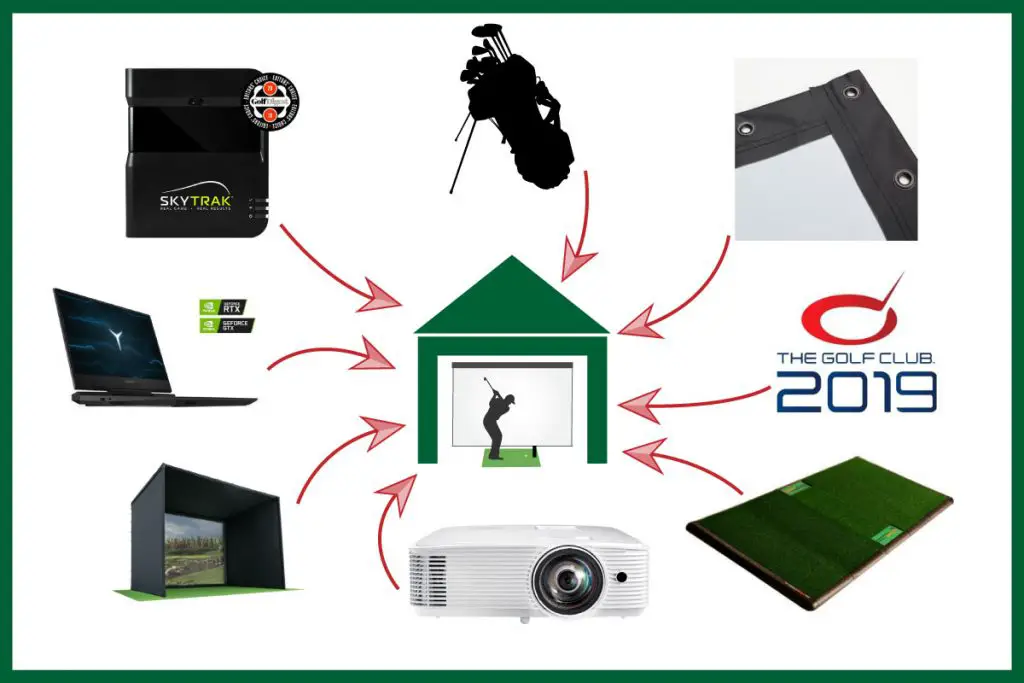
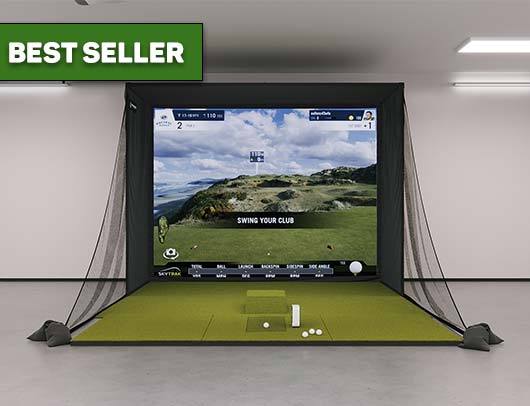
Before the real-world builds below, here’s what you’re actually pricing — eight components, each re-priced against this year’s evidence:
| Component | Realistic 2026 band | What the evidence says |
|---|---|---|
| Launch monitor | $300 used → $30k+ | The priority line item (4 reports, 4 owners, rising) — used R10 ~$300–450, the no-subscription ~$700 optical class (Square — camera-based tracking, not radar), Mevo+ closeout $1,099, SkyTrak+ certified pre-owned $895 (20 October 2026); full pricing lives in my launch monitor guides |
| Hitting mat | $150–300 strip · $600–1,200+ premium | Sub-$100 mats wear out in 1–3 months; a $386 DIY premium-strip build matched $700–1,200 retail mats. Why the range is worth paying for: see the callout below |
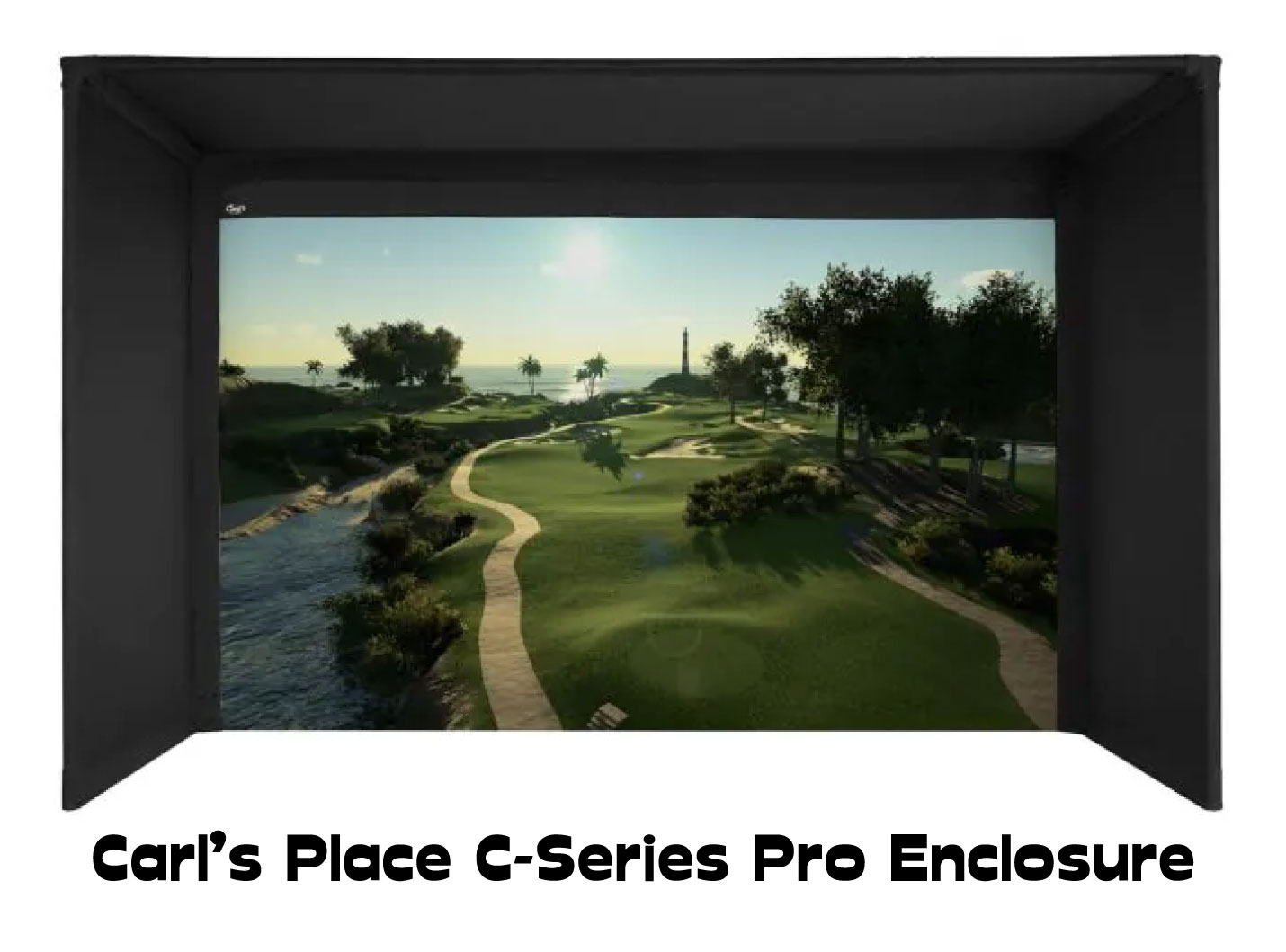
| Impact screen | $50 tarp → $200–900+ | Budget builders start with billboard tarp ($50) or archery netting ($150); Carl’s Place clearance screens surfaced at $200 (7.5×13) and $250 (10×10) this August (none were listed in October); premium 16×9 ~$900 |
| Enclosure | DIY $700–1,500 · premade ~$1.4k–8k (sale prices, October 2026) | The most-praised saving in the corpus: “Built our own enclosure for under $900. Pre-made was going to be $5k+ — huge difference” (5 reports, 4 owners, rising) |
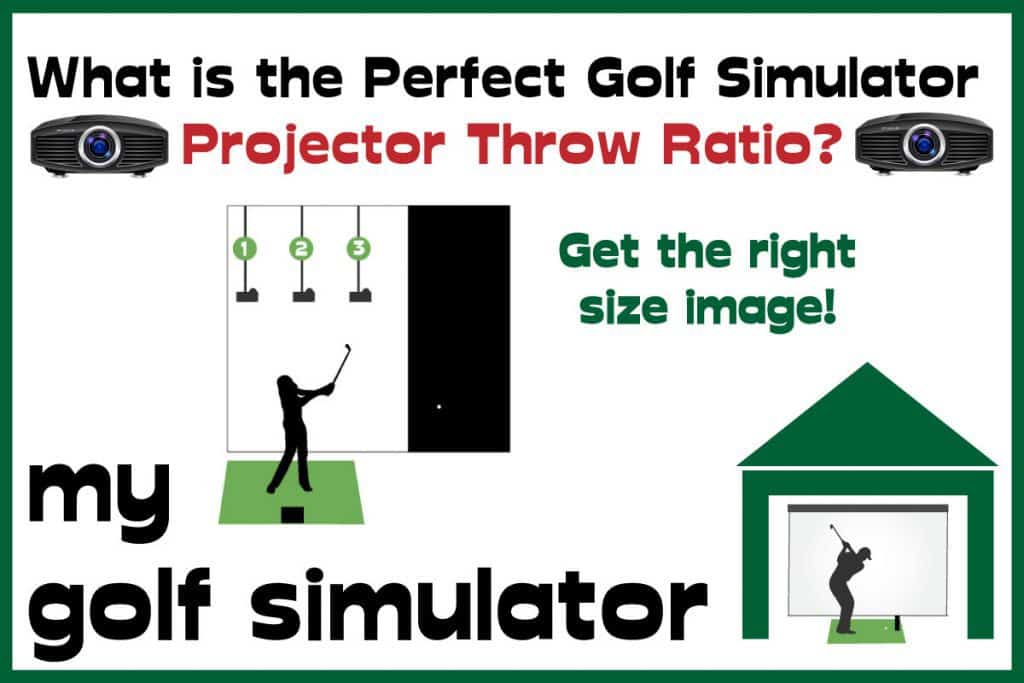
| Projector | $125 used → $2,500 4K | A used Epson did the job in the $2,550 build; budget ~$1k–1.8k units disappoint in ambient light (2 reports); the 4K decision is a room question — 4K Golf Simulator Projectors – Complete 2025 Guide |
| PC | ~$1,000 “tight, not comfortable” | Fresh consensus: $1,000 is now the floor, not a comfortable budget — “Ram and gpus are insane and only going up it seems” (multiple corroborating). Full spec ladder: Golf Simulator System Requirements in 2025 – Updated Reference Guide |
| Software | $250/yr GSPro (full range below) | “+$250 annually for GSPro, don’t forget that” — the forgotten line item; the full subscription picture runs $100–1,200/yr, covered in the ledger below |
| Extras | $60–70 quality HDMI, lighting, protection | Over a 40ft run, a cheap $20 copper HDMI risks image loss — a quality active cable is $60–70 (one commenter’s fix). Ceiling/wall protection, wiring, and swing cameras add up |
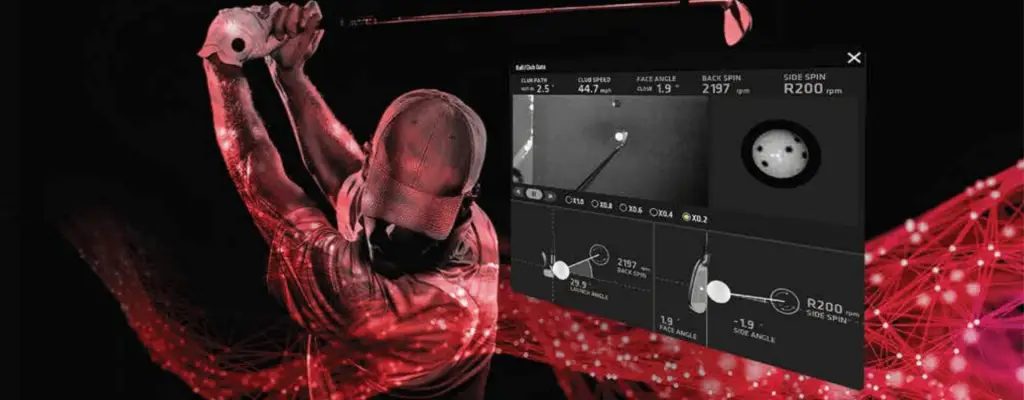
💡 Cheap mats hurt people. In an 85-comment thread this August, at least ten golfers reported wrist, elbow, or shoulder pain from cheap mats — including a labrum tear requiring surgery at 32. The money logic follows: “It’s much better to spend $600 on a mat than at least that much on medical bills.”
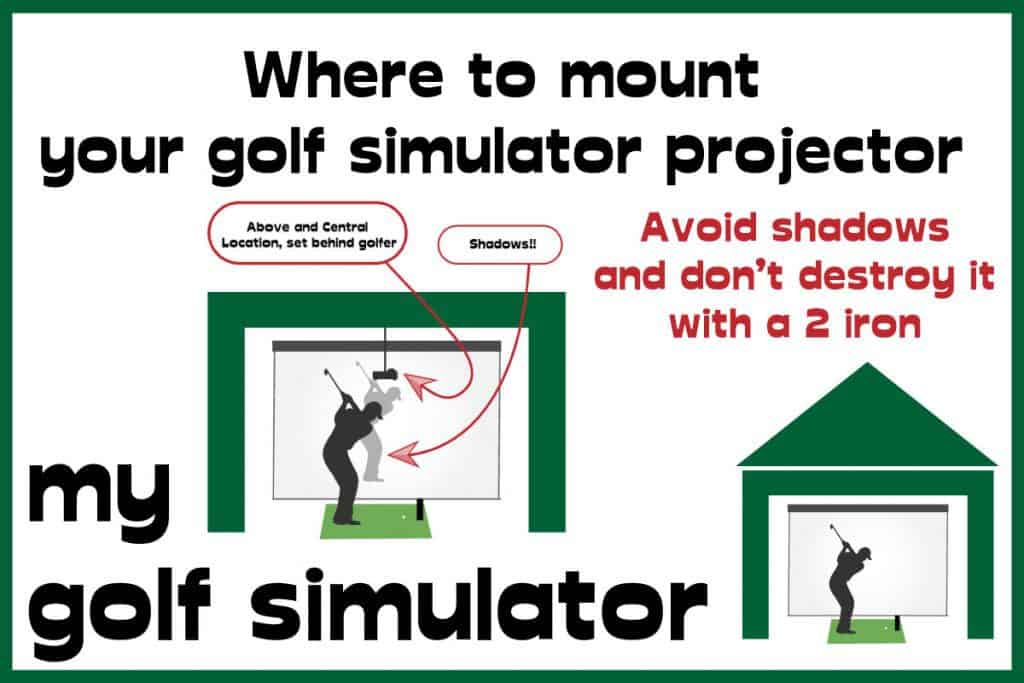
Two preserved notes from my original guide that owners keep proving right: prioritize a good golf mat, as over time a poor mat will start to hurt your joints when you get into thousands of shots — the surgery stories above are that advice with receipts. And make sure your projector positioning doesn’t cast shadows, fills your impact screen with the image, and is out of the way of your swing before you finalize any layout.
What Real Builds Actually Cost
With the glossary covered, here’s what those components actually cost when real owners buy them. The strongest cost data I can give you isn’t a catalog — it’s owners posting receipts. Five real builds and one costed plan from the last 90 days:
| Build (date) | Total | The line items that matter | Notes |
|---|---|---|---|
| Net-and-mat bay (Jun 2026) | $344 | Used Garmin R10 $300 · 12’×15′ net $52 · DIY turf mat $12 · reused hitting strip | The proven floor |
| Square garage build (Jul 2026) | ~$1,300 | Square launch monitor · Amazon enclosure (8’4″×8’4″×5′) · Home Depot turf · 3D-printed ball dropper | Commenters’ add-on advice: ~$150 hitting strip even at this tier |
| DIY outbuilding sim (Jul 2026) | ~$2,550 | Square Omni $1,600 · Temu screen $135 · eBay projector $125 · angle iron $153 · foam/velcro/wiring/cloth ~$290 | Excludes the building itself — owner’s estimate to build it fresh: “50k maybe a bit more” |
| Full budget build, CAD (Aug 2026) | $2,800–3,000 CAD (~$2,000–2,150 USD) | Used R10 $450 · BenQ TH671ST projector $1,050 · GoSports net + screen $236 · Beavertail XL strip $281 + ~$100 import | The most detailed itemized post of the summer |
| UK marquee build (Aug 2026) | ~£9,000 | Industrial marquee, plastic flooring, astroturf, Garmin R50, floor-mounted projector, blackout tarp | Installer quotes for the same job: £30,000–50,000 — a 3–5× DIY gap |
| $6k DIY plan (Aug 2026) | ~$6,000 (costed plan) | Full breakdown posted for critique — the pushback is the value | “There’s no chance you’re buying a pc for 1k prebuilt with good specs” + “+$250 annually for GSPro, don’t forget that” |
Three lessons repeat across these threads. Lean DIY builds in the $6k–11.5k range keep beating retail packages on capability per dollar (5 reports, 4 owners, rising). The outbuilding owner’s total doesn’t include the structure itself — he guesses $50k+ to build it fresh, which is the order-of-magnitude trap gear-only calculators fall into. And every single build thread eventually turns into a conversation about mats and joints, echoing the injury data in the components above.
Hidden Costs — Now With Numbers
The old version of this article listed hidden costs. This version can price them.
Construction costs more than the gear. Framing, drywall, and electrical are consistently the largest line item in serious builds, echoing the home-theater rule that hardware is 10% of the job. The single most brutal quote in my evidence: “Raised our entire garage by 4 ft, cost us $23k we didn’t budget for — that’s not including the frame and drywall.” Infrastructure surprises (HVAC, drywall, acoustic treatment) add $1.5k–7k unplanned (5 reports, 5 owners, rising).
Electrical, priced: high-power laser projectors and full launch-monitor-plus-PC setups are the usual trigger for a new dedicated 240V circuit, which runs a national average of ~$750 all-in — with a $300–1,500 range depending on amperage and GFCI requirements (30A: $300–900; 50A range: $400–1,100; 50A GFCI — ground-fault protected — $800–2,200). My long-standing advice to have an electrician assess the space before construction stands — now you know what the visit leads to.
Installation labor, priced:
| Install route | Cost | Scope |
|---|---|---|
| Remote PC/software setup | ~$500 | Base retail tier |
| Projector mounting | +$500 | Add-on tier |
| Launch monitor + calibration | +$1,000 | Add-on tier |
| On-site enclosure + full setup | ~$2,499 | Full assembly tier |
| Wall-to-wall custom room | ~$4,499 | Top retail tier |
| Market labor-only range | $500–2,500 | Room prep already done |
| Full professional service | $1,500–5,000 (to $2,000–8,000 scope-dependent) | Why three ranges? Labor-only vs full-service vs whole-project scope |
DIY saves a mechanically skilled owner $1,000–5,000 of that labor. One vendor even charges up to $750/day if your room isn’t ready when installers arrive.
The small stuff that isn’t: foam-tile flooring regret is rising — tiles balloon and lift (“Wish we’d gone horse stall mats,” 3 reports, 2 owners). Practice-ball replacement is a real recurring cost owners underestimate too.
The Recurring-Cost Ledger
Hardware is a one-time hit; subscriptions are forever, and resentment of them is rising in every corner of the owner evidence (4 reports, 4 owners, rising) — and echoed by a separate thread of subscription-churn complaints. The quote that sums it up: “I spent $8k on hardware. Now I owe $1200/year in subscriptions? That’s not the deal I thought I was making.”
Budget honestly: software and launch monitor subscriptions run $100–1,200+/yr depending on your stack (GSPro $250/yr is the common center). Subscription-free paths exist — the Square-class optical units charge nothing ongoing, FlightScope’s club-data Pro Package is a one-time purchase (per its product pages — FlightScope Mevo Plus Pros and Cons in 2025), and community-built connectors reach GSPro on some units without official tiers (documented in Skytrak vs Garmin R10 – Complete Guide (19 Key Comparisons)).
Sim vs the Alternatives
Subscriptions aren’t the only recurring golf spend worth weighing — club dues and pay-to-play fees are the alternative’s version of the same math. A permanent home build has one thing they don’t: a finish line, sort of (see Final Thoughts for the asterisk). Here’s the breakeven math:
| Path | Typical cost | Vs. a ~$7k home build |
|---|---|---|
| Home build | ~$7,000 one-time | — |
| Budget country club | ~$1,500 initiation + $3k/yr dues | Home build pays for itself in 1–2 years |
| Top-tier country club | $75k buy-in + $2k/mo | Home build pays for itself in months |
| Pay-to-play sim bay | $85–$700/mo (up to full-amenity NYC clubs) | Home build pays for itself well under a year at the high end |
Sourced from owner threads: home-build-vs-dues payback (2 reports); club dues range (3 reports); pay-to-play range (7 reports, 6 owners).
The Commercial Corner
Different scope entirely — this is business math, not home-build math. If that’s your project, treat this section as a table of contents, not a plan:
- Per-bay technology: $20k–55k (7 reports, 6 owners)
- Multi-bay lounge buildout: $100k–400k, full-service builds past $1M — “We budgeted $150k for a 4-bay lounge setup. Actual was $280k”
- Monthly overhead, 2-bay: $2k–5k
- Classic omissions: soundproofing (“that alone added $12k”) and state-lottery license/insurance costs (8 reports, 7 owners)
- The honesty check: local sim businesses folding within 6–8 months is a story commenters have watched repeat (2 reports)
How Golf Simulator Costs Changed (2021 → 2026)
- TGC 2019 died — my old article priced it at $950 four times; GSPro at $250/yr took its place as the default.
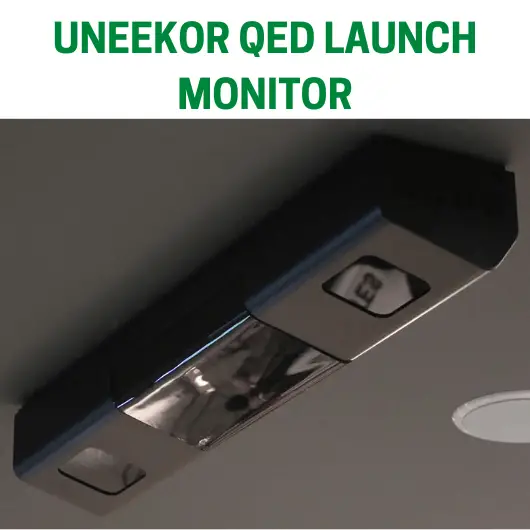
- The old mid/premium anchors aged out — the Uneekor QED (my $7,000 mid-tier example) is now end-of-life (December 31, 2026 cutoff), while the EYE XO is still sold ($6,499 on sale, list $7,999, 20 October 2026); the current line and its trade-in paths live in my Uneekor comparison.
- Supply-shortage inflation reversed into closeout deflation — I once wrote that launch monitor prices were inflated by supply problems; 2026’s story is closeout pricing (Mevo+ $1,099, SkyTrak+ CPO $895).
- A $700 optical class broke the entry tiers — Square-class units deliver what used to cost $2k–7k, with no subscription.
- The PC floor moved the other way — RAM/GPU price spikes pushed a “comfortable” $1,000 build to “tight, not comfortable.”
- Installation grew a price list — $500–4,499 retail tiers now exist where “get a quote” used to be the only answer.
The Cost-Saving Playbook
- Build the enclosure yourself. EMT conduit, corner fittings, foam padding, and curtain fabric — the community’s best-evidenced saving ($700–900 DIY vs about $1,400–5,000+ premade, October 2026). One tip from my own build carried over: I recommend removing the long width piece of pipe from above the golfer’s head — the structure stands without it and it stays out of your swing.
- Buy used, eyes open. I would usually recommend new components for the intact warranty — but the 2026 used market is genuinely good: used R10s at ~$300–450, used premium launch monitors with warranty transfer sometimes intact. One buyer’s $600 “broken” Bushnell Launch Pro gamble ended with Foresight repairing it free under a transferred warranty — his own caveat being that this is ‘not a recommendation that everyone go buy a broken Launch Pro.’ Video calls and reverse image searches before money moves; second-hand marketplaces attract scammers who target excited buyers.
- Start small, upgrade forever. A golf simulator doesn’t have to be 100% finished on the day you cut the ribbon on your new build. You can add to it and upgrade as time goes on — your launch monitor, mat, and even your screen can be easily chopped and changed. The evidence agrees: projects at every tier “rarely feel finished” (4 reports, rising).
- Spend the mat money once. The playbook’s one anti-saving: the $600 mat is cheaper than the $100 mat plus physical therapy.
- Defer the finishing touches. The beer fridge, wall art, memorabilia, and theater seating (my original list survives intact as the dream) come after the essentials: accurate data, a solid hitting surface, a reliable screen.

FAQ
Is $2,000 enough for a real golf simulator in 2026?
Yes — proven twice this summer: a $1,300 Square garage build and a ~$2,000–2,150 USD full build with projector and screen. The compromises are screen quality and the PC (both builds leaned on used gear or no PC).
What’s the cheapest build someone’s actually proven?
$344, itemized: used R10, net, DIY mat. Practice-only — no projector or screen.
What’s the most-forgotten cost?
Structural work — the “$23k we didn’t budget for” class of surprise, echoed by the construction-dwarfs-equipment rule (5 reports). After that: mat injury economics and electrical (~$750 for a 240V circuit).
My launch monitor died — repair or replace?
Do the math a Mevo+ owner faced in July: a $600 repair quote was 30% of his 2023 purchase price, while one commenter’s local read put used replacements at $600–800 and a new Mevo Gen2 at $1,200 (prices from that thread). Under ~30% of replacement cost, repair usually wins — above it, shop.
What does professional installation cost?
$500 (remote setup) to ~$4,499 (wall-to-wall custom room) at retail; $1,500–5,000 market range for full service. DIY saves $1,000–5,000 if you’re handy.
Can I avoid every subscription?
Nearly. Square-class units, one-time club-data purchases (FlightScope’s model), and free community connectors make a $0/yr software stack possible — GSPro’s $250/yr remains the one fee most enthusiasts eventually choose to pay.
DIY or package deal?
DIY wins on price (the £9,000-vs-£30–50k UK gap is the extreme case); packages win on certainty. The middle path most owners take: DIY enclosure + retail screen + carefully chosen launch monitor.
Final Thoughts
This is my ideal golf simulator setup, updated for 2026: I will continue to dream about the ultra high-end rooms — the turnkey installs that run to six figures — and short of those, the $8k–20k parts-built premium tier gets you astonishingly close. But the real story of 2026 is at the other end: the floor build proves it, $2,500 builds a real sim, and the difference between a budget you keep and a budget that doubles is almost always the room, the labor, and the mat — not the launch monitor.
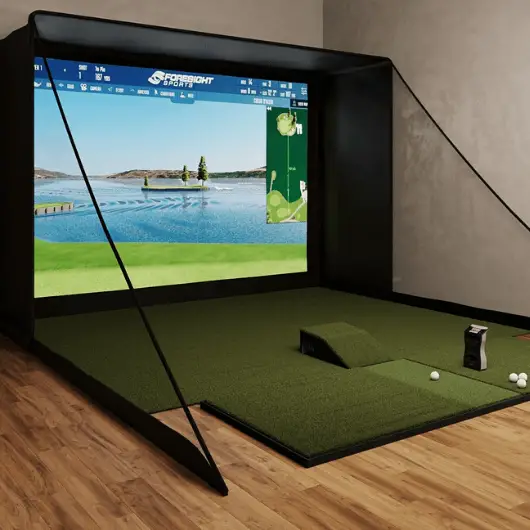
Measure your space, run the calculator above, and budget the boring lines first. How much space do you need for a Golf Simulator? · Garage Golf Simulator – 13 Key Challenges + Tips & Tricks · launch monitors · mats & hitting strips · screens & enclosures
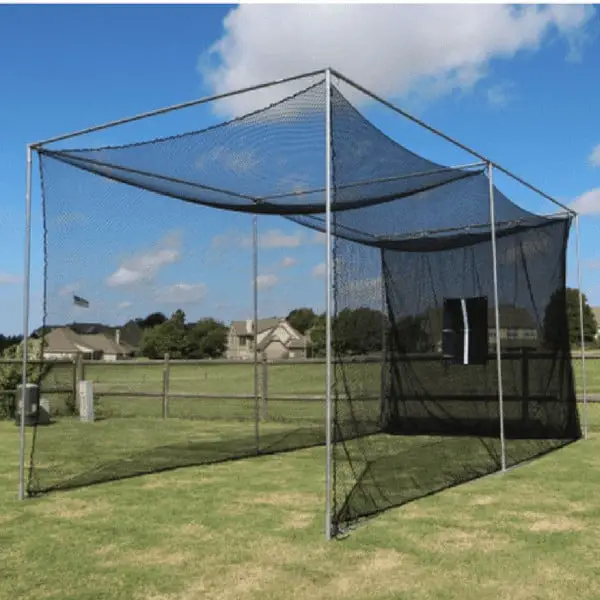

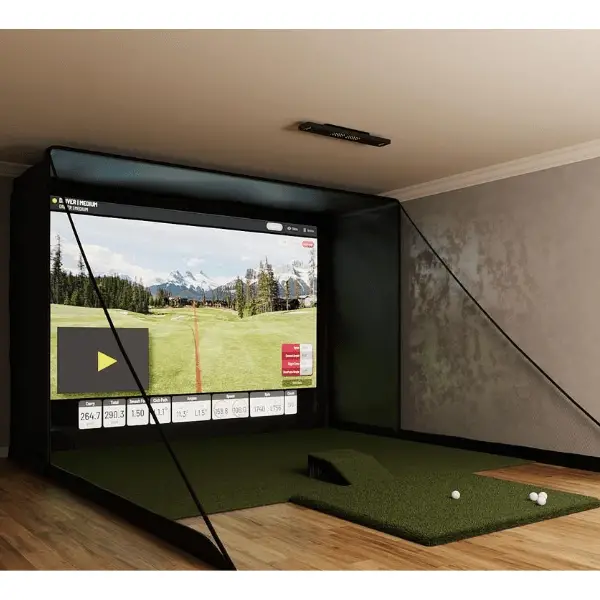
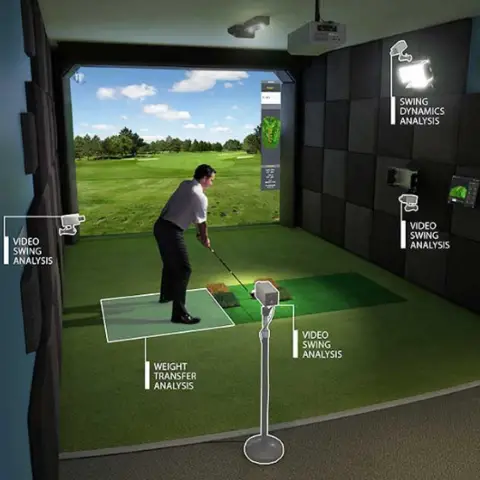
Good luck with your golf simulator build — I hope this guide saves you at least one of the surprises above.
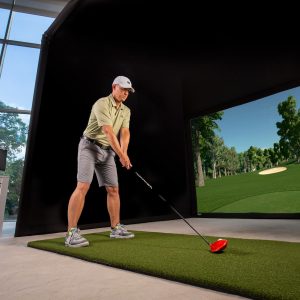
Carl’s Place Pro Golf Enclosure Review (2026): What’s in the Box, Real Cost and Owner Reports
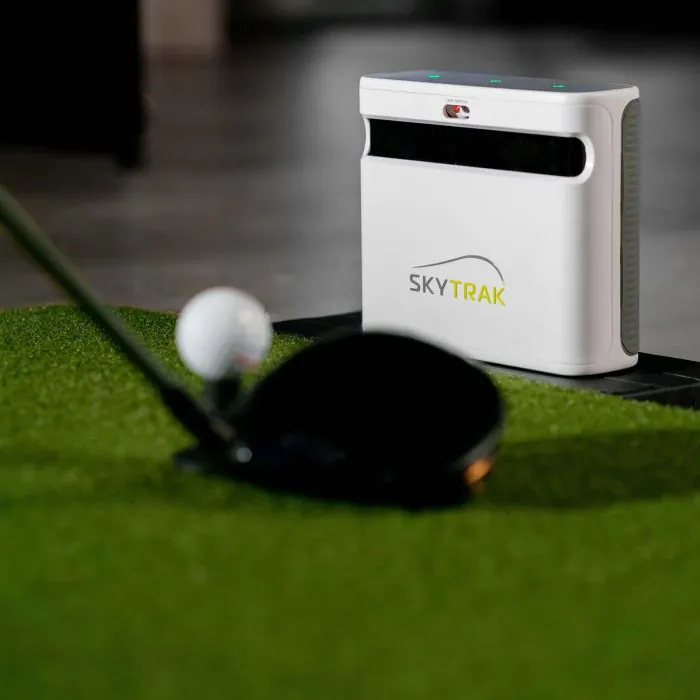
Is SkyTrak Portable? Battery, Direct Mode and Range Days (2026)
ABOUT THE AUTHOR
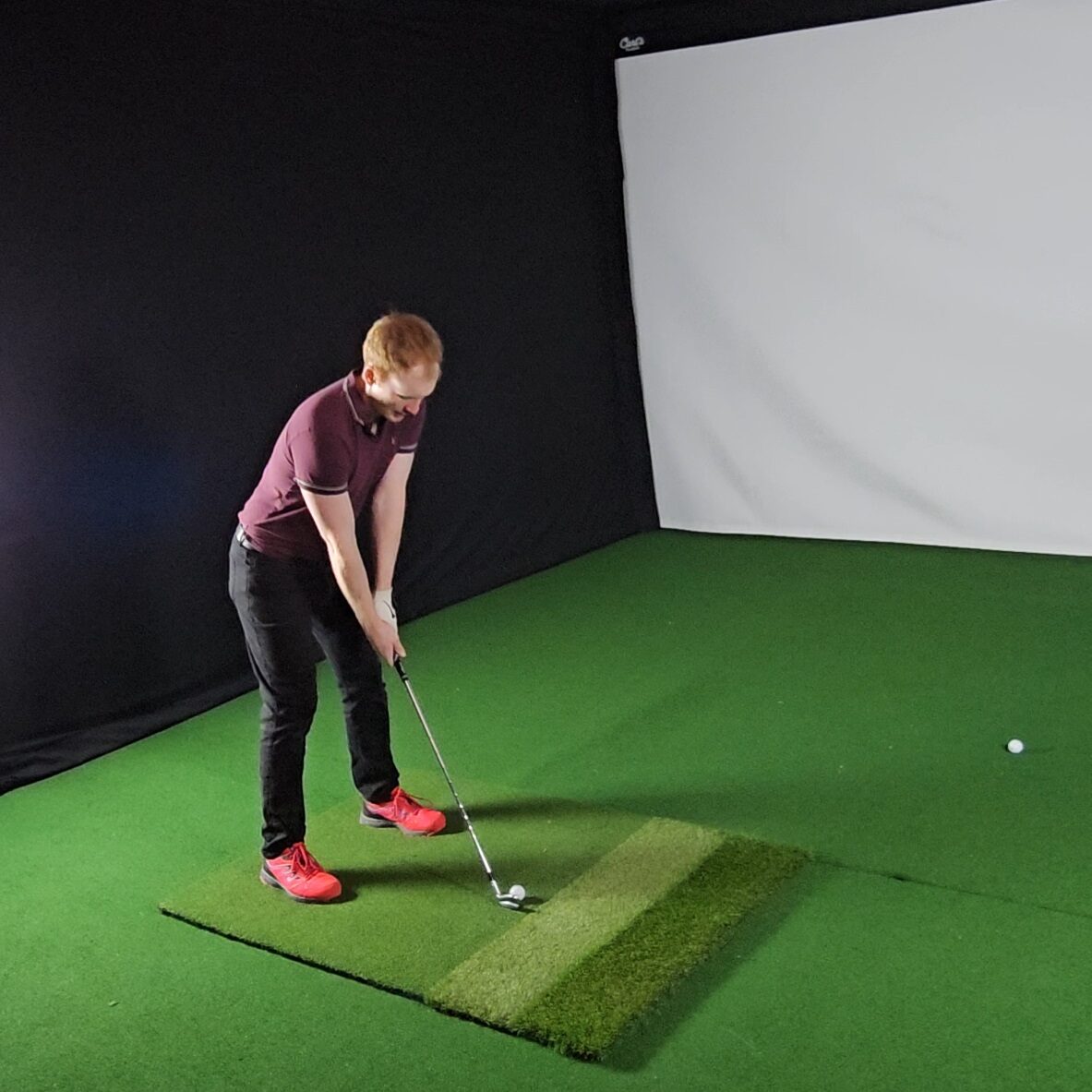
Hello! My name is Alex and it is my mission to bring you all the information you need to build your own home golf simulator! I hope mygolfsimulator.com helps you on your journey to better golf at home!
LEGAL INFORMATION
On this site, you'll find articles on all aspects of building a golf simulator. I will also link to other sites where you can buy some of the simulator components. Some of these links may be affiliate links, which means if you click them I gain a small commission at no extra cost to you. This really helps out me and my site so thank you in advance! mygolfsimulator.com and all related social media accounts are property of Awonline LTD.