Foresight GC Quad Space Requirements – Length, Width & Height
Posted in Launch Monitors, Room Setup
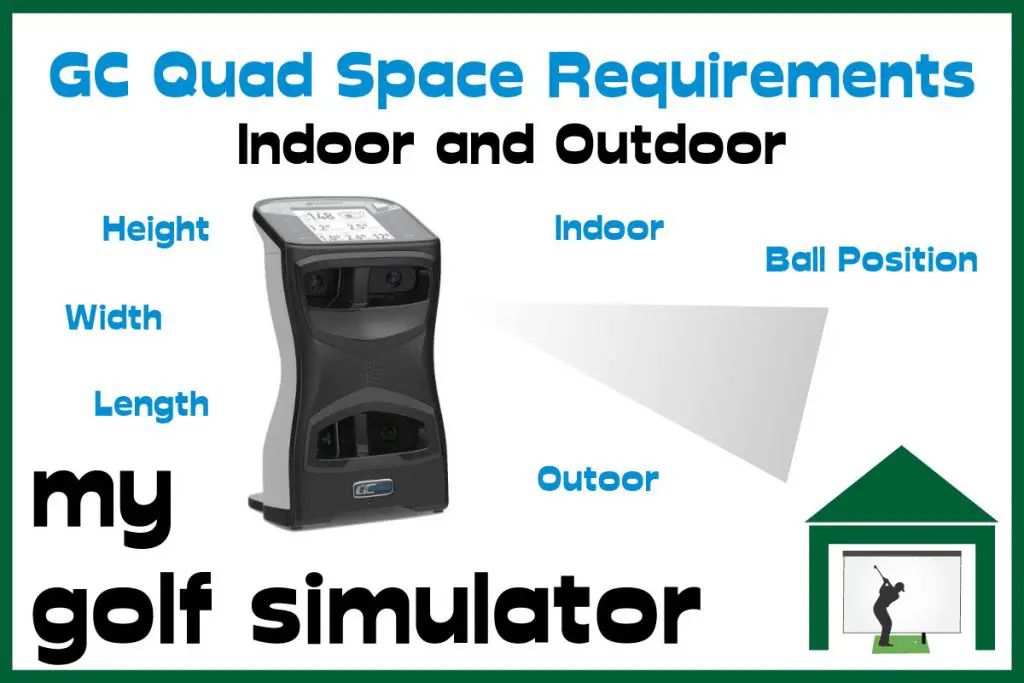
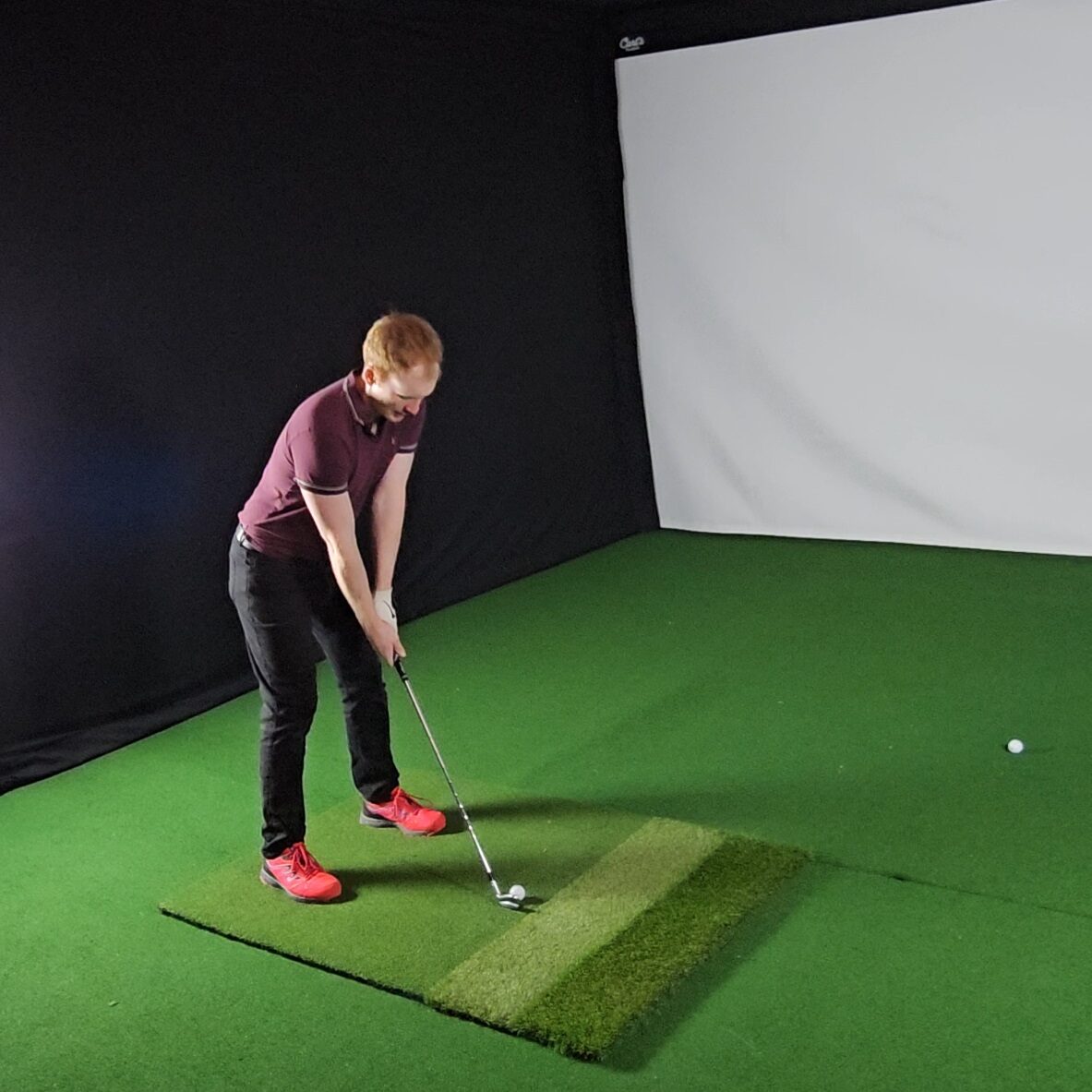
A comfortable GCQuad room is 18 feet long, 15 feet wide, and 10 feet high — and a workable one is roughly 12 × 10 × 9. The reason the minimum is so forgiving: the GCQuad is a camera unit that sits 22 inches to the side of your hitting zone and photographs the ball at impact, so it needs no depth behind you and no ball-flight distance in front. Your ceiling and your swing set the real limits, not the machine. The same geometry now covers the QuadMAX — and left-handed play needs no unit-shuffling: the manual documents an electronic toggle.
In a Nutshell
A GCQuad fits any room you can swing a driver in: it sits 22 inches beside the ball and needs no depth behind you, so about 12 × 10 × 9 ft is workable and 18 × 15 × 10 ft is comfortable.
👉 If you can swing your driver freely in the room, a GCQuad fits: 22 inches of side clearance for the unit, a 14×14-inch strike zone, and whatever ceiling your swing needs — 10ft safe, 9–9.5ft for most. Foresight publishes no room minimums because the cameras don’t need one.
In this guide: In a Nutshell · The numbers · How it sees your shot · The 22-inch rule · Ceiling · Length and screen distance · QuadMAX · vs Trackman · FAQ
| Dimension | Answer |
|---|---|
| Comfortable room | 18ft long × 15ft wide × 10ft high |
| Workable minimum | ~12ft × 10ft × 9ft |
| Unit to hitting zone | 22 inches, level with the hitting surface |
| Strike zone | 14×14in (club tracking on); 18×14in (ball-only) |
| Left/right-handed | Electronic toggle — no repositioning |
| QuadMAX | Identical geometry |
Jargon, once: photometric = camera-based capture of ball (and club) at impact. Strike zone = the area your ball must sit in for the cameras. Tee-to-screen = ball-to-impact-screen distance. Stimp — not needed here; that’s a greens number.
How this has changed
- The QuadMAX launched above the GCQuad — $19,999 list against the GCQuad’s $15,999 “starting at” — with identical placement geometry, so one room plan serves both.
- Prices moved visibly: a July retailer promo listed GCQuads at $11,999, and the summer’s used market ran soft (one fully-loaded listing slid $10,500 → $8,500 and sat unsold). On 21 October 2026 Foresight’s own store listed the GCQuad at $15,999 and the QuadMAX at $19,999.
- Foresight signaled licensing changes in a July owner email; the result, Foresight+, is now live with published plans (Silver $199/yr, Gold $599/yr), and Foresight says existing FSX licences keep working — check current terms before buying.
- The lefty toggle, confirmed: the manual documents an on-device electronic left/right switch — no repositioning between golfers.
The numbers table
| Dimension | Manual specifies | Workable minimum | Comfortable |
|---|---|---|---|
| Length | No figure published | ~12ft (13ft+ with bounceback margin) | 16–18ft |
| Width | No figure published | 10ft | 15ft (centered aim) |
| Ceiling | No figure published | 9ft for most swings | 10ft+ |
| Unit-to-ball | 22in, level with hitting surface | — | — |
| Strike zone | 14×14in / 18×14in ball-only | — | — |
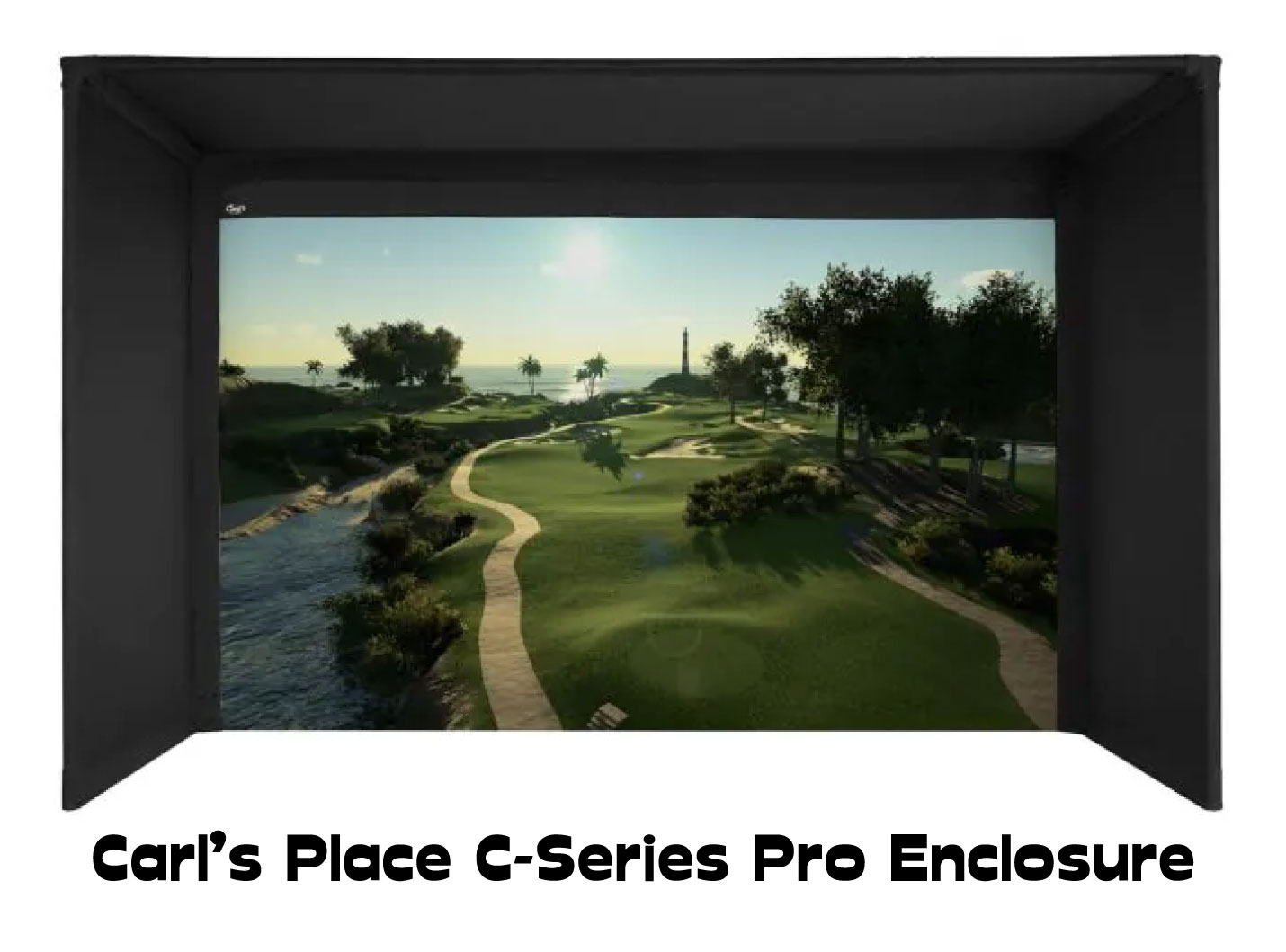
Foresight’s honesty deserves note: it publishes the unit’s geometry precisely and refuses to invent a room size, because the room genuinely depends on your swing. The community filled that gap — the consensus columns above — and the article’s remaining sections put numbers behind each one. For the build you’ll actually enjoy: I recommend room dimensions for GC Quad of 18 feet long, 15 feet wide and 10 feet high for a more comfortable experience, you should be able to achieve a centered aim in a room this size too. For how those numbers compare across the wider launch monitor market, the master guide is How much space do you need for a Golf Simulator?.
How the GCQuad sees your shot
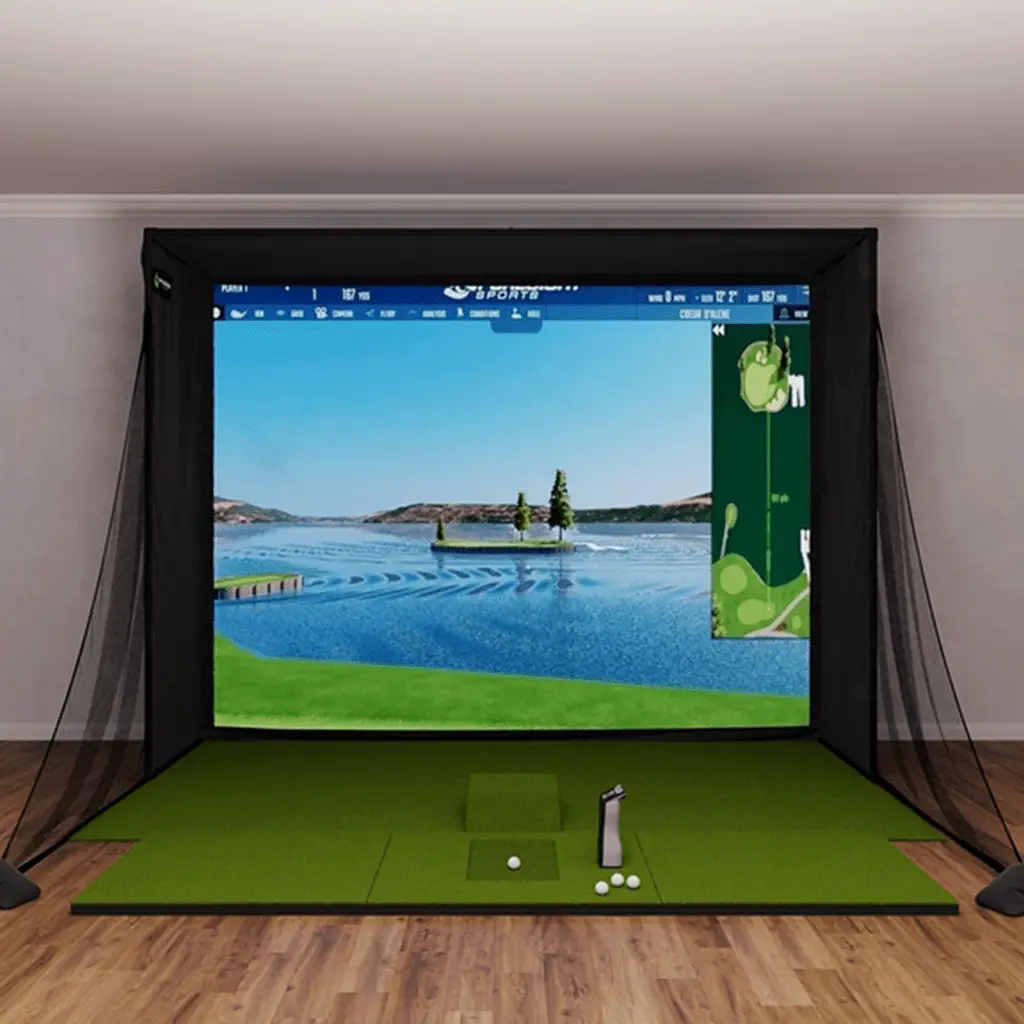
Four high-speed cameras photograph the ball at and immediately after impact, and the onboard computer calculates flight from those frames. Two spatial consequences follow:
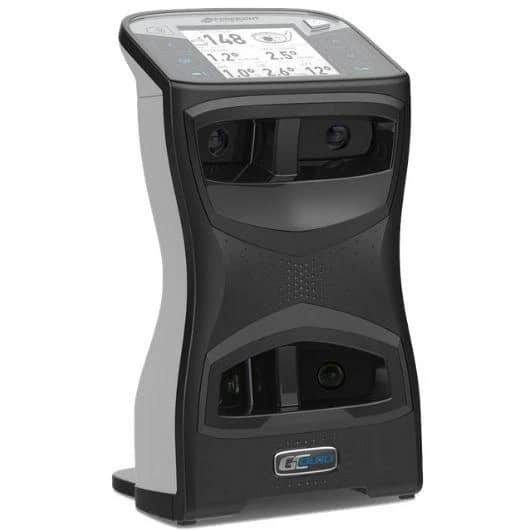
Depth behind you barely matters. There’s no radar cone needing a running start — the reason tight-room threads keep landing on camera units. As one owner put it this August, with a side unit “the distance to the screen doesn’t matter, as long as you can swing without hitting your enclosure” — corroborated across the summer’s tight-space threads, including one build hitting from just 5 feet and another capped at 9 feet by projector shadow rather than tracking.
Side clearance is the unit’s only ask. The GCQuad shares the beside-the-ball convention with its GC3 sibling; budget the 22 inches plus walking room on the unit’s side.
The trade-off camera units accept: precision placement. That’s the next section.
Placement precision: the 22-inch rule
Setup is exact and quick once habitual:
- Place the unit 22 inches from the center of the hitting zone, on the golfer’s target-line side, level with the hitting surface (raise it to mat height if you hit off a mat).
- Strike zone: 14×14 inches with club tracking enabled; 18×14 ball-only. Ball anywhere in the box, not on a single dot.
- Read the LED: solid = ready; rapid blinking = too many balls in view; slow blinking = no ball detected.
- Switching between right- and left-handed golfers is an electronic toggle on the device — the unit stays put. (SkyTrak owners: yes, this is different — the physical shuffle you know from floor cameras doesn’t apply here.)
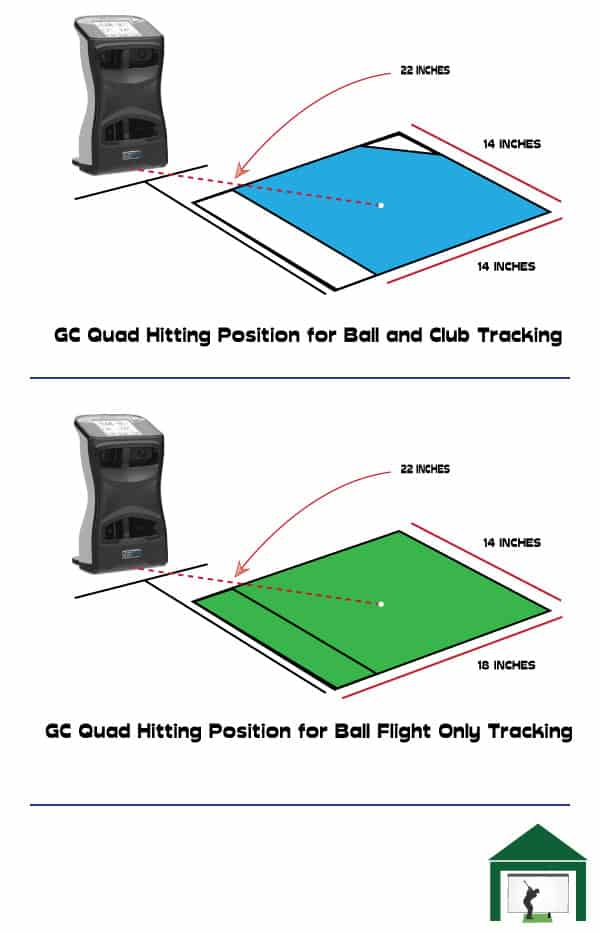
The QuadMAX follows the same 22-inch placement with the same strike zones, adds a kickstand for uneven surfaces, and weighs 15% less (6.3 lbs vs 7.5).
Outdoors, the only requirement that follows you is the same 22-inch placement, level with the hitting surface — Foresight’s own compare table marks both the GCQuad and the QuadMAX for indoor and outdoor use (its “if fully covered” footnote belongs to the overhead Falcon) and publishes no outdoor distance specs beyond that, since open air solves the ceiling question by itself.
Ceiling height
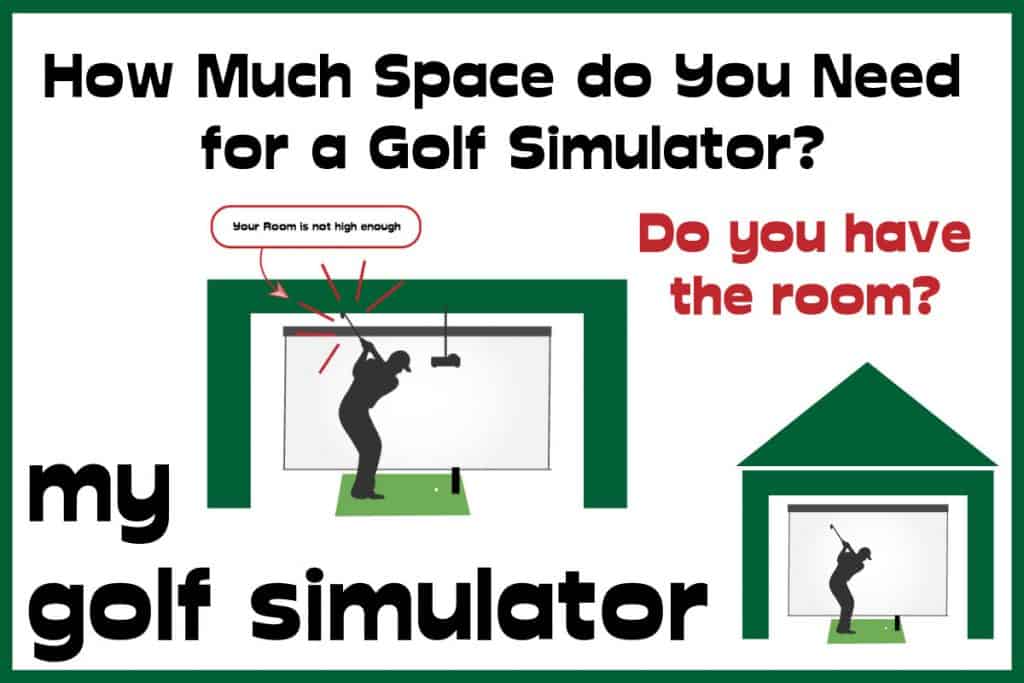
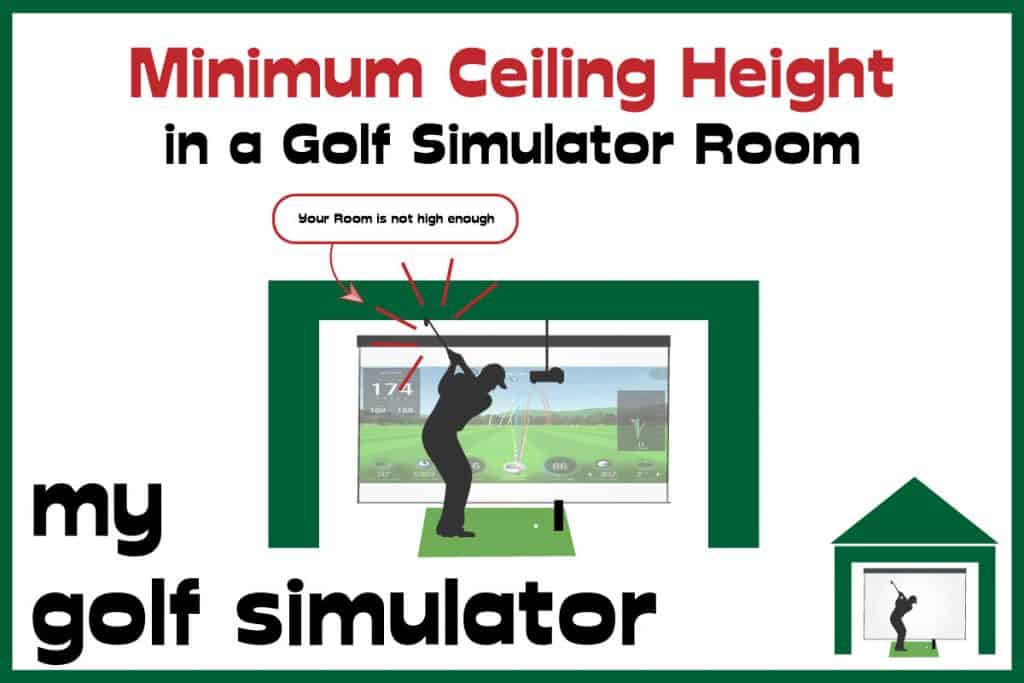
Ceiling clearance is golfer-and-room math rather than anything GCQuad-specific, so the short version, with the deep dive at What’s the Minimum Golf Simulator Ceiling Height?:
| Ceiling | Community verdict |
|---|---|
| 10ft+ | Safe for any club and golfer — the recommended floor for a no-compromise bay |
| 9–9.5ft | Full driver works for most, including many six-footers |
| 8–8.5ft | Mid-irons territory; driver risks the follow-through |
| Under 8ft | No full swings for most |
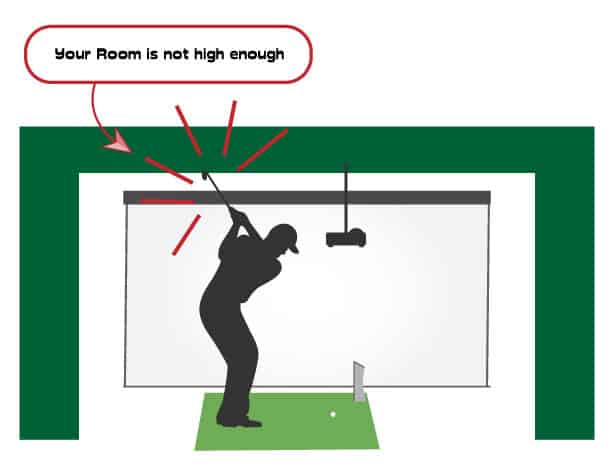
It is possible you could get away with 9 feet or even less depending on your height. The two evergreen cautions: owners across the 8’4″–9’5″ range admit scraping a ceiling at least once (usually the follow-through), and bulkheads or ductwork steal clearance exactly where the swing peaks. 💡 Test-swing your longest club in the actual spot — slowly, then fully — before any purchase this expensive. At GCQuad money, the room check costs nothing and the mistake costs five figures.
Room length and tee-to-screen distance
At least 16 feet of total room length makes for a comfortable indoor GCQuad experience. Shorter rooms — 13 feet and up — definitely work, but they invite bounceback trouble and indoor swing syndrome, the cramped-swing habit covered at Indoor Swing Syndrome – 11 Tips for Better Indoor Golf.
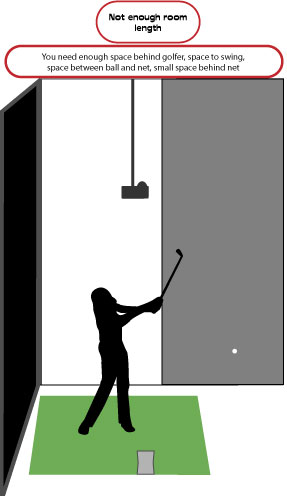
The depth budget stacks like this:
- ~1.5 feet of clearance behind the screen (general site guidance for screen safety)
- Your ball-to-screen distance (next paragraph)
- Stance and swing room behind the ball
- Roughly 6.5 feet from the ball before anyone sits safely behind you
Bystander space is the constraint tight builds hit last: one Foresight package owner this August fit the hitting, then discovered friends “would still have to sit/stand essentially outside the roller shades to be safe.”
On ball-to-screen distance, two honest numbers coexist:
- The 8–10ft vendor convention, framed around bounceback safety.
- The 6–9ft owner reality — many camera-unit owners hit closer without tracking issues and prefer the immersion; one GC3 owner runs 10–12ft and reports no bounceback at all.
Start at 8–10, tune your screen tension, then tighten if you want. The caveats that keep it honest: high-lofted wedges are the anxiety case at any distance, and standing farther back doesn’t automatically make mishits safer — skied balls miss screens that aren’t tall enough for the extra range.
Room width and the centered aim
The width rule: 15 feet buys a centered aim. You need 15 feet or more of room width to use a GCQuad with a centered aim — hitting at the middle of your screen rather than angling across the room. I always recommend striving for a centered aim in an indoor golf simulator room. Narrower works — 10 feet fits the gear — but you’ll aim across the room, and your side-wall clearance needs to roughly match your vertical clearance at a 45-degree swing plane or the backswing finds the wall.
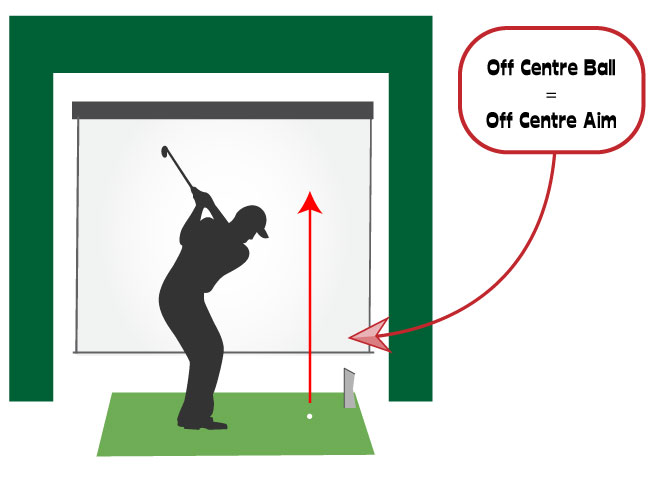
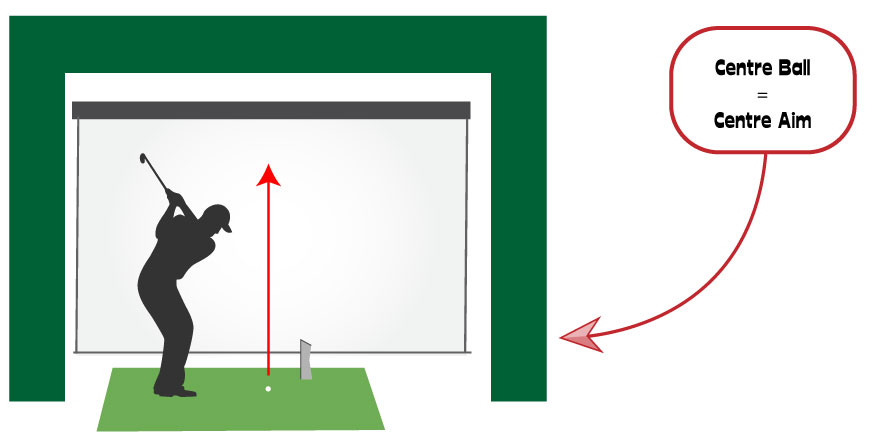
However, GC Quad is a huge investment and I would want to ensure I had a space big enough to get an optimal experience before shelling out on this launch monitor behemoth.
QuadMAX: same footprint, new flagship
Space-wise there is nothing to relearn: 22 inches out, same strike zones, same level-with-the-surface rule. The differences are money and payload — $19,999 list (financing from $834/mo advertised), a 15%-lighter body, and the club-data performance that’s built its reputation as the family’s standout. The money picture around both units in 2026 (Foresight’s store prices checked 21 October 2026):
| Unit | List | Seen this summer |
|---|---|---|
| GCQuad | $15,999 starting | $11,999 retailer promo (July); used listings $8,500–10,500, moving slowly |
| QuadMAX | $19,999 starting | $14,999 in the same promo roundup |
| GC3 (context) | $6,999 | $5,999 sale this summer; $3,999 sale on Foresight’s store (21 October 2026) |
Check current pricing on both units before deciding: Foresight GCQuad · Foresight QuadMAX.
Two recurring-cost notes belong in any GCQuad budget. First, subscription stacking: GSPro is $250/yr, and Foresight+ says third-party software like GSPro needs its Gold plan ($599/yr) — a stack owners resent audibly. The two makers’ pages disagree for this unit, though: GSPro’s own Foresight setup page still lists FSX 2020 or FSX Play, not a Gold plan, as the GCQuad requirement, so ask the seller which applies to your unit and licence before you budget. Second, the July licensing email has become Foresight+, now live with published plans and a 30-day trial on new devices; treat the terms as changeable and check them before purchase. Deeper Foresight background: Foresight GC3 Data – What Data does the GC3 Measure?.
The SIG packages
Shop Indoor Golf’s GCQuad studio bundles, per its current listings (verify specs at order time):
| Package | Enclosure dimensions | SIG-recommended room |
|---|---|---|
| SIG10 + GCQuad | 13’7″ × 10’10” × 8’4″ | 18ft × 12ft × 9ft minimum |
| SIG12 + GCQuad | 16′ × 12’2″ × 9’4″ | 20ft × 14ft × 10ft minimum |
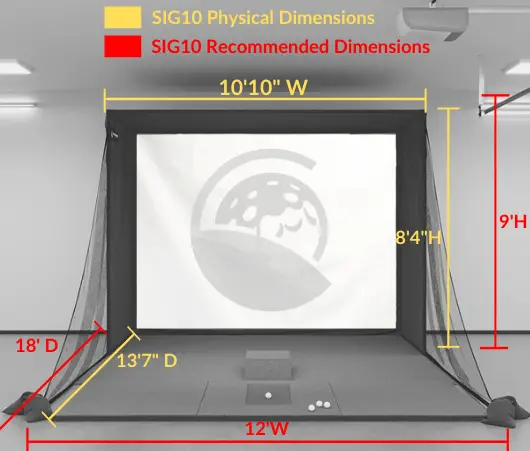
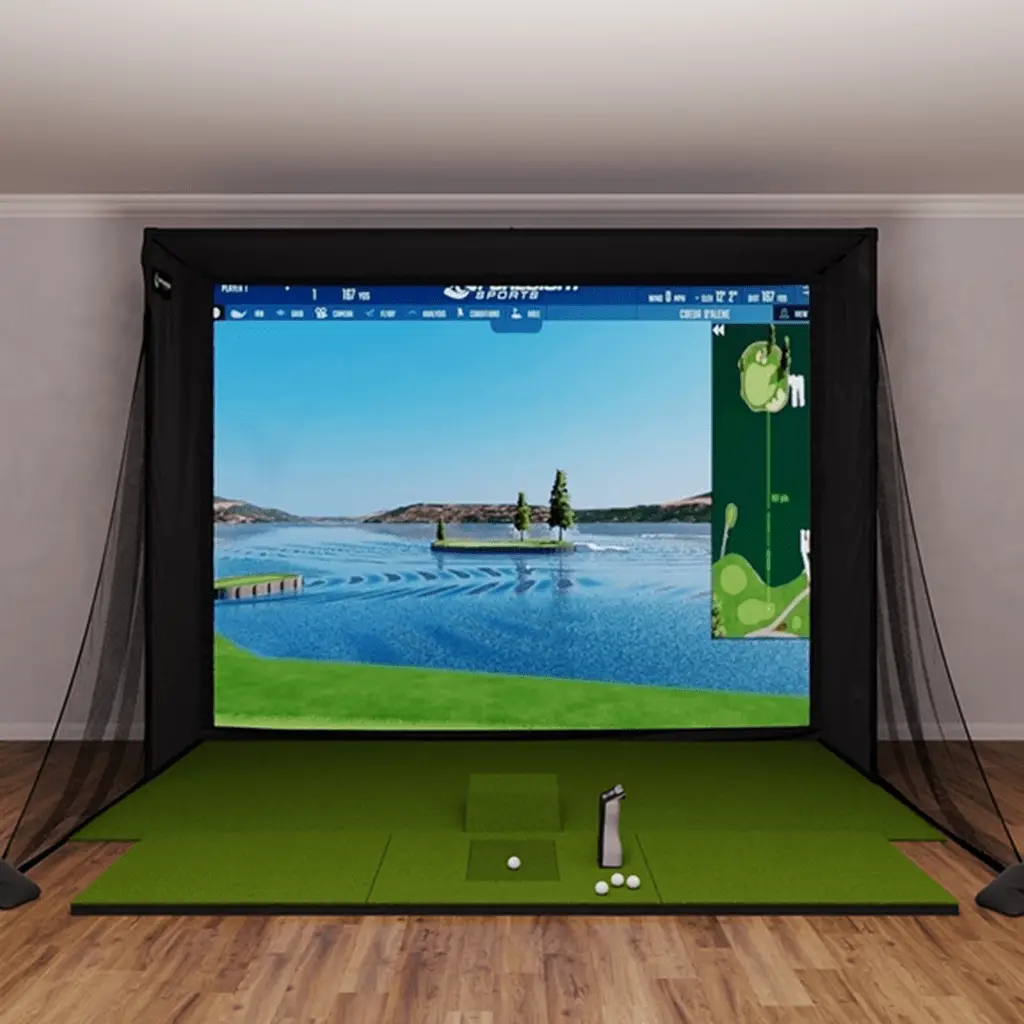
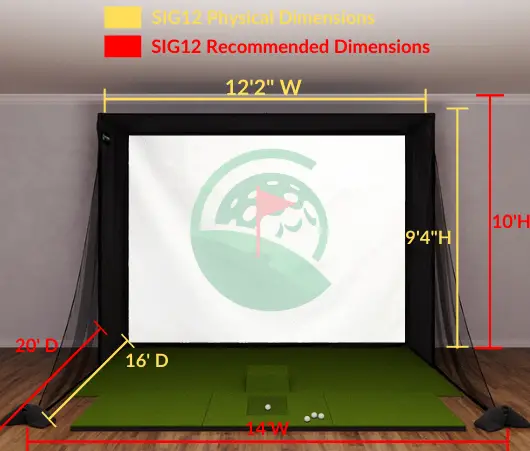
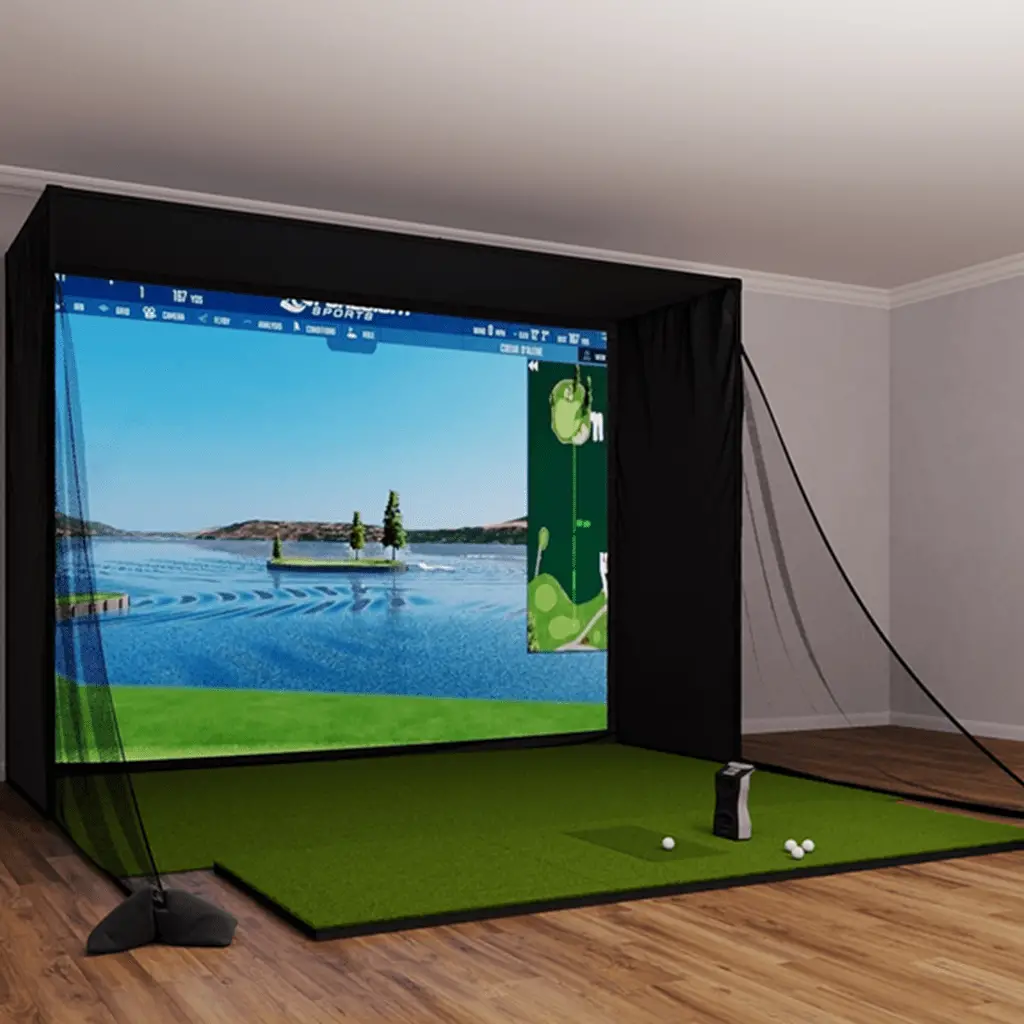
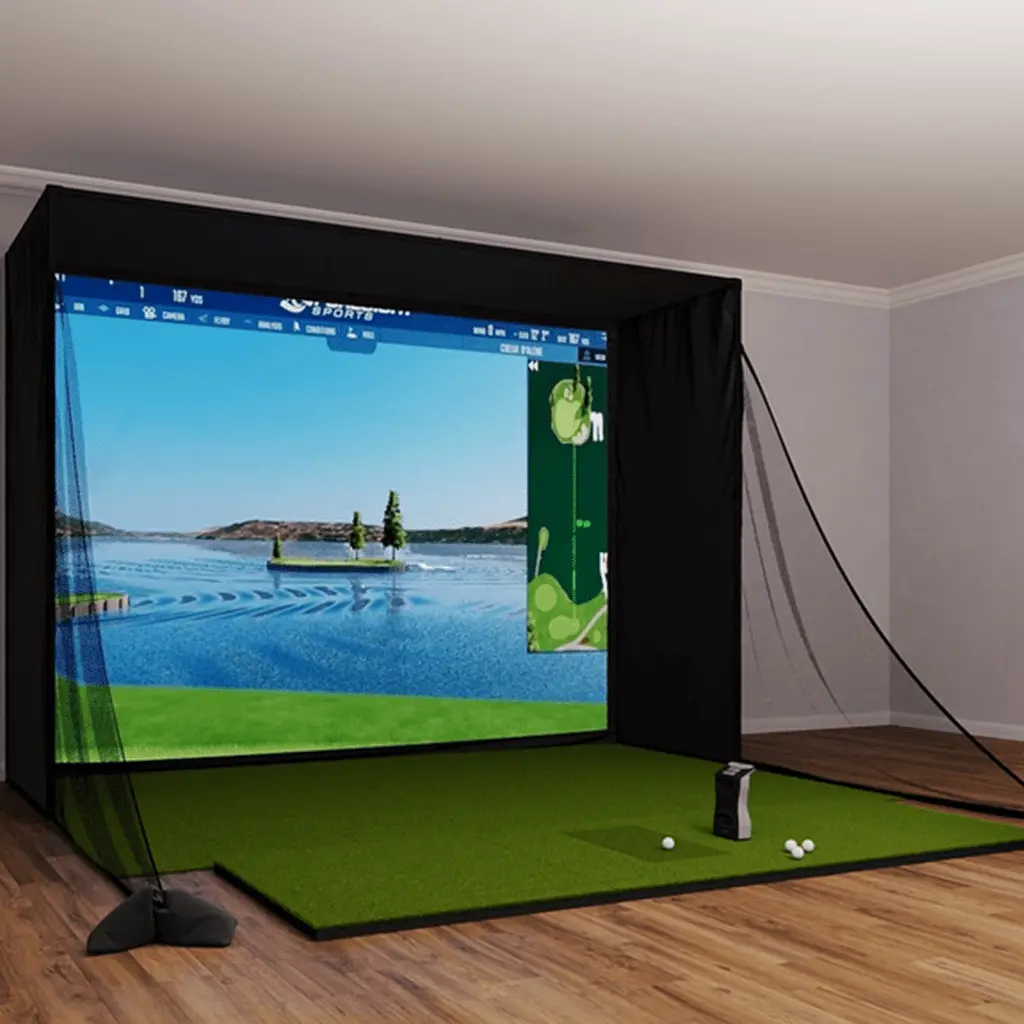
Foresight GCQuad SIG10 package · GCQuad SIG12 package
GCQuad vs Trackman 4 on space
The instructive contrast at the top of the market — camera beside the ball versus radar behind it:
| GCQuad | Trackman 4 | |
|---|---|---|
| Technology | Photometric cameras, beside the ball | Doppler radar, behind the ball |
| Depth requirement | None from the unit — swing room sets the limit | 17ft minimum; 19–21ft optimal (7ft behind ball + 10–12ft to screen) |
| Unit placement | 22in to the side of the hitting zone | Several feet behind the golfer, clear view down the line |
| Room shape it wants | Any room you can swing in | A long room |
Both are portable and travel to the range happily; the full radar math lives at Trackman Space Requirements – Indoor and Outdoor, and the rest of the space family at Garmin R10 Space Requirements – Length, Width and Height and Uneekor QED Space Requirements.
GCQuad Space FAQs
What’s the minimum room for a GCQuad?
Roughly 12ft long × 10ft wide with a ceiling you can swing under — the unit itself needs only its 22 inches of side placement.
Will a GCQuad work under my 9-foot ceiling?
The GCQuad will — cameras don’t care. Whether you can swing a driver under 9ft depends on your height and swing plane; most golfers manage at 9–9.5ft. Test-swing first.
How far from the screen should I stand?
8–10ft by vendor convention; many camera-unit owners hit from 6–9ft happily once screen tension is tuned.
Does it work for left-handed golfers?
Yes — an electronic left/right toggle on the device. No repositioning between golfers, unlike physically-moved floor cameras.
Can I use the GCQuad outside?
Yes — Foresight lists the GCQuad for indoor and outdoor use. Keep the same 22-inch placement, level with the hitting surface; no extra space specs apply.
Does the QuadMAX need a different room?
No — identical placement geometry and strike zones. The differences are price and club data, not space.
However you cut the room math, the order of operations stands: measure, test-swing, and only then spend. At this price, the space check is the cheapest component in the build.
Bushnell Launch Pro vs SkyTrak ST MAX (2026)
Golf Simulator Packages vs Building Your Own: Which Is Better Value?
ABOUT THE AUTHOR
Hello! My name is Alex and it is my mission to bring you all the information you need to build your own home golf simulator! I hope mygolfsimulator.com helps you on your journey to better golf at home!
LEGAL INFORMATION
On this site, you'll find articles on all aspects of building a golf simulator. I will also link to other sites where you can buy some of the simulator components. Some of these links may be affiliate links, which means if you click them I gain a small commission at no extra cost to you. This really helps out me and my site so thank you in advance! mygolfsimulator.com and all related social media accounts are property of Awonline LTD.