Uneekor EYE XO Space Requirements
Posted in Launch Monitors, Room Setup
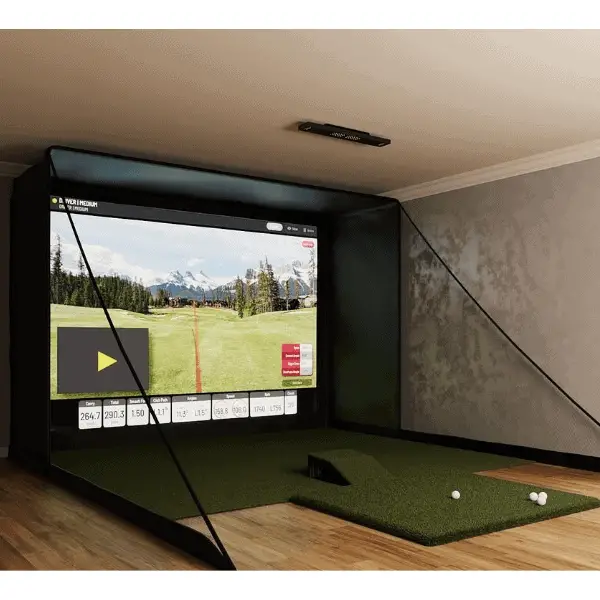
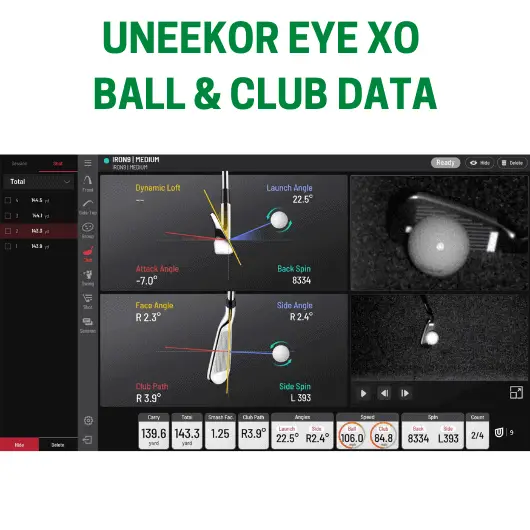
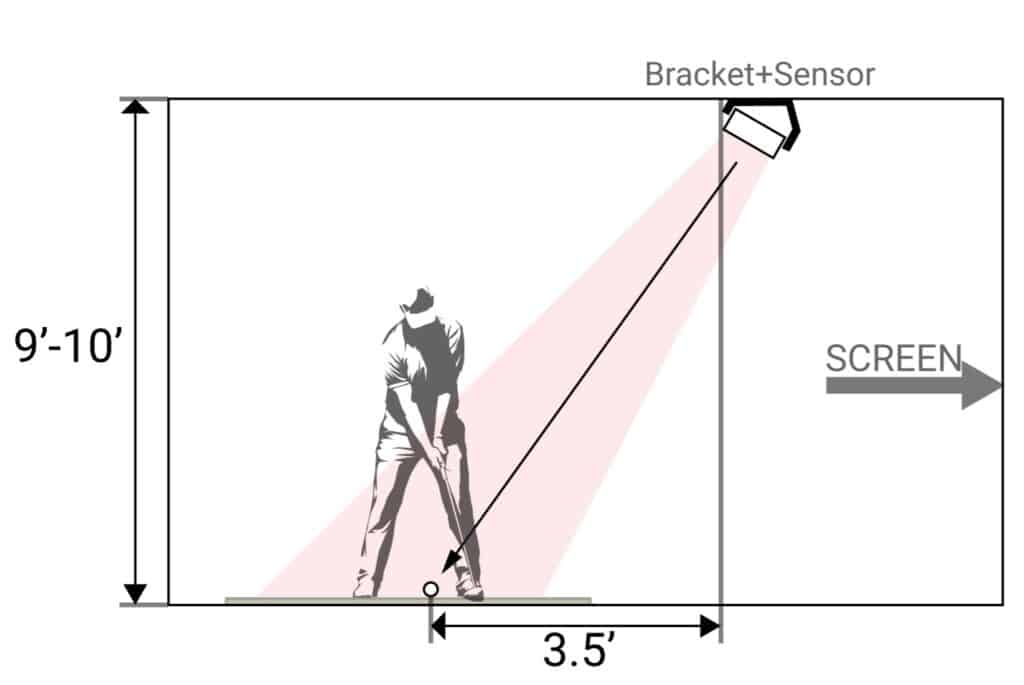
The numbers first: the EYE XO mounts overhead at 9–10ft, positioned 3.5ft in front of the tee (measured from the device, not the bracket), and the manual asks for 13ft of room width minimum — 15ft for golfers over 6ft — with 9–10ft from tee to screen. Uneekor’s own recommendation, on its product page (21 October 2026), is a room at least 13ft wide × 16ft deep × 10ft high. Owners report 9ft ceilings working, but 9ft is the bottom of the sensor’s mount band, not Uneekor’s room minimum. And a note on depth: owners’ installs run tighter than the manual’s tee-to-screen numbers and still land at about 16ft long — that gap between paper and practice is what this guide maps. Jump to: mounting · width · depth · ceilings · FAQ.
In a Nutshell
Uneekor recommends a room at least 13ft wide, 16ft deep and 10ft high for the EYE XO (15ft wide for golfers over 6ft or a lefty/righty household); the sensor mounts overhead 9–10ft up, 3.5ft in front of the tee, measured from the device. The manual’s tee-to-screen band is 9–10ft, and owners report 8–10ft working, and 9ft ceilings as tight but workable.
👉 Uneekor recommends a room at least 13ft wide, 16ft deep and 10ft high; the sensor itself mounts 9–10ft up, and owners report 9ft ceilings as tight but workable — real installs run tighter than the paper numbers suggest.
| Dimension | Manual figure | Working reality |
|---|---|---|
| Mount height | 9–10ft (hard band) | Owners report 9ft ceilings tight but workable (Uneekor’s room recommendation is 10ft high); drop mount for taller ceilings |
| Device position | 3.5ft in front of tee, from the device | The classic install mistake is measuring from the bracket |
| Room width | 13ft min · 15ft over 6ft tall | Under 13ft forces an offset hitting position (6 owners) |
| Tee to screen | 9–10ft | Owners run 8–10ft; one installer’s working build sits at ~8ft |
| Room length | 16ft deep per Uneekor’s product page (13 × 16 × 10ft room, 21 October 2026); the manual gives only the 9–10ft mount band | ~16ft practical, from the depth chain below |
Jargon, once: overhead/photometric = camera unit mounted on the ceiling, watching the hitting zone from above. Tee-to-screen = ball position to impact screen distance. Drop mount = a bracket extension that lowers the unit into its required height band. Hitting zone = the area where the cameras track ball and club.
How this has changed
- Width corrected: the original version of this article said ~12ft; the manual’s figure is 13ft minimum swing area for left- and right-handers, 15ft recommended for golfers over 6ft. Manual precedence — the number here is now the manual’s.
- QED comparison corrected: the original said the QED mounts at 9–10.5ft. The QED manual’s figure is 9–10ft (manual-sourced via the QED fact brief, cross-referenced in this article’s own) — same band as the XO, different position (behind the tee, not in front).
- A third quiet correction: the original quoted a flat 10ft tee-to-screen recommendation; the manual actually gives a 9–10ft band, and this refresh uses the band throughout.
- Lineup moved: the XO now sells at $6,499 for the AI Studio bundle (struck from $9,878 on Uneekor’s US store, 21 October 2026; €8,325 net on the EU store) with Swing Optix cameras and a year of AI Trainer bundled. The XO2 sells alongside it. The rear-mounted EYE XR exists too, and owners steer each other away from it for one reason: “The XO being in front of the ball gives a much better perspective for the slo-mo impact video” — corroborated across two threads.
- Positioning context: among launch monitors generally, the XO still sits mid-pack for space appetite — more room than a beside-the-ball camera unit, far less than a radar unit needing ball flight.
- The tee-to-screen story matured: the author’s long-standing view that you don’t need the full 10ft is now corroborated working practice — details in the depth section, which is the reason to read this refresh.

Mounting: height, position, and the fine print
The height band is 9–10ft from floor to sensor, and the manual attaches real stakes to it: “Failure to meet these requirements will result in accuracy issues.” If your ceiling is taller than 10ft, a ceiling drop mount brings the unit down into range — the manual requires it but names no compatible product, so budget time to source one.
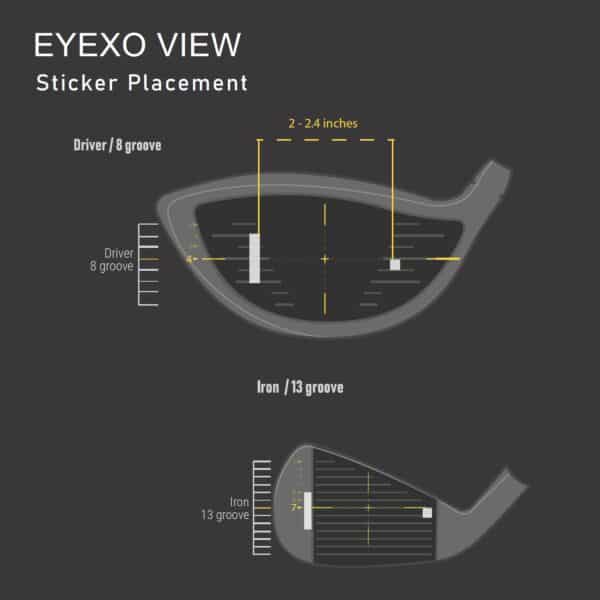
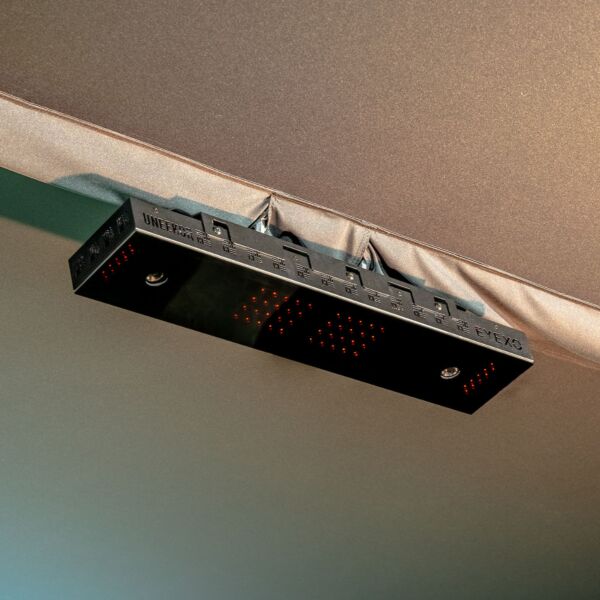
Position is where installs go wrong: 3.5ft in front of the tee, measured from the front/middle of the device — not the mounting bracket. The bracket ships attached; you detach it, measure from the device, mount the bracket flat with hinges facing down (longer hinge side toward the screen), and hang the sensor’s six pre-set screws into the hinge hooks. Tools: a ladder and a Phillips screwdriver. The unit is light — 5.8 lbs plus a 2.3 lb bracket — and angle fine-tuning is done by swapping to the High or Low screw set.
One acknowledged oddity, straight from the manual: its marketing pages call the XO a “front-mounted design” while its own spec table says “Rear Mounted.” Three data points, no clean winner — the sensor faces the ball from in front of the hitting zone while mounting overhead toward the rear of the room’s flight line. Neither label alone captures it — it mounts overhead, in front of the hitting zone, regardless of which word you use.
One fresh mounting question worth knowing about: a shop owner with C-purlin steel beams at a 12.5ft peak asked how to hang an XO from them and got no confirmed answer — one commenter suggested spanning a 2×4 between the channels. If your structure is anything unusual, that’s a get-an-installer case. For conventional ceilings, owners’ standing advice is to anchor the bracket into joists, not drywall alone (2 owners) — the multi-slot bracket makes catching two joists straightforward.
Width: the corrected number
The manual asks for a 13ft minimum swing area covering both left- and right-handed play, and recommends 15ft for golfers over 6ft. The author’s own recommendation has always sat at the upper figure: “I recommend at least 15ft of room width to enjoy a seamless simulator experience.” The manual’s tall-golfer figure has effectively converged on it.
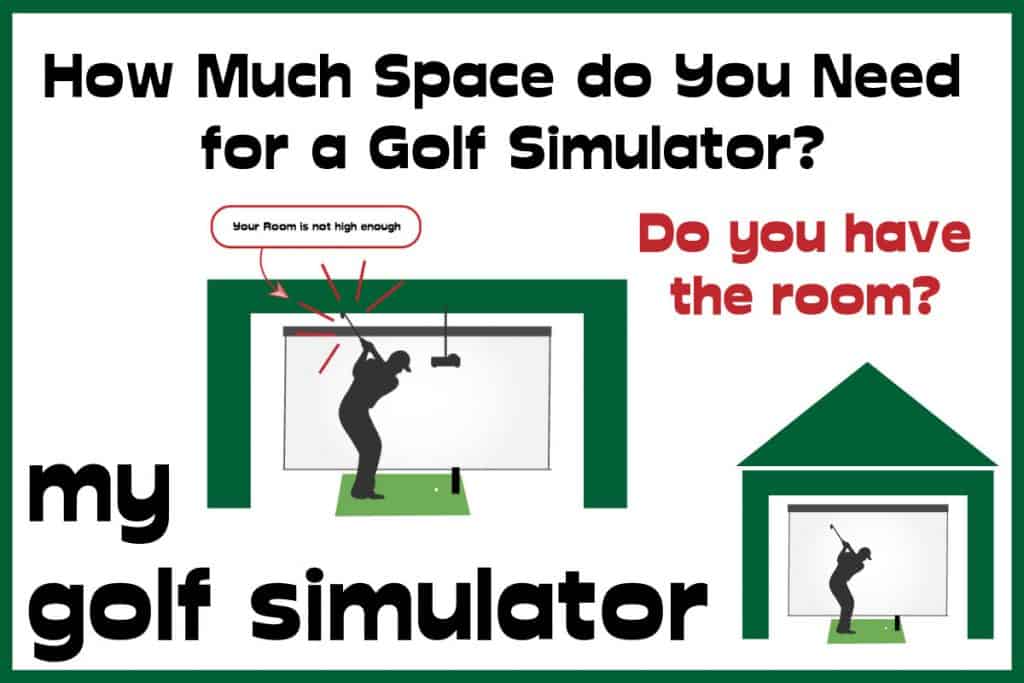
Why 15ft? The author’s original reasoning still holds, built around one idea — a central aim point that serves everyone in the household. First, what the width buys: “You’ll find rooms 15ft or wider allow you to: Address the ball with your target line aimed at the center of the screen. Accommodate left handed golfers as well as right handers. Swing freely without fear of hitting the wall. Have room for extra swing cameras and accessories”.
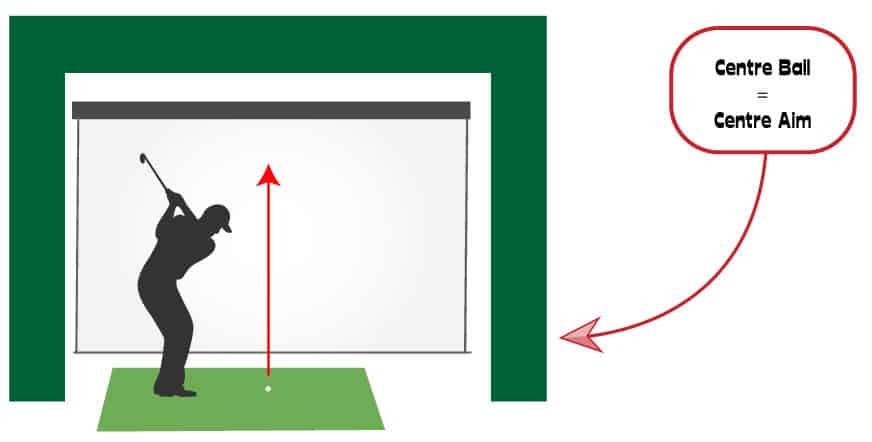
And the dual-handed logic in full: “You will also have to be mindful that the EYE XO and your projector are appropriately placed when considering right and left handed use. I recommend always aiming for a central aim point if you have the space. This way both left and right handed golfers will have a target line aimed at the center of your impact screen. This requires a good amount of room width. Both golfers would have to address the ball and make a full swing with no fear of hitting the walls. You’re going to need at least 15ft of room width for this.”
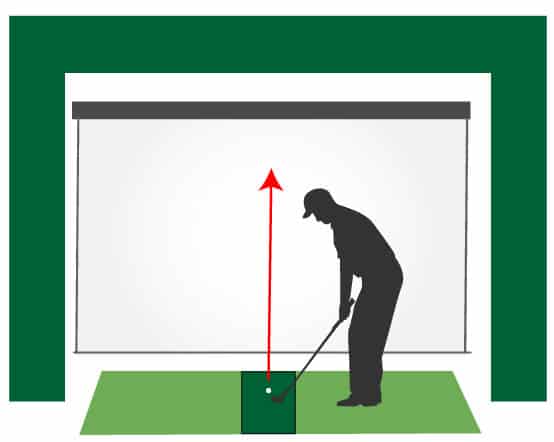
Community measuring practice backs the caution: side-wall clearance needs to roughly match your vertical clearance at a 45-degree swing plane, or the driver head finds the wall on the backswing (6 comments, 4 owners).
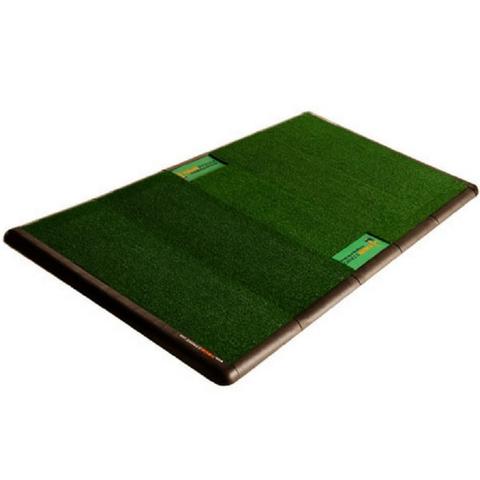
If your room is under 13ft: Uneekor’s own recommendation is a room 13ft wide × 16ft deep × 10ft high, but owners report it’s been done narrower, with a known cost. Owners in narrow rooms hit from an offset position rather than true center to keep clearance — and some argue the unit isn’t worth it below that width (6 owners). For dual-handed households specifically, the author’s mat pick remains: “Golfers who need to cater for both lefties and righties in their EYE XO simulators should definitely look at the TrueStrike Academy Mat. This premium mat features two stance areas either side of a central hitting portion. Your target line will therefore line up with both the center of the impact screen and the center of the Uneekor EYE XO sensor.” TrueStrike Academy Mat
Depth and tee-to-screen: paper vs practice
The manual band is 9–10ft from tee to screen. The record of actual installs says the band bends:
- The community treats roughly 8–10ft as a bounceback-safety convention, not an accuracy requirement (8 owners).
- XO owners specifically converge on 8–10ft, with one noting the camera loses sight of the ball about 4ft into flight anyway (5 owners).
- The radar-vs-camera divide is the mechanism: camera units like the XO let you stand closer; radar units are the ones that need ball flight (4 owners).
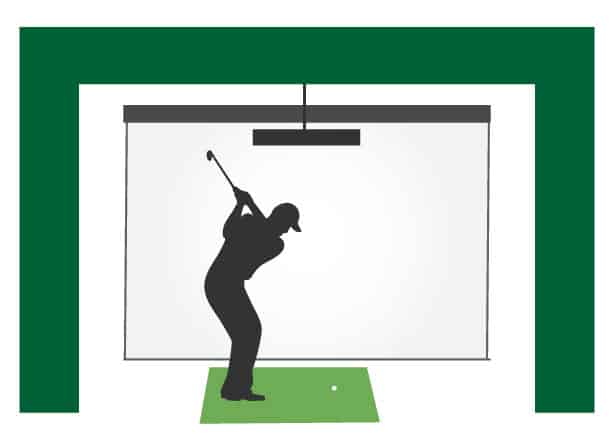
The author called this years ago, and the quote stays as written: “Many golfers use the Uneekor launch monitors in smaller spaces with success. The EYE XO sits 3.5ft in front of the golfer and monitors the hitting area and initial launch window as in the diagram below. I don’t believe you need the full 10ft of recommended tee to screen distance and I suspect the longer distance is due to safety and bounceback concerns.”
That opinion is now a corroborated working practice. A working installer posted a live EYE XO build this July and answered the space questions directly: ceiling “roughly 10’3′”; hitting area to screen “About 8′. It’s definitely tight, but the back wall forces us in such a position. Client opted for no overhead protection for aesthetic reasons.” And the honest caveat, in his own words: “No lefties and not a deep room. This was built specifically for the golfer and there was no worry about it being accessible for other players.” One installer, one build — but a real one, running at the exact numbers the paper band excludes.
Behind you, the author’s guidance: “You will need about 5-6ft of room behind your hitting position to accommodate your swing laterally and ensure you have enough space to place any chairs, cameras, and computers.”
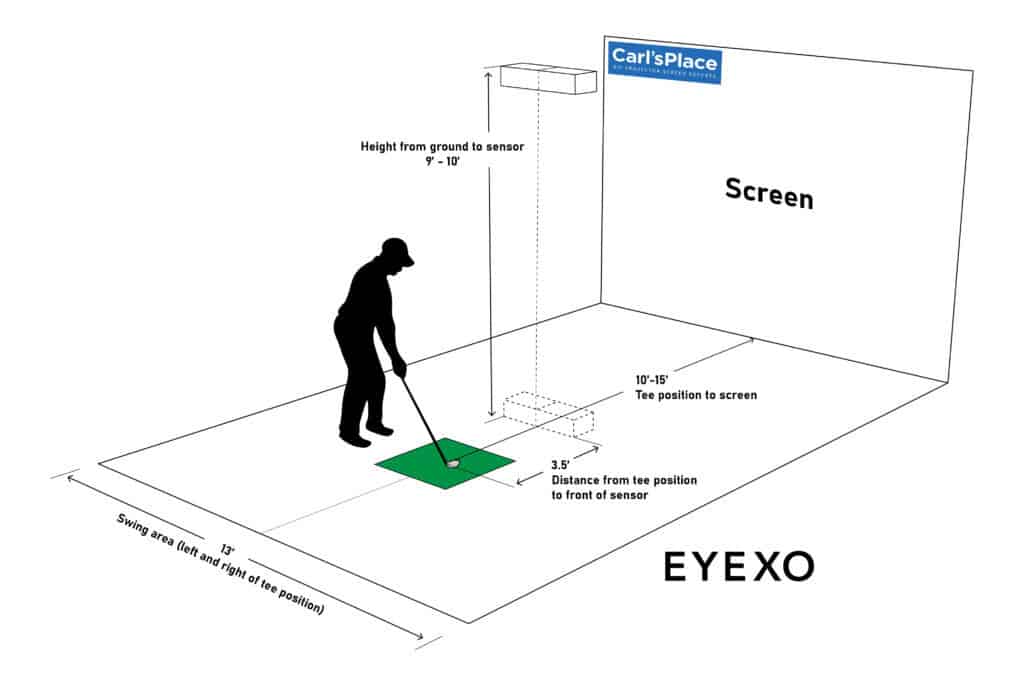

The full depth chain, one leg at a time:
- 3.5ft device offset — sits inside your tee-to-screen run, not in addition to it.
- 8–10ft tee-to-screen, per the working practice above.
- Stance room plus 5–6ft behind the hitting position.
- ~12in behind the screen (community convention — not manufacturer-specified).
- Total: the ~16ft practical room length this article has always used.
Two cautions from the record, one at a time. Enclosure depth compounds everything — clearance behind screen, behind mat, and to side walls budget together (6 comments, 4 owners). And if you run the short end, manage bounceback by loosening screen tension and testing your distance empirically rather than trusting one number (5 owners).
One more truth about tee-to-screen distance worth naming: high wedges and flop shots are the anxiety case at any distance — the single best-supported worry in the record (8 owners) — which is why tension tuning and overhead protection matter more than chasing an extra foot.
Ceiling height reality check
- 9–10ft is the community consensus band for comfortable driver swings (14 comments, 11 owners) — the same number as the manual’s mount-height band, though that band is a different constraint (sensor placement, not swing clearance). Uneekor’s own room recommendation is 10ft high.
- Around 10’4″, general overhead-unit threads call it “kinda rough for an overhead setup” — corroborated, though those threads aren’t XO-specific.
- The constraint is real enough to drive downgrades: one owner listed his XO for sale this July at $6,500 — “Going to do a mini since I have shorter ceilings which it still works well just want one I can take outside also.”
- For the full height-by-golfer picture: What’s the Minimum Golf Simulator Ceiling Height?.
The enclosure question
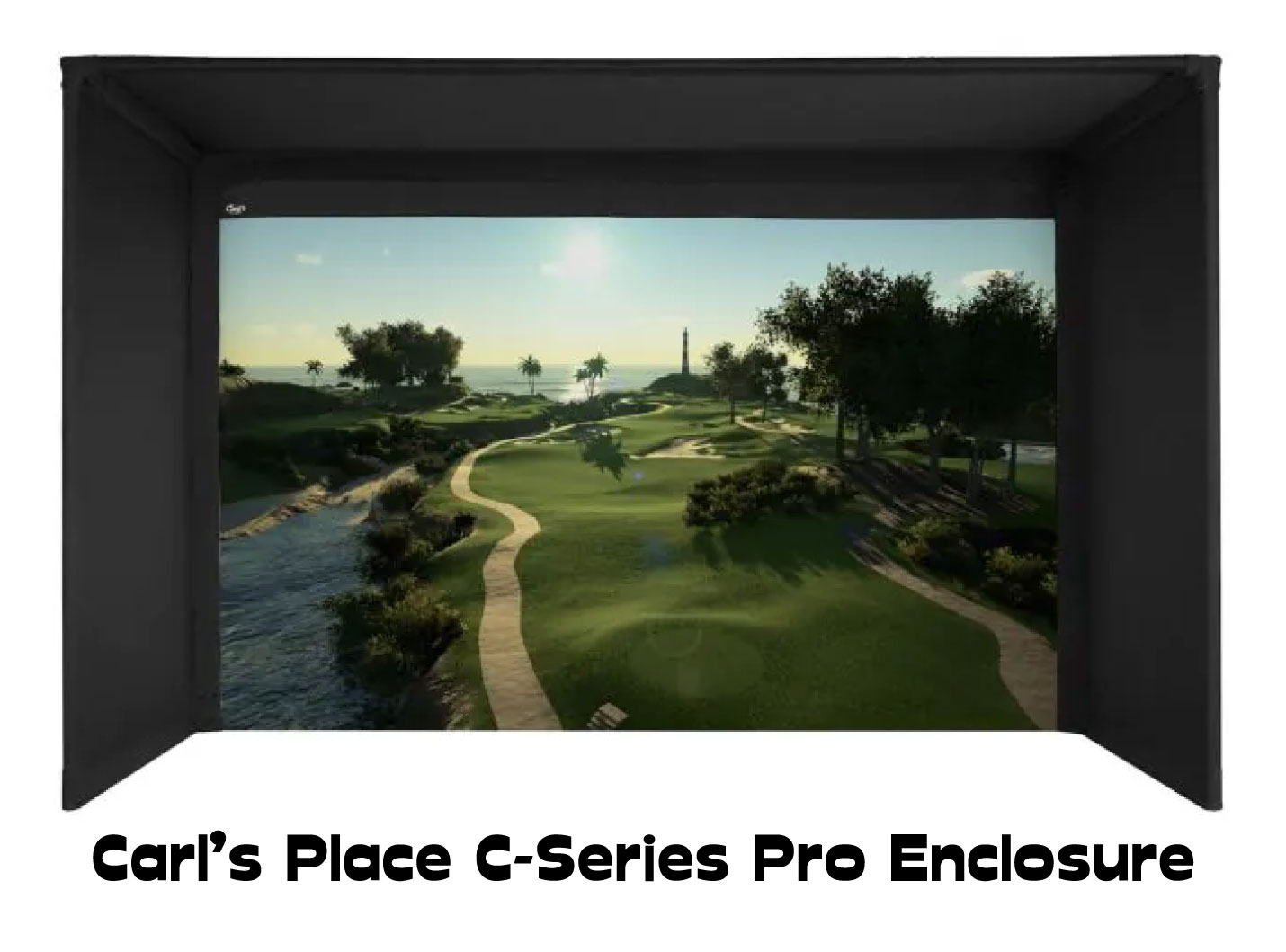
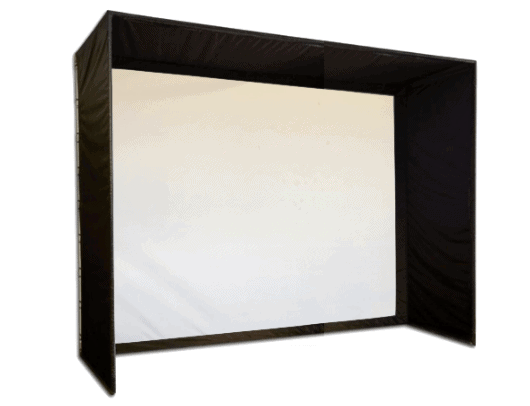
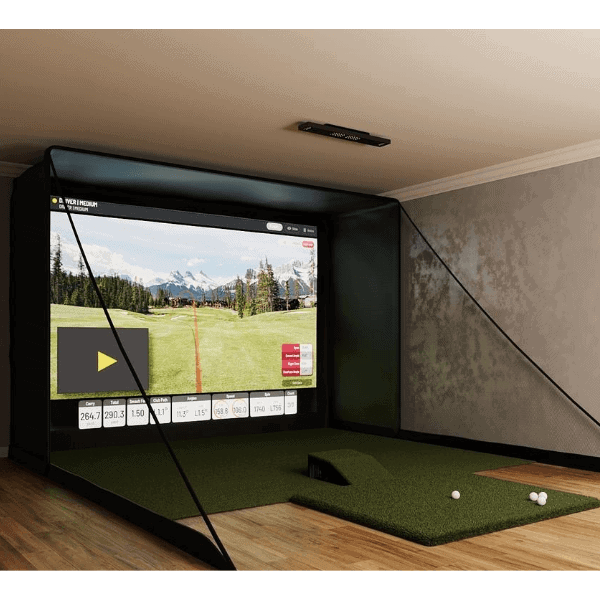
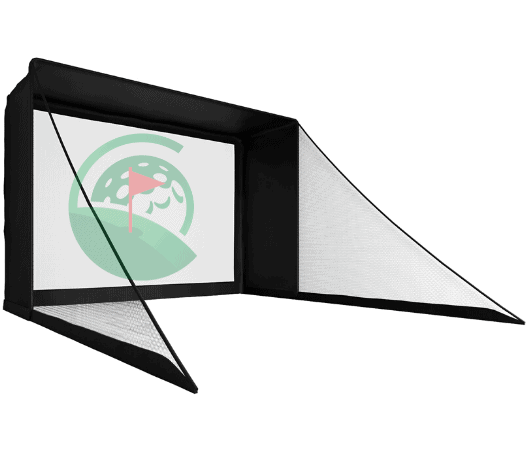
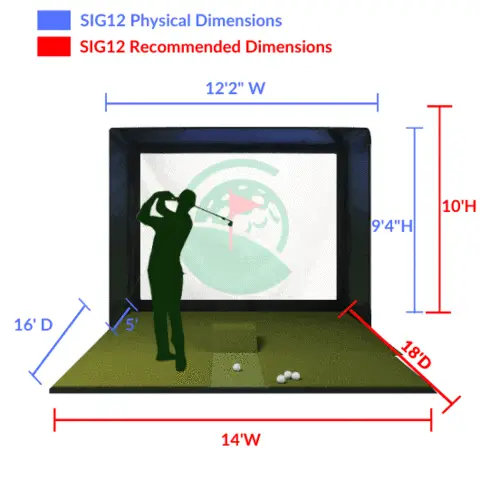
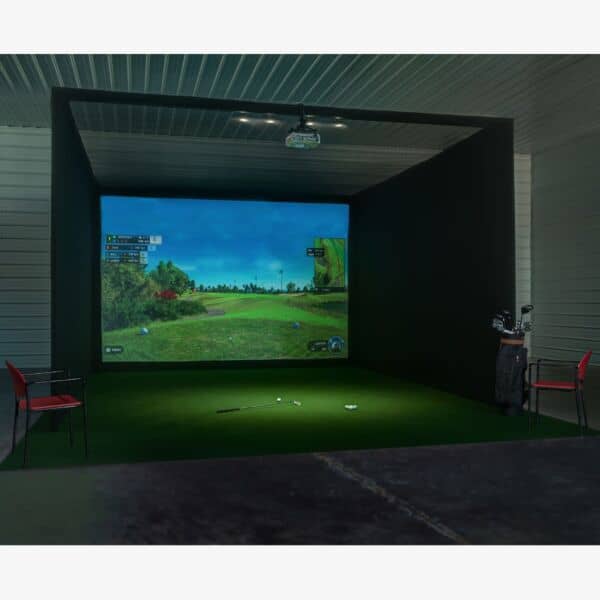
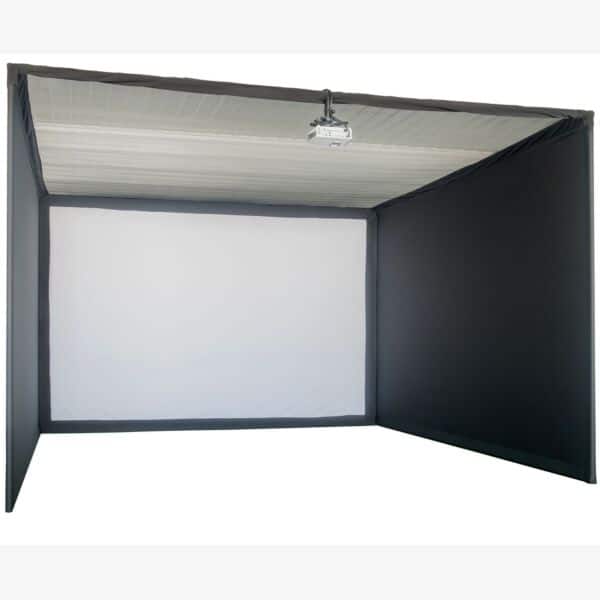
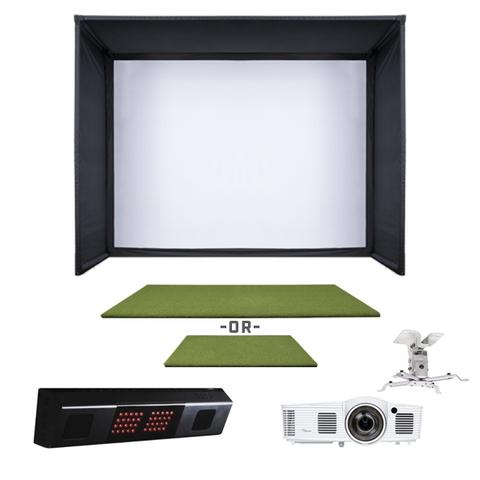
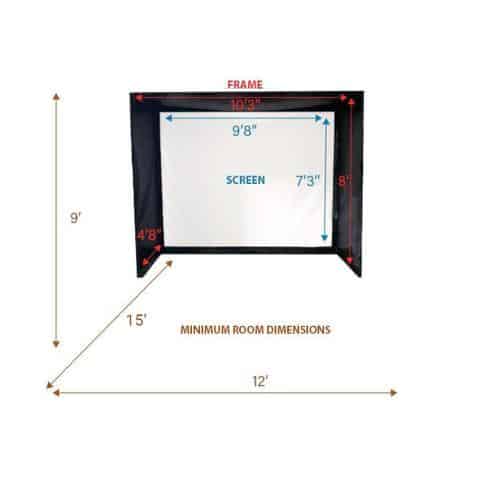
An enclosure’s exterior dimensions add to every room minimum above. The original’s SIG package figures, kept as illustrative match-ups (current SIG specs unconfirmed at time of writing — sizing logic, not a quote):
| Package | Enclosure (L × W × H) | Recommended room |
|---|---|---|
| SIG 10 | 13’7″ × 10’10” × 8’4″ | 16 × 12 × 9ft |
| SIG 12 | 16′ × 12’2″ × 9’4″ | 18 × 14 × 10ft |
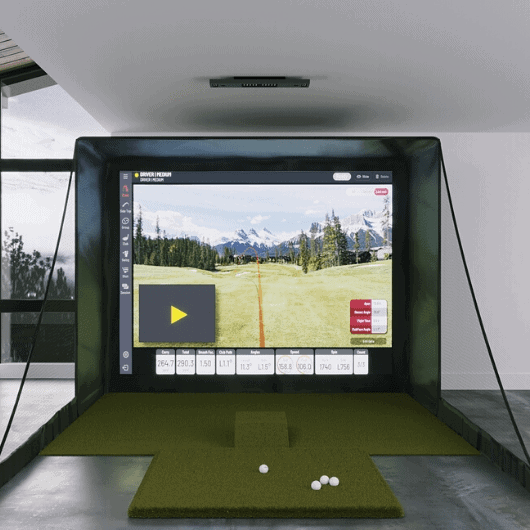
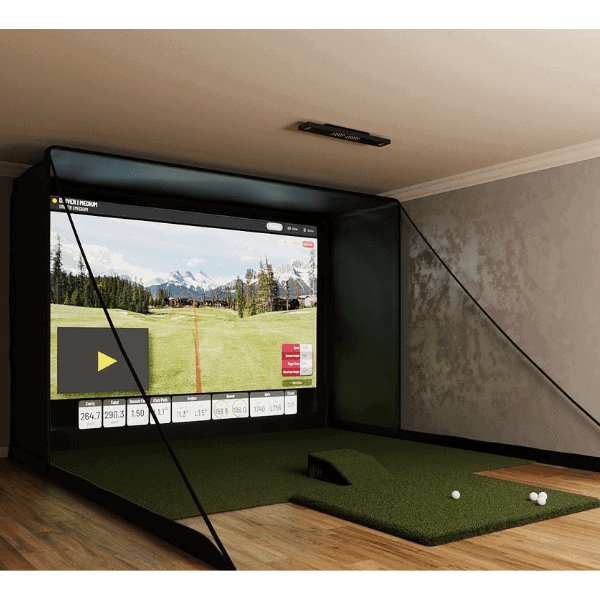
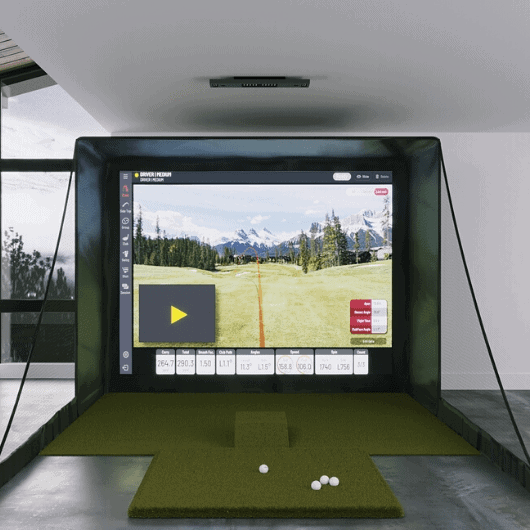

The general principle and the full space math live in How much space do you need for a Golf Simulator?.
Projector placement
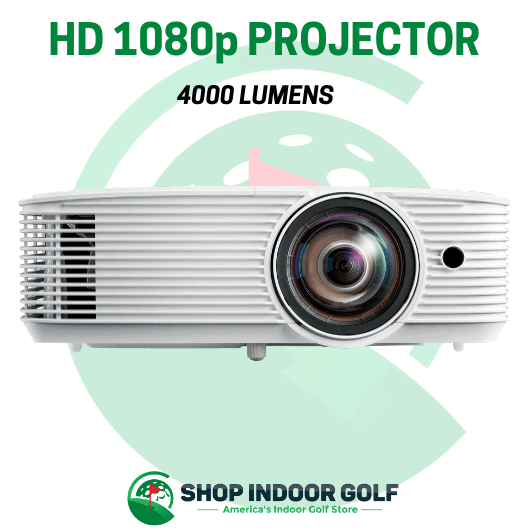
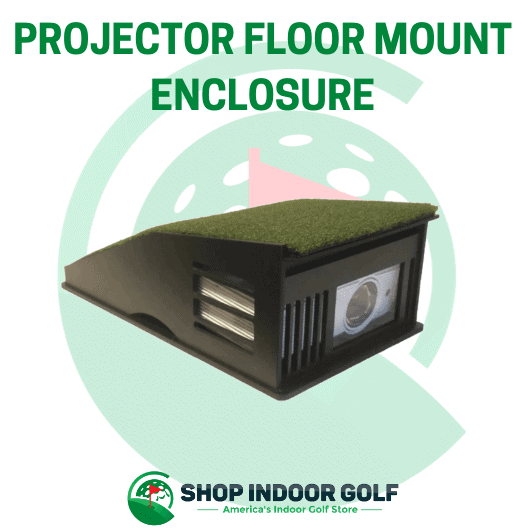
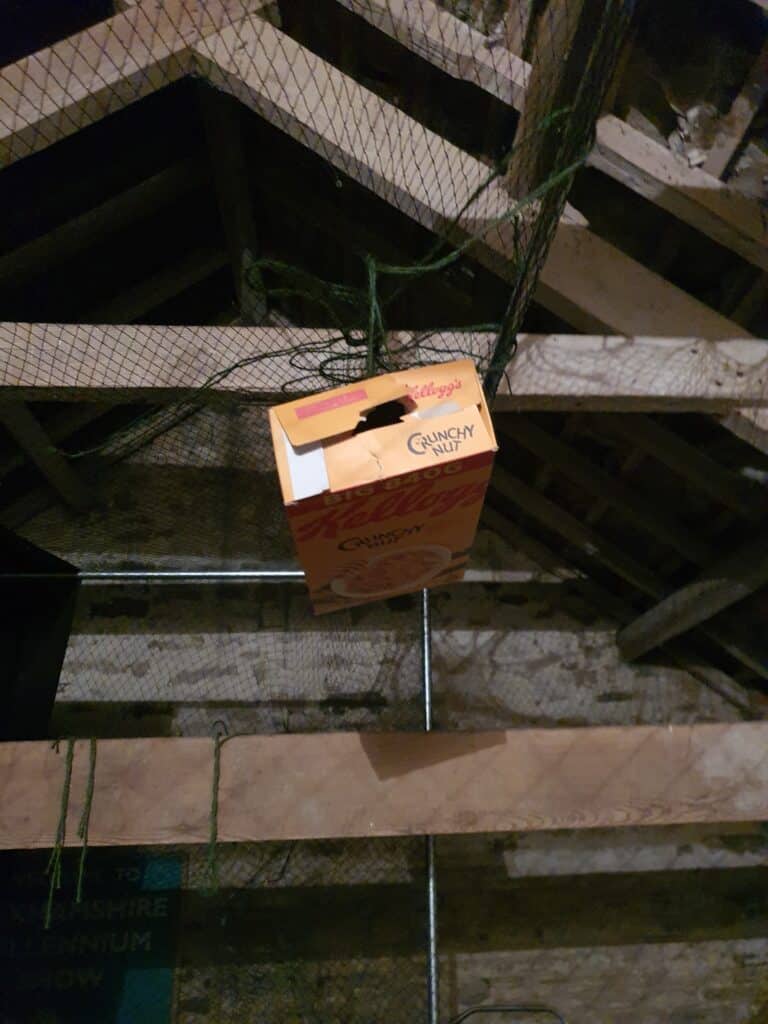
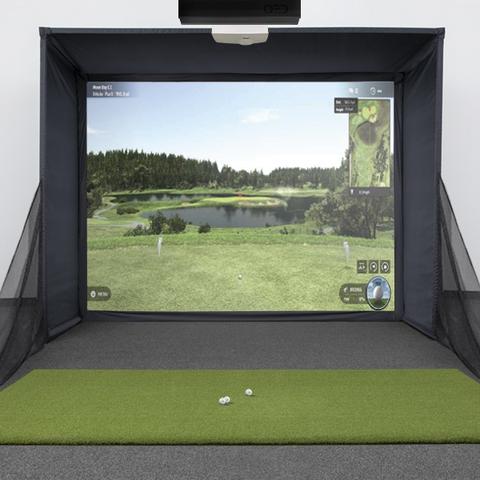
The XO occupies the front-overhead position a projector often wants — the same conflict the QED has. The standard answer is a short-throw unit (~0.49 throw ratio class) mounted where the XO isn’t. The author’s signature test for the nervous, in full: “However, I have researched this on forums and across the internet and most people found it to be less of an issue than they thought. Before you mount your EYE XO and projector, try fixing cardboard boxes to the place where they would go. Then try your best to hit them. Try a deliberate sky shot with an old driver and a tall tee. Hit the highest flop shot you can manage. See if it hits the boxes. If you can’t hit them even when trying then your confidence making swings with the real deal mounted will be sky-high. If you do manage to strike them then you can work on a protective cover for the projector. Making a protective cover for the EYE XO is harder as you have to allow the sensor to work. I have contacted Uneekor about projector positioning and will update this article when I hear back.”
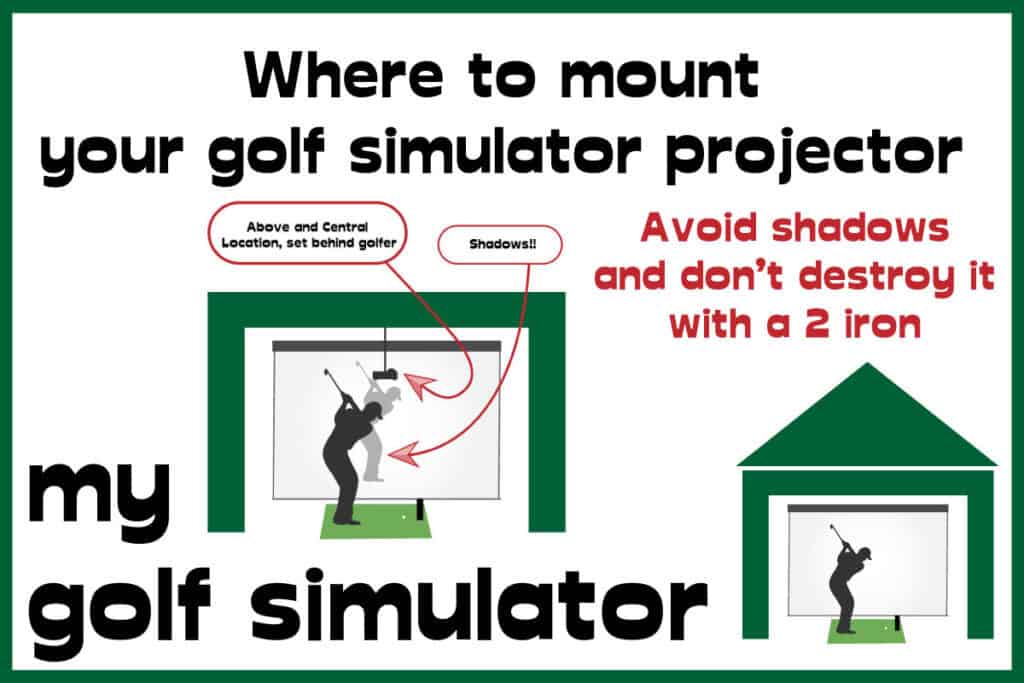
That closing line is historical — the update the author promised is, in effect, this refresh. Deeper placement math: Where to Mount your Golf Simulator Projector – Pitfalls + Example Placements.
Accessories and small-space wrinkles
- Swing Optix cameras (bundled in the AI Studio price): side camera at 5ft; the rear camera’s setback is shown in the manual’s diagram with no distance figure printed — an honest gap if you’re planning a spectator-side layout.
- Ethernet, directly: the box includes a USB Ethernet adapter, but the manual forbids connecting through a hub or adapter — LAN cable direct to the PC’s Ethernet port. Plan the cable run to your PC as a space item.
- One wry manual typo: the spec table cites “IEEE802.13bt” — the real standard is 802.3bt PoE++. Use the AC adapter and it never matters.
- If the room fails the tests above — 👉 the fallback ladder, in order: measure again with the offset-hitting compromise in mind → consider the QED (mounts behind the tee; same height band) → consider a portable camera unit for a hitting-bay-only setup → fix the room before the hardware. System requirements are their own gate too — the XO is PC-only over Ethernet Golf Simulator System Requirements in 2026 – Updated Reference Guide.
FAQ
Will it work at 8’6″?
No — 9–10ft is a hard band, and the drop mount only helps ceilings above 10ft. At 8’6″ the sensor can’t reach its required height.
How close can the screen be?
The manual says 9–10ft; owners run 8–10ft treating it as a bounceback question, and one installer’s working build sits at ~8ft (the depth section has the full record). What distance is “right” for a given room remains the community’s most-asked open question (6 owners) — tune tension, test, and err longer if you have the room.
How much total depth do I need — not just tee-to-screen?
About 16ft practical: 8–10ft tee-to-screen + stance + 5–6ft behind the hitting position + ~12in behind the screen. Owners repeatedly ask whether 16–18ft total works (3 owners): it does, and that’s the split.
XO or XO2 for a tight room?
The XO2’s documented figure is a 28in hitting zone against VTrack’s 24in and ProTee’s 21in — but that’s a tracking-window spec, not a room dimension. No public source compares XO-vs-XO2 room footprints. Same overhead-mount family, so expect a similar ballpark — exact figures aren’t independently documented.
Lefties and righties in one bay?
15ft width, a central aim point, and a dual-stance mat — see the width section.
Does the QED need the same space?
Same 9–10ft height band, opposite position — the QED mounts 3.5ft behind the tee (per its manual, cross-sourced in this article’s fact brief). Uneekor QED Accuracy – Data, Error Margins, Setup & More
Summary
| Number | Value |
|---|---|
| Mount height | 9–10ft, from floor to sensor |
| Device position | 3.5ft in front of tee, measured from the device |
| Width | 13ft minimum · 15ft for 6ft+ golfers or dual-handed play |
| Tee to screen | 9–10ft on paper · 8–10ft in practice |
| Room size | Uneekor recommends 13ft W × 16ft D × 10ft H · owners report 9ft ceilings (the mount band’s low end) as tight but workable |
| Price context | $6,499 AI Studio bundle (struck from $9,878; 21 October 2026) |
Measure from the device, anchor into joists, keep the aim point central if the width allows — and if your room only just clears the minimums, the record says you’re in better company than the manual suggests.
Bushnell Launch Pro vs SkyTrak ST MAX (2026)
Golf Simulator Packages vs Building Your Own: Which Is Better Value?
ABOUT THE AUTHOR
Hello! My name is Alex and it is my mission to bring you all the information you need to build your own home golf simulator! I hope mygolfsimulator.com helps you on your journey to better golf at home!
LEGAL INFORMATION
On this site, you'll find articles on all aspects of building a golf simulator. I will also link to other sites where you can buy some of the simulator components. Some of these links may be affiliate links, which means if you click them I gain a small commission at no extra cost to you. This really helps out me and my site so thank you in advance! mygolfsimulator.com and all related social media accounts are property of Awonline LTD.