Uneekor QED Space Requirements
Posted in Launch Monitors, Room Setup
The numbers first: 17 ft long × 12 ft wide × 9 ft high is the minimum room for a Uneekor QED, with the sensor mounted overhead 3.5 ft behind the ball at 9–10 ft of ceiling height. And the 2026 context that changes who’s reading: Uneekor has deprecated the QED, which makes this a used-buyer’s space guide now — the geometry below still decides whether a QED fits your room, and this refresh says honestly whether the space math still earns the buy. 👉 Quick Verdict.
In a Nutshell
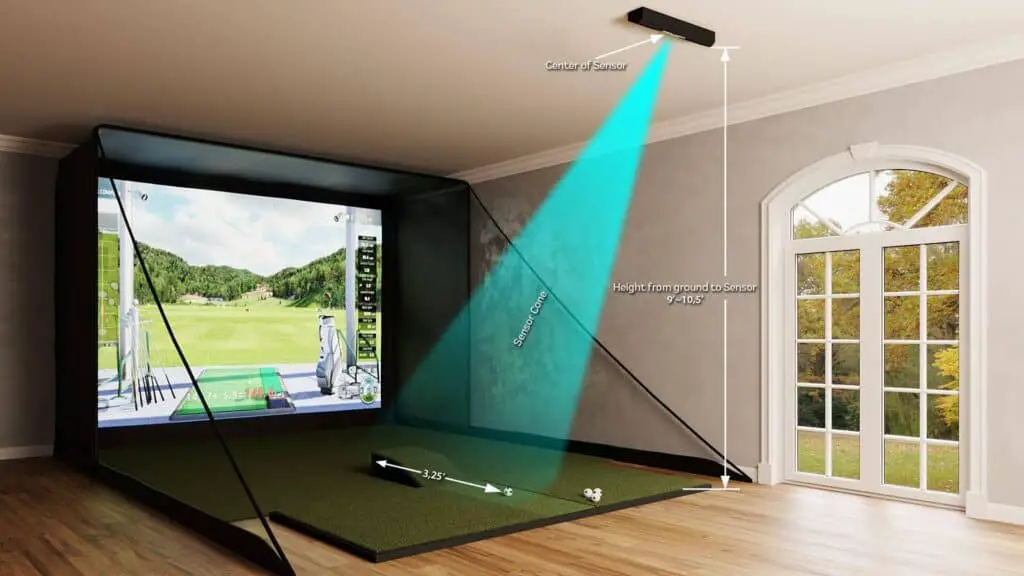
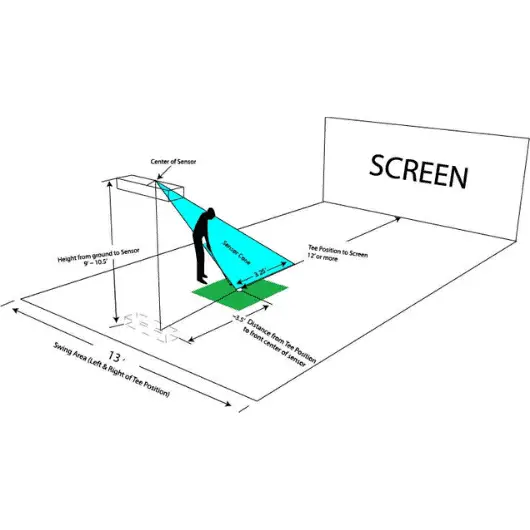
A Uneekor QED needs a room at least 17 ft long, 12 ft wide and 9 ft high, with the sensor mounted overhead 3.5 ft behind the center of the tee at 9–10 ft of ceiling height, and 15 ft of width if lefties and righties share it.
👉 If your room gives you 9–10 ft of ceiling and 17 ft of length, a QED fits. The question in 2026 isn’t space — it’s whether a deprecated, marked-ball unit at ~$1,900 used beats a current floor unit at similar all-in money. Both cases are below.
| Dimension | Figure | Note |
|---|---|---|
| Room minimum | 17 ft L × 12 ft W × 9 ft H | the working minimum |
| Mount height | 9–10 ft (to the sensor) | corrected — the QED manual’s band, not the 9–10.5 ft sometimes quoted |
| Mount position | 3.5 ft behind the center of the tee | measured from the sensor front — opposite convention to the EYE XO, which mounts in front |
| Out-of-band ceilings | no sanctioned fix | the QED manual documents no drop-mount accessory (unlike XR/XO/XO2) |
| Width | 12 ft workable; 15 ft comfortable | 15 ft is also the dual-handed figure |
Jargon, once: overhead/photometric = ceiling-mounted cameras reading the ball at impact. Marked balls = balls with drilled-in marker dots the QED needs to read. Mounting band = the ceiling-height range the sensor is calibrated for. Deprecation = the manufacturer ending a product’s support life.
How this has changed
- The QED is deprecated. Announced September 2025 — “with no advanced notice,” in the words of the one fresh community mention this summer — with a trade-in program attached (rebuilt in April 2026 as a flat $2,000 credit toward an EYE XR, XO or XO2 AI Studio bundle, for QED owners in the US and Canada). Uneekor’s own September-2025 support reply, quoted at the time: “the QED will keep functioning, however… No more technical support after December 31 2026.”
- The used market is live anyway: a $1,900 private-party QED weighed against a $2,500 refurbished Eye Mini in one July thread — with two independent voices converging on “avoid.” The full argument is in the verdict section.
- Two corrections to the original’s numbers, both per the QED’s own manual: the mounting band is 9–10 ft (not 9–10.5 ft), and there is no drop-mount accessory for out-of-band ceilings — the earlier suggestion that a too-tall ceiling could be solved by attaching the QED to a hanging mount doesn’t match the manual, which documents no such accessory for the QED (unlike the XR/XO/XO2).
- The running costs now carry a horizon: Uneekor’s third-party software tier at $199/yr plus GSPro’s $250/yr — the same figures from two unrelated owners posting roughly three months apart — is real money on a product line with a reported support end-date.
- It has left Uneekor’s own site: the QED’s product page, which once showed a broken Buy button, placeholder FAQ text and a $0 price, now redirects to the launch-monitor collection, and the collection lists no QED (checked 21 October 2026).
The room numbers
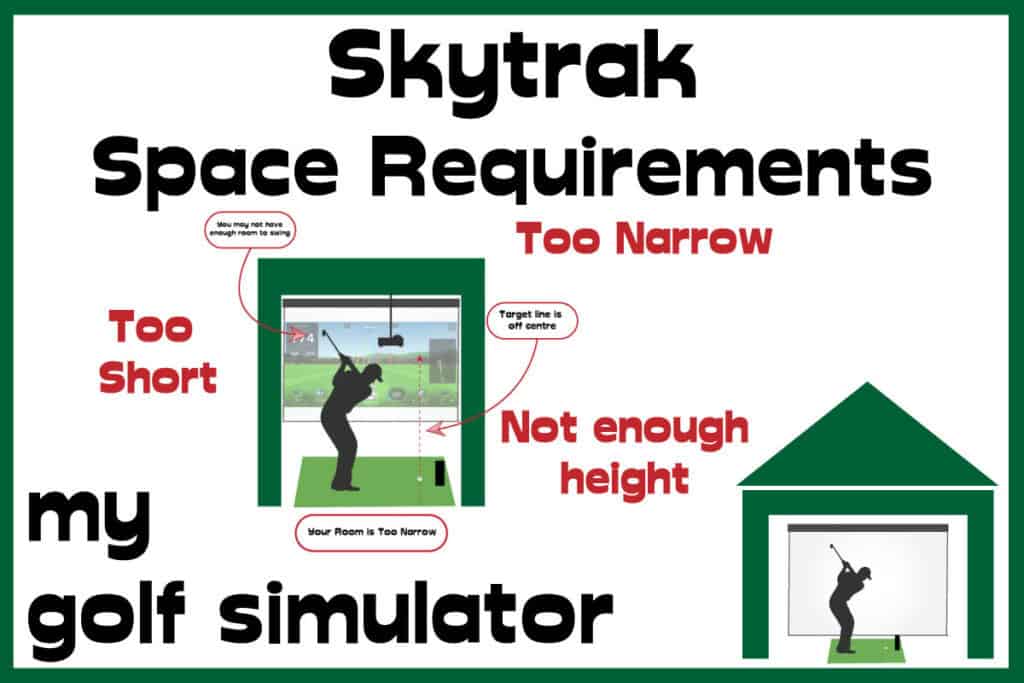
Room minimum: 17 ft long × 12 ft wide × 9 ft high. That’s the working minimum, and it still holds.
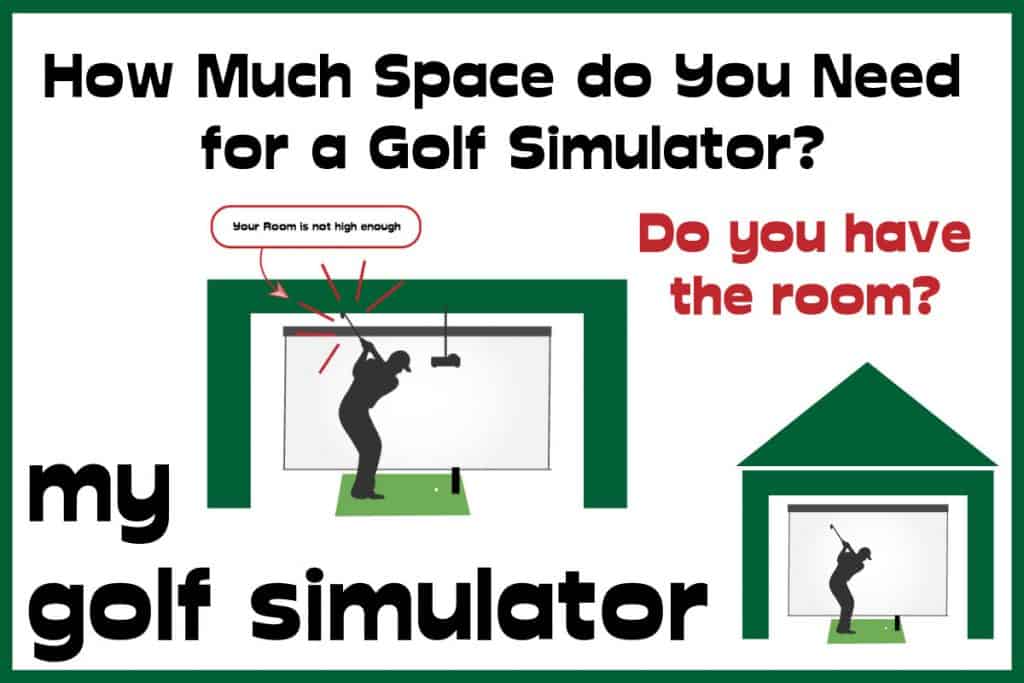
Mount height: 9–10 ft, measured to the sensor. This is the manual’s band — tighter than the 9–10.5 ft figure sometimes quoted, and the manual governs. The stakes are Uneekor’s own words: “The mounting position of the QED sensor must be perfectly aligned 3 feet 6 inches behind the center of your tee position and between 9-10 feet for the ceiling height. Failure to meet these requirements will result in accuracy issues.”
Position: 3.5 ft behind the center of the tee, measured from the sensor’s front — not the bracket. Note the direction: the QED hangs behind the ball, where its EYE XO sibling mounts in front. If your ceiling sits outside the 9–10 ft band, there’s no sanctioned workaround: the QED manual documents no drop-mount accessory, unlike the XR, XO, and XO2.
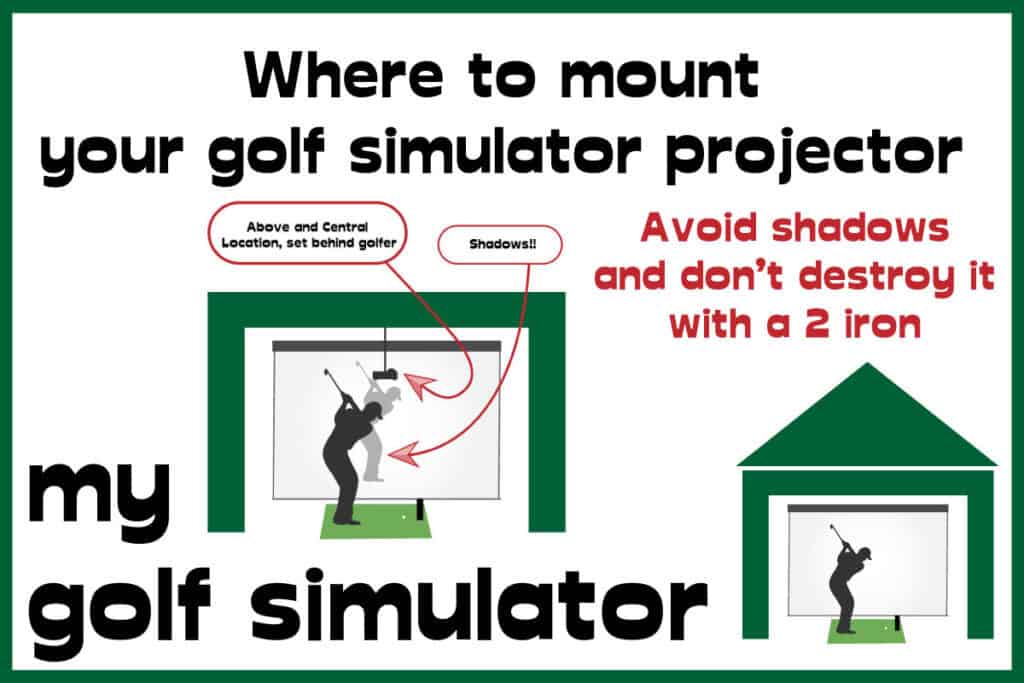
Projector coexistence: the QED’s rear-mount position generally keeps it clear of a ceiling-mounted projector, but the two do compete for the same stretch of ceiling — plan both mounts together rather than in sequence (a pairing owners have flagged). Full guidance: Where to Mount your Golf Simulator Projector – Pitfalls + Example Placements
Length: the 17 ft budget covers swing room behind the tee, ball flight to the screen, and the screen’s own standoff from the wall. The QED’s photometric design is an honest advantage here — camera units let you stand much closer to the screen than radar without losing accuracy, and owners hitting from as little as 6–9 ft report it working fine (14 owners, several finding the shorter distance more immersive).
The community’s 8–10 ft tee-to-screen convention is really a bounceback-safety norm rather than an accuracy requirement: rebounds off a tight screen at close range are the actual danger, and the standard fix is loosening screen tension and testing your own distance empirically. Two cautions from the record:
- Standing farther back doesn’t reliably reduce risk — shanks and skied wedges find the gaps around a screen that isn’t tall enough.
- High-lofted wedge shots are the anxiety case in otherwise comfortable rooms, several owners say.
However, if you’re working with a shorter distance and considering a Uneekor launch monitor please contact them directly . In 2026 that advice comes with an addendum: support for a deprecated line has a reported end-date — ask about that too before buying used.
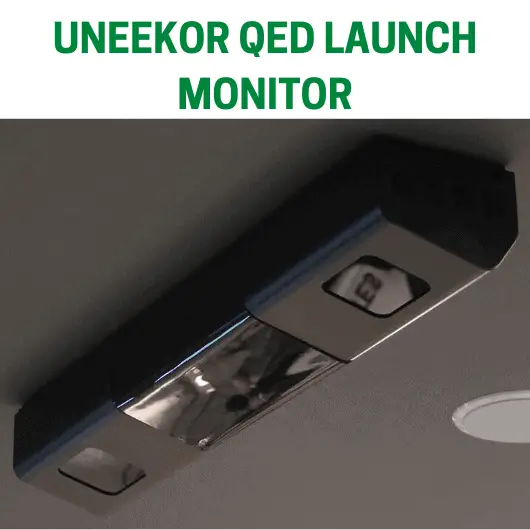
What’s actually on your ceiling: the QED bar is 31″ long × 6.5″ wide × 4.75″ high, shipped pre-assembled with its bracket. One tolerance worth knowing: the hitting zone can be moved within the calibration software’s bounded area, but if your mat position drifts outside that zone, the fix is a physical remount — another reason to mount the sensor before finalizing the mat.
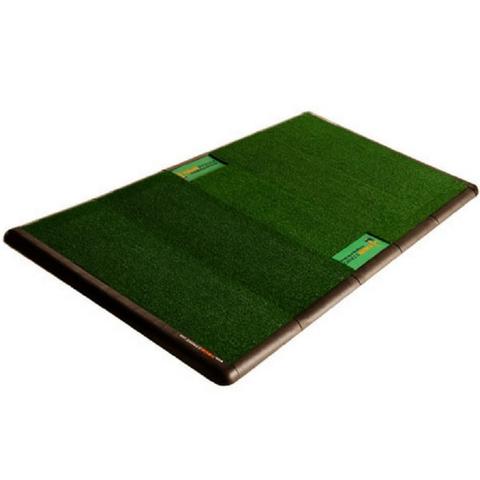
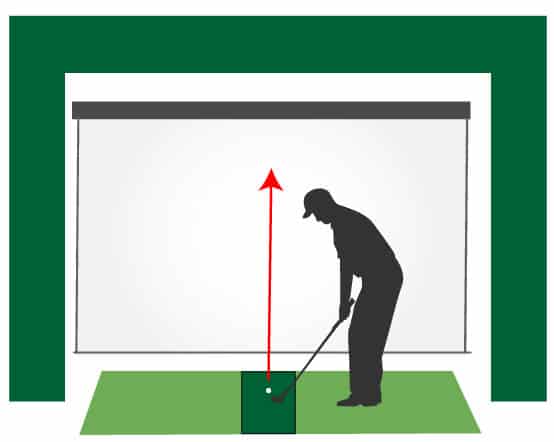
Width: 12 ft is workable. I usually recommend 15ft as a good width for a comfortable space to house a golf simulator and this is no different with the Uneekor launch monitors. For shared households: I recommend at least 15 ft in width for setup that accommodates righties and lefties, and that is using a mat with a central aim point. The TrueStrike Academy Mat (credited to Rain or Shine Golf in the original build guidance) remains the reference example of that central-aim mat class. Brand-level context from a fresh room-planner working an 11 ft room: “Uneekor says the room needs to be at least 13′ wide but it seems like this can work to me” — Uneekor’s stated 13 ft is for its overhead line generally, not the QED specifically.
Will you hit it with your swing?
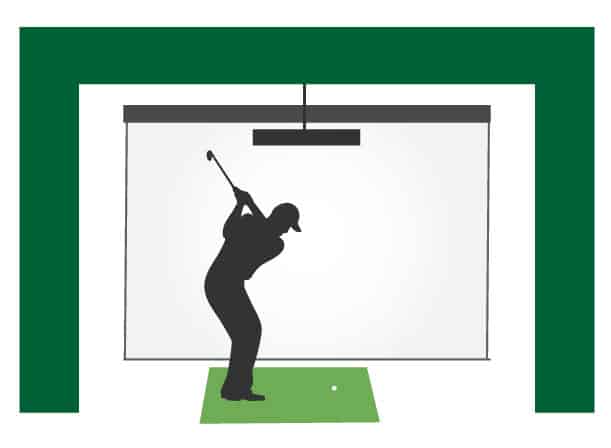
However, I recommend the same trick that I advise for checking projector positioning. That’s to use a dummy QED and see if you hit it with your longest club and wildest swing. A cardboard box taped at the exact mount position answers the question in five minutes.
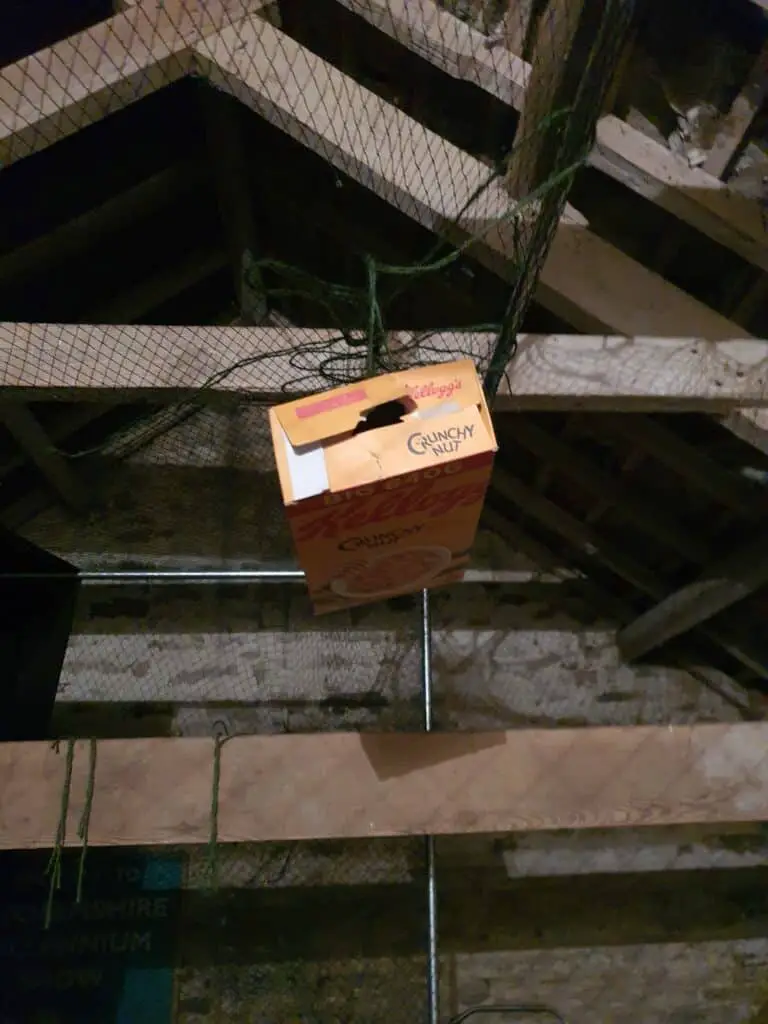
For installs outside the recommended envelope: I can not guarantee that there wouldn’t be problems with data accuracy (or hitting the unit with your swing). The QED manual’s own accuracy warning above says the same thing, in manufacturer language.
Enclosure and package sizing references
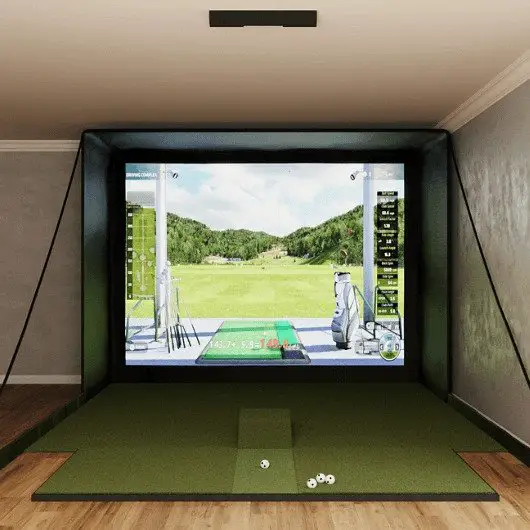
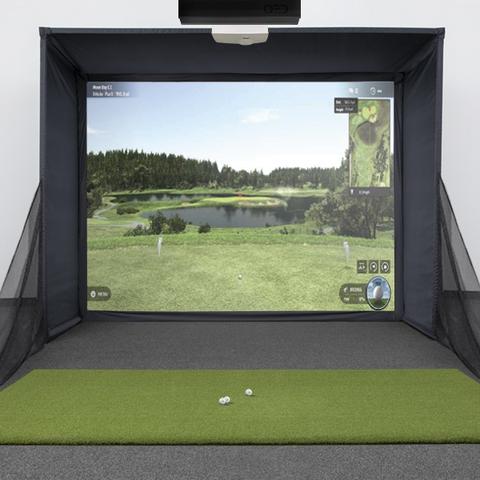
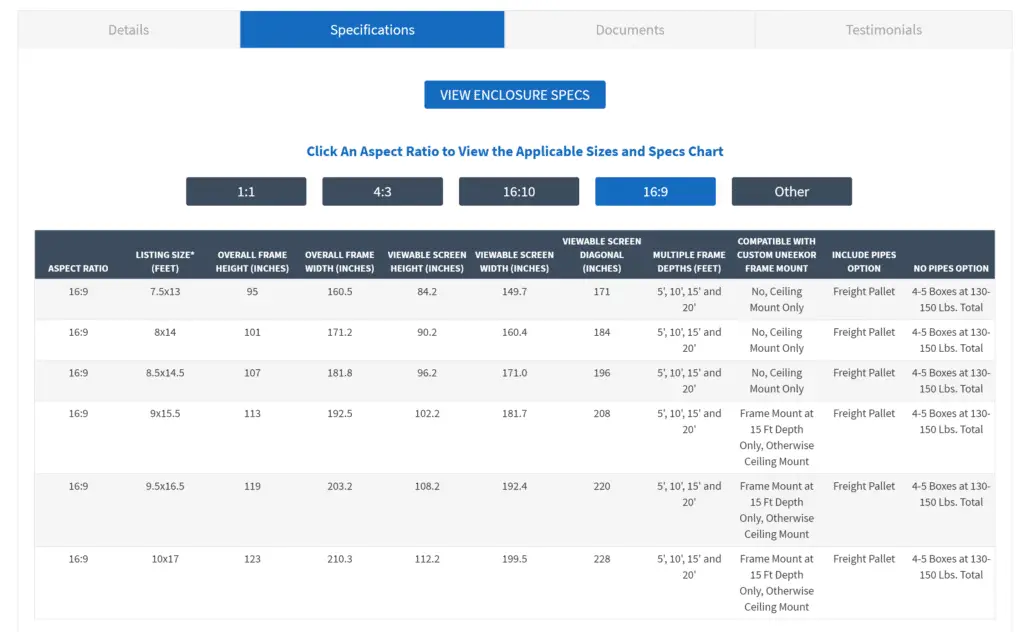
The retail packages built around the QED served as useful sizing logic, and their dimensions still do — though the QED package bundles have disappeared from retailer pages (Shop Indoor Golf’s and Rain or Shine Golf’s QED package links now redirect to EYE XR packages, checked 21 October 2026 — the dims remain useful sizing references):
| Package | Enclosure dimensions | Recommended room |
|---|---|---|
| SIG 10 (Shop Indoor Golf) | 13’7″ × 10’10” × 8’4″ | 18 × 12 × 9 ft |
| SIG 12 (Shop Indoor Golf) | 16′ × 12’2″ × 9’4″ | 20 × 14 × 10 ft |
| Swing Bay (Rain or Shine Golf) | — | 15 × 12 × 9 ft minimum |
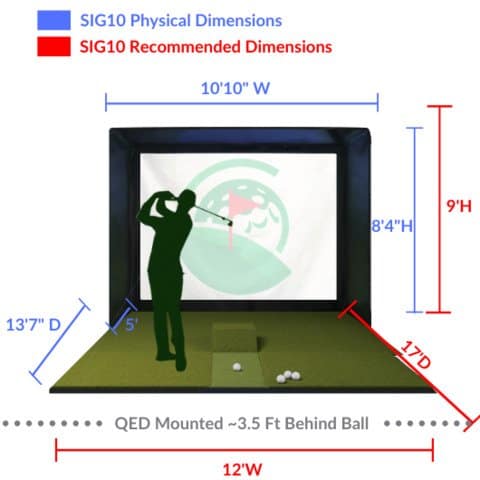
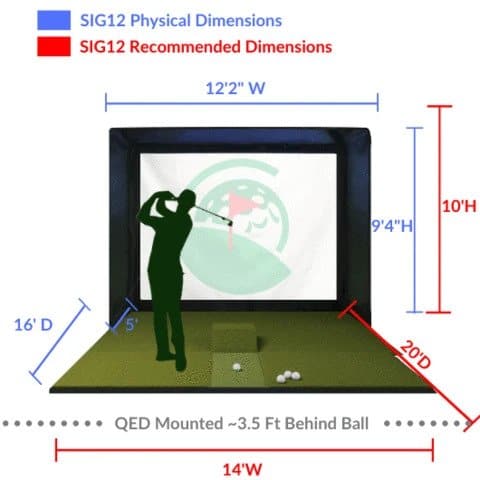
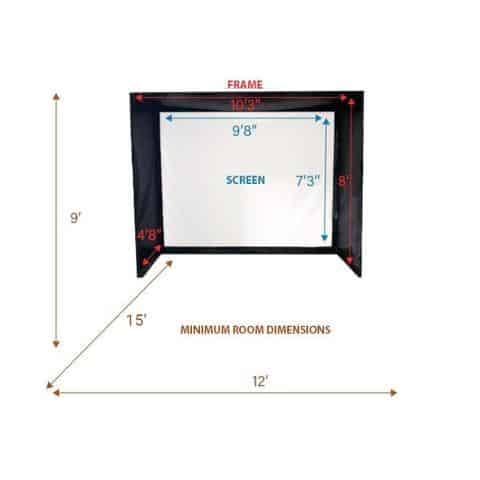
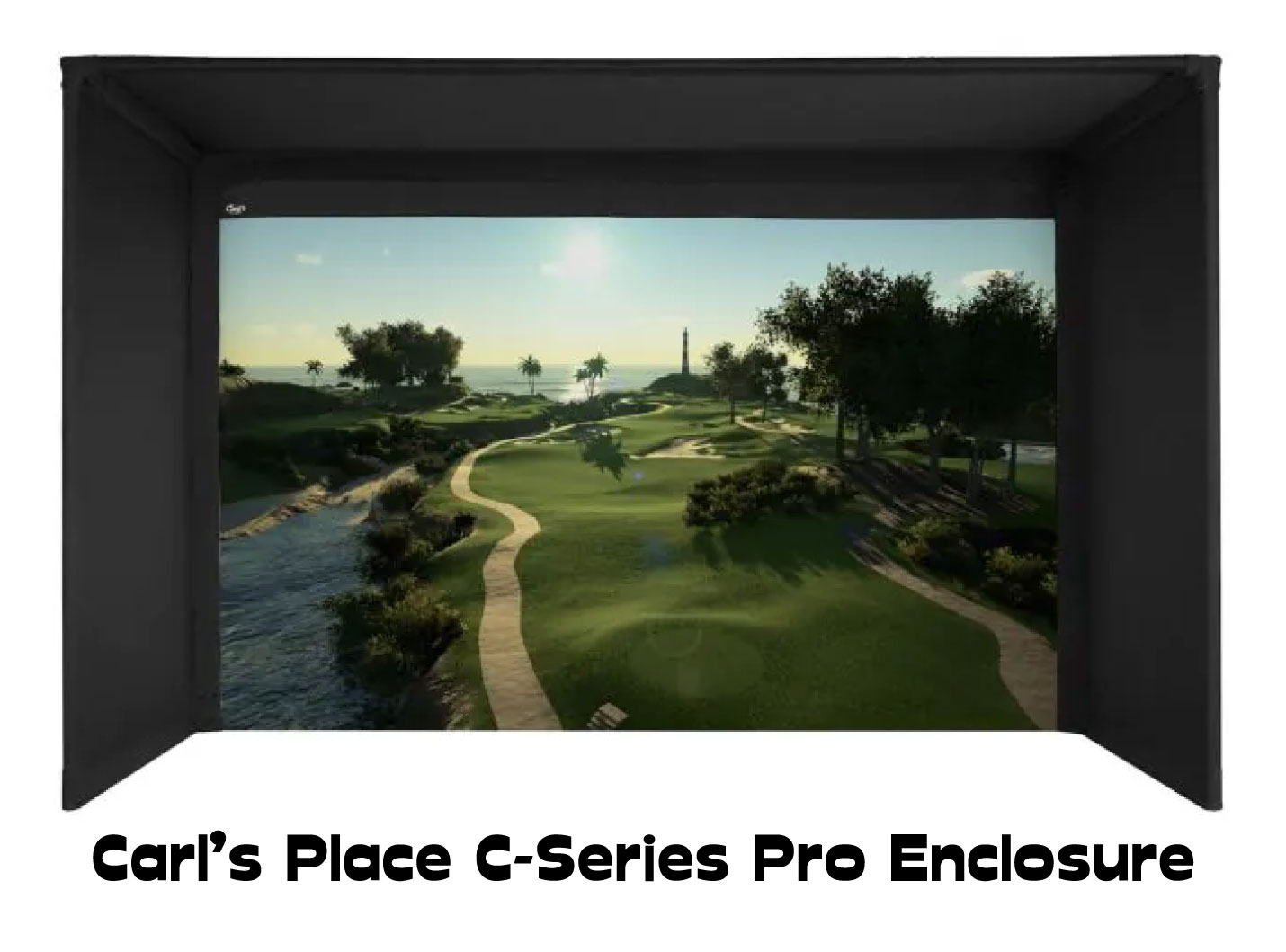
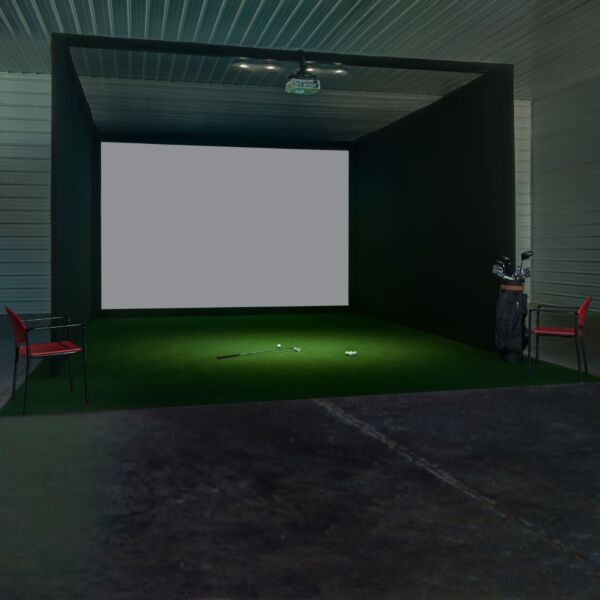
The SIG rows match Shop Indoor Golf’s current enclosure pages and assembly manuals (21 October 2026); treat the Swing Bay row as illustrative. The enclosure names survive because the sizing logic does: a QED room is an enclosure room plus walking space. And Carl’s Place — who produce the amazing premium impact screens that I recommend — remains the screen partner worth pricing for any build in this size class.
The marked-ball question
Marked balls only — not any ball you own. The QED requires golf balls with special drilled-in marker dots. Its more expensive EYE XO sibling reads normal balls, which was always its major plus.
In 2026, that requirement graduated from inconvenience to avoid-reason. Both buyers’ advisors in the fresh used-market thread named marked balls in their case against buying, and the dots wear with use — worn dots raise misread rates. There’s also a supply question nobody can answer yet: marked-ball availability on a deprecated product line over a multi-year horizon is a real unknown, flagged here honestly, without an invented reassurance.
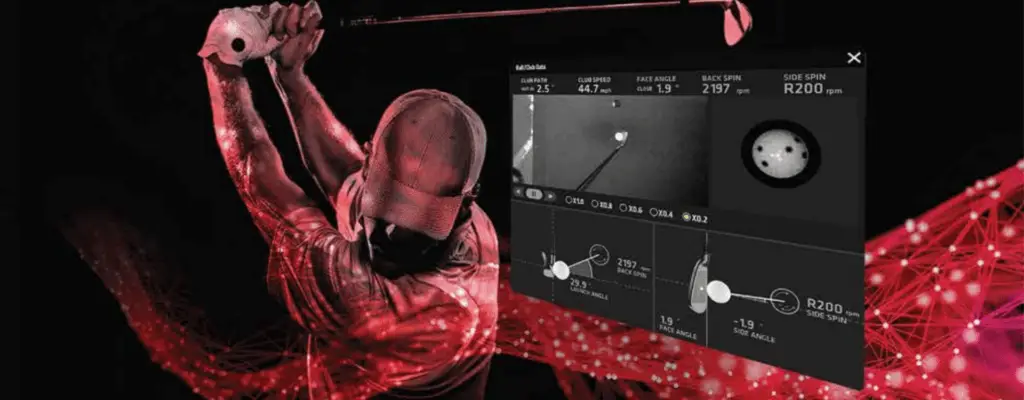
The markings don’t stop at the ball. The QED’s club data depends on club stickers, and their placement is precise — on irons it varies by groove count, on drivers the sticker aligns to the crown’s arrow mark — get it wrong and the club data goes wrong with it. The original box shipped with 400 of them.
PC requirements and software money
The QED’s PC floor is modest by 2026 standards:
| Component | Minimum |
|---|---|
| CPU | Intel i5-8400 or better |
| GPU | GeForce GTX 1060 or better |
| RAM | 8 GB |
| OS | Windows 10 64-bit (v1803+) |
One wrinkle: the QED wants its Ethernet cable run directly to the PC’s native port, not through a USB adapter or hub. Broader guidance: Golf Simulator System Requirements in 2026 – Updated Reference Guide
The software money — two unrelated owners cite the same numbers months apart: $199 a year for the Uneekor tier that opens third-party software (owners cite it as the Pro tier; Uneekor’s old QED page also tied the connector to a “Champion” package — the dollar figure is the corroborated constant), plus $250 a year for GSPro itself. On a deprecated unit, budget that ~$450/yr against a support horizon with a reported end-date, not an indefinite future.
Should you buy a used QED in 2026?
The live case, from a real July thread: a $1,900 private-party QED against a $2,500 refurbished Eye Mini. The buyer’s logic for the QED — “I am left handed and EVERYONE else is right handed. So the overhead version will keep me from having to move the monitor each time.” — is the overhead mount’s genuine, enduring advantage.
FOR the used QED:
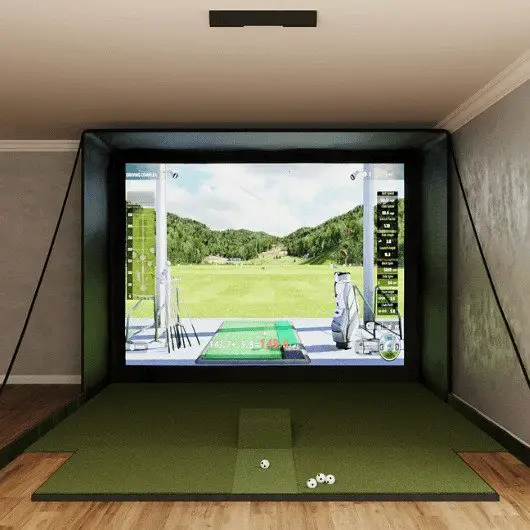
- Overhead mounting serves lefty/righty households with zero repositioning — the reason buyers keep looking at it.
- The space math works in rooms floor units also fit — more room than a SkyTrak bay, less than a radar bay.
- ~$1,900 buys a lot of proven photometric hardware.
AGAINST:
- Deprecated, with a reported support cutoff of end-2026 — repairs, parts, and updates all end.
- Marked balls: an ongoing cost, a wear item, and a supply question on a dead line.
- The capture tech is 7–8 years old: “I’d worry about obsolescence with the QED. It came out 7-8 years ago. Which is an eternity in the quick moving golf sim tech world.”
- Both voices advising the live buyer said avoid — the second bluntly: “Do NOT go for the QED. It requires marked balls and is not as accurate as other more recent options.”
- The replacement ecosystem prices new-with-support at used-QED money: the Eye Mini Lite sells new at $1,999 (struck from $2,750 at Uneekor on 21 October 2026).
- One buyer reported paying $1,900 for it after a discount code, with ~$500 of bundled GSPro and Pro Package software included — netting an effective ~$1,400.
One commenter also challenged the premise driving the QED’s overhead appeal: “How many people are actually going to be using besides you?” — worth an honest pause if the lefty-household case is theoretical rather than weekly reality.
And if the room itself is the problem rather than the QED’s future, deprecation math is beside the point: a beside-the-ball camera unit like a SkyTrak, or a portable monitor, fits spaces no overhead install ever will — that answer predates the QED’s retirement and survives it.
💡 If you do buy used, audit the box before money moves. The QED originally shipped with the sensor bar, mounting bracket with level, calibration board, 24 marked balls, power and CAT6 cables with a USB Ethernet adapter, and 400 club stickers. On a deprecated line, every missing piece is a piece you may not be able to replace.
The Uneekor QED is a fantastic launch monitor . You get a suite of both ball and club data, very little (if any) shot delay and you can see where the club impacts the ball as well as incorporating video of your swing. And: I believe Uneekor Launch Monitors offer some of the best value for money in the entire golf simulator market. Those verdicts were written when the QED was a current product — the hardware they describe hasn’t changed, but the support reality underneath it has, and the 2026 buying decision has to weigh both.
Uneekor QED space FAQ
Is the QED discontinued?
Deprecated, with a trade-in program (a flat $2,000 credit toward an EYE XR, XO or XO2 AI Studio bundle, US and Canada only) and a support cutoff reported for December 31, 2026. The unit keeps functioning after that date — verify current support status with Uneekor before buying used.
What’s the minimum ceiling for the QED?
The 9–10 ft mounting band, and it’s hard — the QED manual documents no drop-mount accessory for taller ceilings, unlike the XR/XO/XO2.
Does the QED need special golf balls?
Yes — balls with drilled-in marker dots. It’s the record’s most-cited reason to avoid a used QED, and dot wear degrades reads over time.
Yes — this is the overhead mount’s genuine advantage: no repositioning between golfers. Give it 15 ft of width and a central-aim mat and it’s seamless.
What does a QED cost to run?
$199/yr for Uneekor’s third-party software tier plus $250/yr for GSPro — roughly $450/yr, the same math from unrelated owners. On a deprecated line, weigh that recurring cost against the support horizon.
The bottom line
The space answer hasn’t changed: 17 × 12 × 9 ft, sensor at 9–10 ft, 3.5 ft behind the tee. The buying answer has. A used QED in 2026 is a room-geometry bargain wearing a countdown clock — if the overhead advantage is your daily reality and the price is right, go in with eyes open; if it isn’t, the same money now buys current hardware with a future attached.
Bushnell Launch Pro vs SkyTrak ST MAX (2026)
Golf Simulator Packages vs Building Your Own: Which Is Better Value?
ABOUT THE AUTHOR
Hello! My name is Alex and it is my mission to bring you all the information you need to build your own home golf simulator! I hope mygolfsimulator.com helps you on your journey to better golf at home!
LEGAL INFORMATION
On this site, you'll find articles on all aspects of building a golf simulator. I will also link to other sites where you can buy some of the simulator components. Some of these links may be affiliate links, which means if you click them I gain a small commission at no extra cost to you. This really helps out me and my site so thank you in advance! mygolfsimulator.com and all related social media accounts are property of Awonline LTD.