How to Practice in a Golf Simulator – 40 Easy Ways
Posted in Launch Monitor Data, Launch Monitors, Room Setup
Want practice that shows up on the course, not just on the screen? Owners report handicap drops of 5–19 strokes from regular home-sim practice (5 reports, 5 owners, rising) — but the community has also learned, sometimes painfully, that only some skills transfer.
In a Nutshell — What Transfers
Ball-striking and distance control carry over well from simulator to course; putting, real lies, and pressure mostly don’t. Treat the sim as a technique lab and the course as the exam — practice with intent and the reps compound, play casually and the flattering numbers lie.
This guide gives you all 40 ways to practice, updated for the GSPro era, with an honest transfer map and — something you won’t find elsewhere — what published sports science actually says about practice that sticks.
I recommend keeping a notebook and practice file on hand in your golf simulator. In my practice file, I have pages dedicated to specific drills, ordered by category — because I struggle to keep the steps and intent of all my practice drills right at the front of my brain, and without it I default to smashing balls with no target. The 40 ways below are that file, published.
Jargon, once: your launch monitor (LM) reads each shot; GSPro is the community’s favorite sim software; SGT is a well-known simulator golf league played online; gimmes are putts the software concedes; low point is where your swing bottoms out.
| Transfers well | Transfers partially | Transfers poorly |
|---|---|---|
| Full-swing mechanics (9 reports, 9 owners) | Driver (mechanics yes, consequences no — 3 reports) | Chipping inside ~30–40 yards |
| Distance control & gapping (4 reports — allow ~half a club mat-to-grass) | Lag putting & green reading (a surprise in one owner’s structured test) | Real lies — rough, slopes, divots (9 reports, 9 owners) |
| Wedge distances | Shot-shaping awareness | Pressure and consequence (4 reports, rising) |
The 40 Ways at a Glance

| # | Way | What it trains | Where |
|---|---|---|---|
| 1 | Block distance practice | One yardage, grooved | Any range mode |
| 2 | Wedge matrix | Three swings × every wedge | Range/practice apps |
| 3 | Bag mapping | True carry numbers per club | Most LM apps |
| 4 | Distance randomizer | Adapting like on-course | Range modes |
| 5 | Dispersion tracking | Honest accuracy measurement | Any LM |
| 6 | GSPro practice ladder & Practice Facility | Distance control, structured | GSPro |
| 7 | Skills challenges | Scored pressure reps | Various software |
| 8 | Watch your low point | The number mats hide | LM club data |
| 9 | Work out your miss | Pattern diagnosis | Dispersion charts |
| 10 | Learn a fade | Start line + face control | Any |
| 11 | Learn a draw | Path control | Any |
| 12 | The stinger | Flight control, wind game | Any |
| 13 | High soft-landers | Launch + spin control | Any |
| 14 | Wind practice | Adjusting, flighting | Sim settings |
| 15 | Projector-off feel drill | Calibrating feel vs data | Any |
| 16 | Impact position | Strike location | Spray or premium LM |
| 17 | Swing-speed training | Clubhead speed gains | Overspeed protocols + LM |
| 18 | Fast 18 holes | Full-game rehearsal | Course play |
| 19 | On Course Practice mode | Your real course’s miss spots | GSPro |
| 20 | Famous courses | Variety, fun, shot demands | Course libraries |
| 21 | Competitive leagues | Pressure that counts | SGT and similar |
| 22 | Dogleg discipline | Shaping off the tee | Course/range settings |
| 23 | Hazard avoidance | Aim + shape strategy | Course play |
| 24 | Course management reps | Laying up, stress-free routes | Course play |
| 25 | Autorewind / mulligans | Repeating one hard shot | Software feature |
| 26 | Wedge-carry practice | Pitch distances | Range modes |
| 27 | Chipping-net workaround | Real short game, beside the sim | Physical net |
| 28 | Flop practice | Fun + technique (protect the room) | Rough-turf mat |
| 29 | Putt it out | Honest putting | League discipline |
| 30 | Stimp conversion + slope rule | Sim putting that means something | Conversion tables |
| 31 | A real putting corner | The skill sims can’t fake | Mat/trainer |
| 32 | Multi-angle swing camera | Positions you can’t see | Cameras |
| 33 | Record and review | Deliberate change tracking | Camera + app |
| 34 | Pre-shot-routine recording | The habit nobody watches | Camera |
| 35 | Data-overlay video | Swing + numbers together | LM app features |
| 36 | Pressure games with kids | Fun + composure | Family |
| 37 | Precise personal goals | Self-designed challenges | Notebook |
| 38 | Make the sim harder | Closing the sim-to-course gap | Settings + props |
| 39 | Foam-ball sessions | Short-iron practice, safely | Camera-based LMs |
| 40 | The AI-coach experiment | Data-driven focus areas | CSV export + LLM |
Family 1: Distance & Data (Ways 1–9)
1. Block distance practice. Groove one yardage until you own it. 75 yards is a good one for me — perhaps due to there being a 75-yard target at my driving range. Repeat it across clubs and wind settings and you’ll lay up to your number with real confidence.
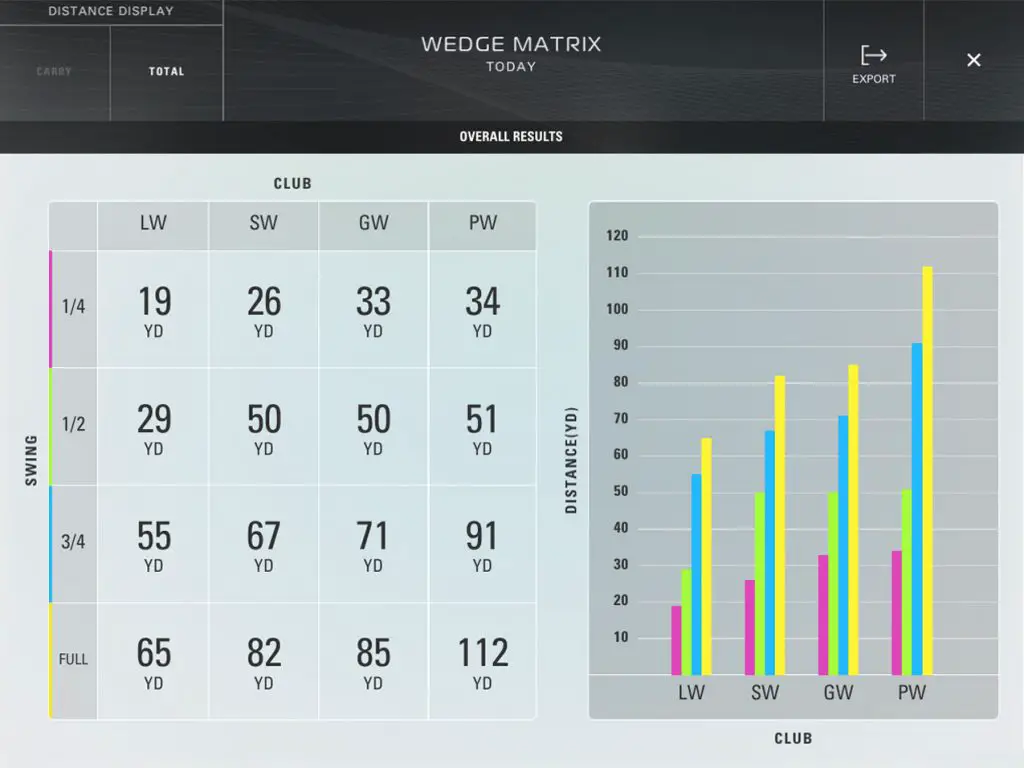
2. Wedge matrix. Three swing lengths for each wedge, mapped into a grid. Some owners run it as a clock system — backswing positions as clock faces (one commenter’s method). SkyTrak-style practice apps have dedicated wedge-matrix features; a paper grid works everywhere.
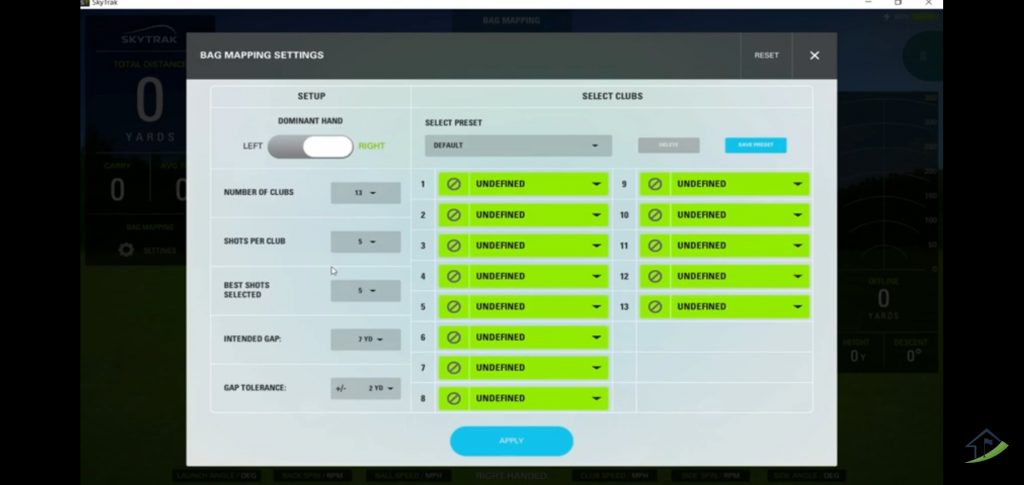
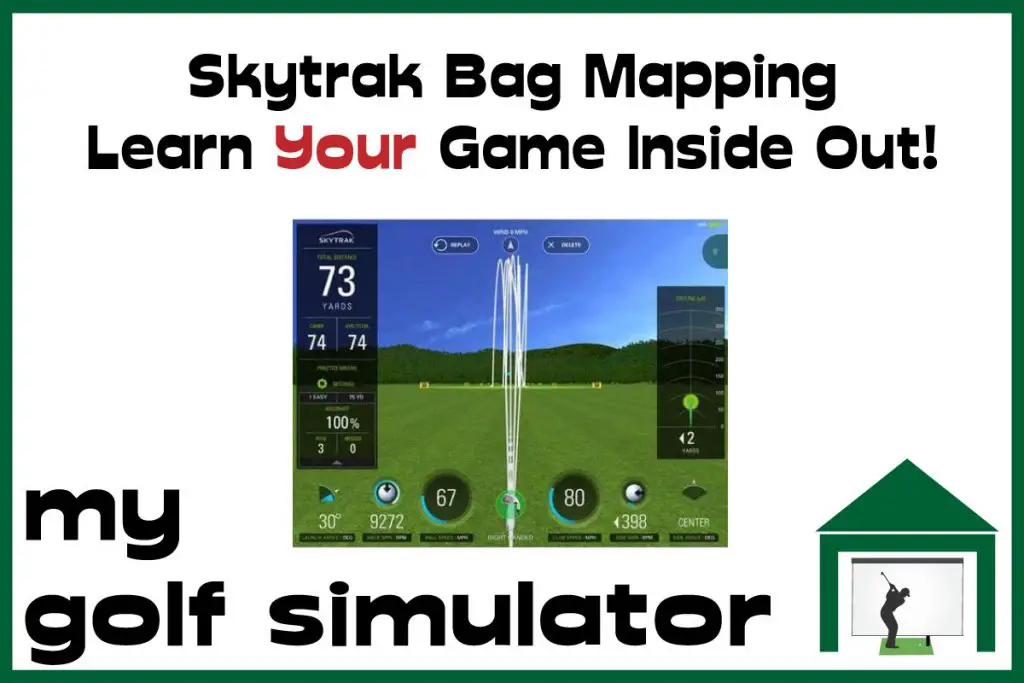
3. Bag mapping. Know your true average carry for every club — most LM apps track this continuously now.
4. Distance randomizer. Random-yardage features force the on-course skill: adapting. I know I revert to favorite distances if left to my own devices; the randomizer removes the choice.
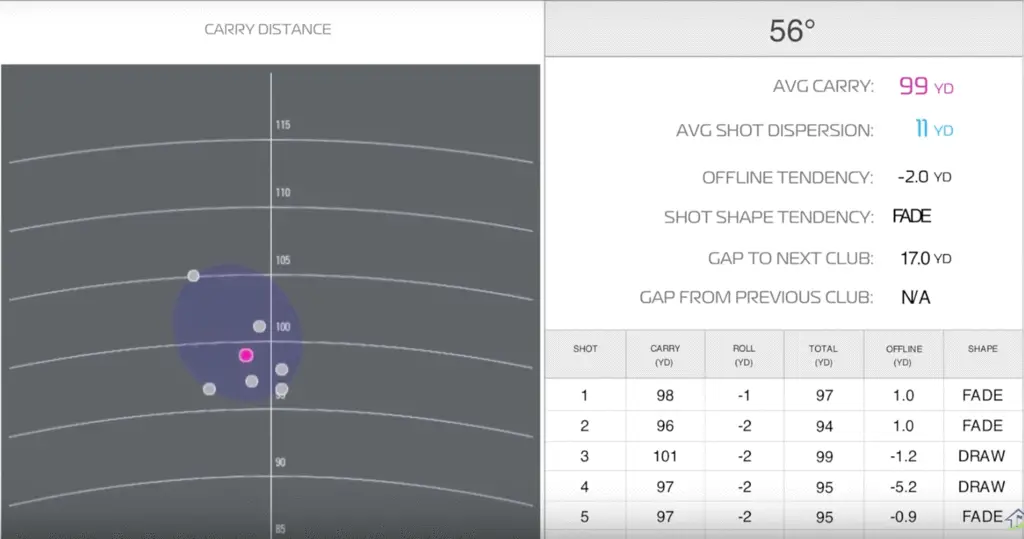
5. Dispersion tracking. Five shots each with a 7-iron, 4-iron, and driver; measure the spread, note your start lines. Accuracy is a measurable, not a feeling.
6. GSPro practice ladder & Practice Facility. The community’s current default for structured distance work — “If you have GSPro I would focus on doing the ladder in practice mode” (multiple owners recommend it independently). Operation 36 (a structured skill-progression program) and community-built practice courses extend it.
7. Skills challenges. Scored challenges with leaderboards put a number and a pulse on practice. (Foresight’s FSX skills challenge was the classic; that software line is mid-transition in 2026, so check what your ecosystem currently offers.)
8. Watch your low point. The single most valuable number for sim golfers, because mats forgive what turf punishes — hitting ground-first barely registers on a mat and quietly grooves a fat strike. One owner’s confession from this summer’s threads: the mats had been covering up a fat-strike habit for months, and it took two months of real-turf practice to unlearn it. If your LM reports low point or attack angle, watch it like a hawk.
9. Work out your miss. Left, right, long, short; slice or hook. The dispersion chart tells you what to practice next. One science note while you’re in there: launch monitor studies found clubhead speed, ball speed, and carry valid and reliable on consumer units, but spin rate was the least reliable metric in two separate studies (Mevo+ and TrackMan 4 research, 2024) — so build goals on speed and carry, and treat session-to-session spin swings skeptically.
Family 2: Swing & Shot-Making (Ways 10–17)
10–11. Fades and draws. Stand up and shape it on command — start line, face, path. Premium LMs show club path and face-to-path so you can see the geometry, not guess it.
12. The stinger. Max distance, minimum height. Part of this is stubbornness — I really want to be able to emulate Tiger, even though I invariably can’t. It does mean I’m more confident than many with my long irons.
13. High soft-landers. My favorite shot in golf is a pure, long and high 4-iron. Watch launch angle and descent angle; a crisp strike that launches high beats a spinny mishit that balloons.
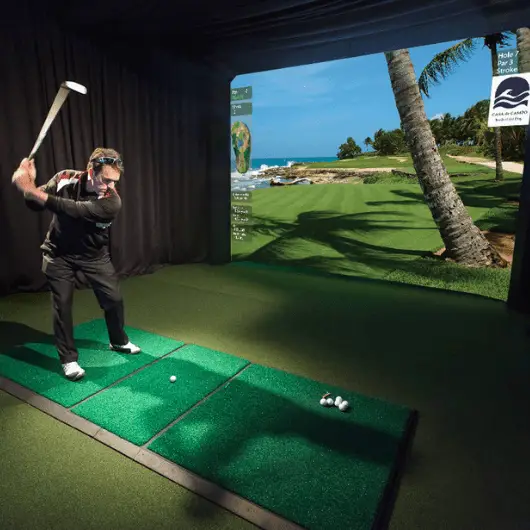
14. Wind practice. Fifteen mph into your face, accuracy targets, spin down. The sim is the only place wind practice is comfortable — use it.
15. Projector-off feel drill. Hit, call the shot — distance, shape, finish — then look at the screen. Calibrates feel against fact.
16. Impact position. Foot-spray on the face is the free version; premium launch monitors can show face-strike location directly [verify current models at publish]. Off-center strikes tax distance and spin more than most golfers believe.
17. Swing-speed training. The winter project that pays in yards: overspeed protocols, strength work, and a launch monitor to keep score honestly. (See the case study below for what tracked, honest speed work did for one owner.)
Family 3: Course-Play Practice (Ways 18–25)
18. Fast 18 holes. Playing 18 holes in a golf simulator usually takes me between 60 and 90 minutes. I like to practice my short game, long game, and play 18 in a session — a few hours I could never replicate at the real course.
19. On Course Practice mode. The fresh standout: GSPro lets you drop balls anywhere on your own home course — “I also use On Course Practice mode for my home course and place balls where I regularly miss shots on various holes” (one commenter’s method, and a genuinely brilliant one).
20. Famous courses. Pebble Beach, St Andrews, Augusta-alikes — variety is a training effect in itself, and the demands of great courses stretch your shot menu.
21. Competitive leagues. Online tours mirror real schedules and add the ingredient practice lacks: consequence. A note from a scratch player’s thread on SGT: every tour runs an auto-putt division too, so putting preference doesn’t gatekeep entry.
22. Dogleg discipline. Choose fairways that turn and practice fitting shots into them — dogleg settings or course selection both work.
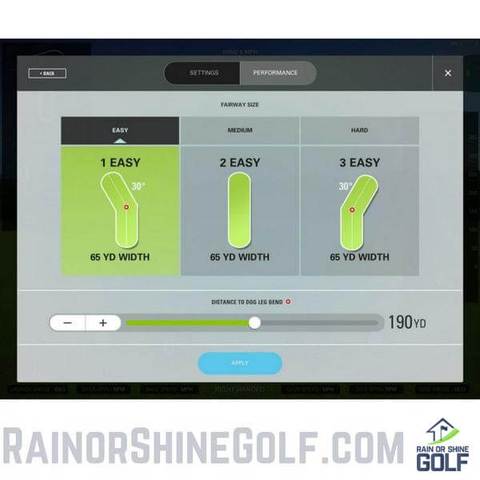
23. Hazard avoidance. Water right, OB left: aim at trouble and shape away from it, or aim safe and let it work back. Rehearse the decision, not just the swing.
24. Course management reps. Lay up to your favorite full-wedge number; plot the stress-free route. Course management is choosing the path with the least trouble — the sim gives you unlimited rehearsals.
25. Autorewind / mulligans. Replay the shot that scares you until it doesn’t. I do love a mulligan after a proper hosel job — but autorewind’s real use is deliberate repetition of one hard shot.
Family 4: Short Game & Putting — the Honest Section
26. Wedge-carry practice. The sim’s short-game strength: pitch and wedge carries measure beautifully. Run the matrix (way 2) from 30 to 100 yards.
27. The chipping-net workaround. Short chips are the hardest thing to simulate — the ball’s response to real turf and slope is beyond current software. The solution hasn’t changed in years: a simple chipping net beside your screen. One thread put it bluntly: “Chipping and putting are the two skills that simulators are the worst at. Go to your local practice green… 3 days a week.”
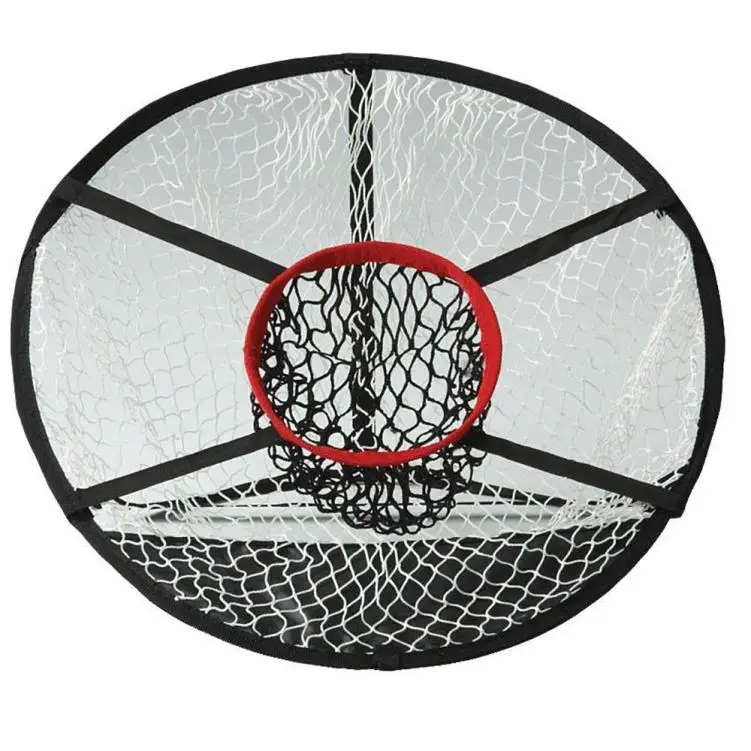
28. Flop practice. Enormous fun, genuinely useful — with ceiling netting, frame padding, and a rough-section mat that lets you slide under the ball. Mind the projector.
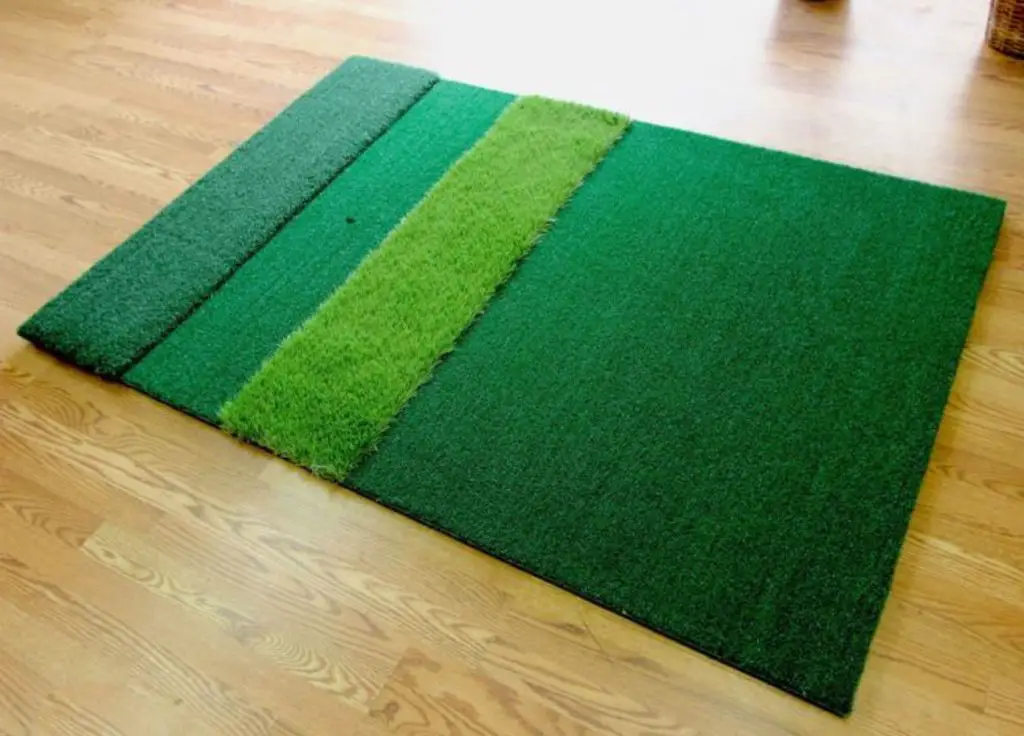
29. Putt it out. If you putt on the sim, putt honestly — “4 foot gimmies are a lie, putt it out,” as one owner put it. Auto-putt made some owners’ real putting worse (6 reports, 6 owners) — if you keep putting in the loop, keep it honest.
30. Stimp conversion + the slope rule. Real greens are rated by a Stimpmeter — their “Stimp,” a green-speed number — and sim putting only translates once you convert that to your software’s speed setting. One league player’s rule of thumb — add or subtract a foot of putting distance per inch of slope per 18 feet — took him from ~30 putts to ~26 (one detailed report).
31. A real putting corner. Everyone with a golf simulator needs a putting answer, and for most people it’s a dedicated mat, not the screen. Buy it for stroke and start line, not pace — the community is split on the market’s most-recommended alignment mat (13 owner reports, split roughly 3:2): most credit its guides with fixing pushes and cutting three-putts, a vocal minority blame its uphill ramp for grooving an over-hit stroke that doesn’t survive real greens. Either way, train the line on the mat and verify pace on a real green. putting mats & trainers
Family 5: Swing Camera (Ways 32–35)
32. Multi-angle views. Your simulator doubling as a swing studio — angles you can never see live. I have a LiveView Pro, which streams a view of my swing to my iPad almost seamlessly and without delay. This allows me to view and alter my swing with a down-the-line view.
33. Record and review. High-frame-rate cameras, decent lighting, and a review habit after sessions; send the file to your coach. [verify current app recommendations at publish]
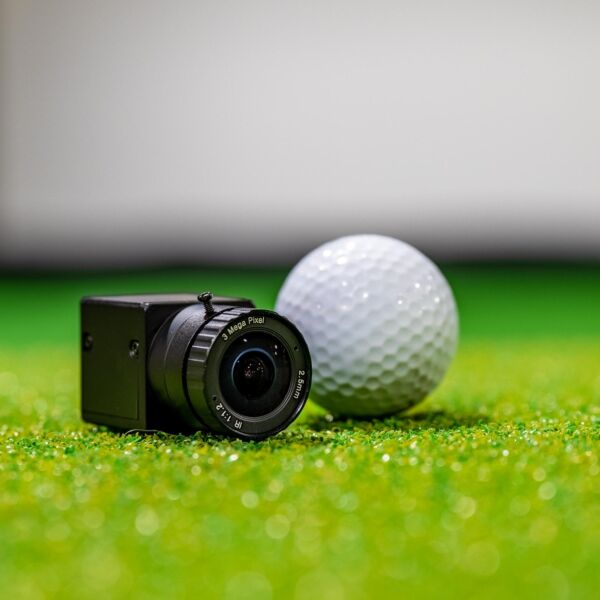
34. Record your pre-shot routine. Sounds silly; isn’t. Set the camera for 18 holes and watch what you actually do before each shot. You’ll play better just knowing it’s rolling.
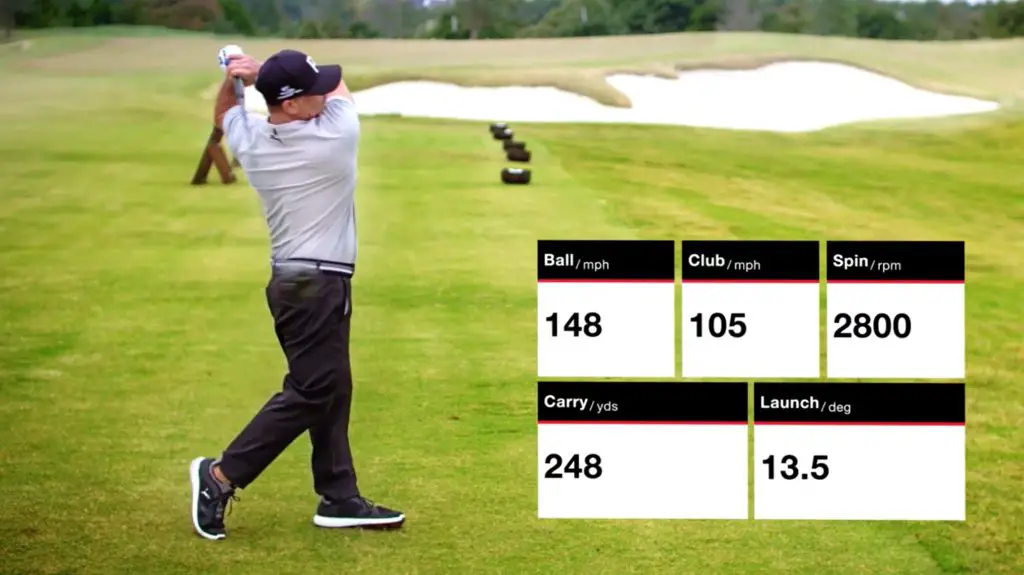
35. Data-overlay video. Some LM apps overlay shot data on your swing video — seeing the numbers on the move that produced them is the fastest feedback loop in golf.
Family 6: Mental Game & Fun (Ways 36–40)
36. Pressure games with kids. Have them stage a live-streamed “17th at Sawgrass,” drum-roll your takeaway, or just heckle. The best way to involve children in your golf simulator is to make it fun for them — structured targets, low stakes, time together.
37. Precise personal goals. From my practice file: total distance over 10 drives; total dispersion over 10 iron shots; 10 fades in a row; closest-to-100-yards contests. Write yours down.
38. Make the sim harder on purpose. One owner’s project this August, after two years: recommended course settings, real-course altitude, firmer greens, punishing lies via a sand mat — plus the community’s prop tricks (stand on a board, one foot on extra turf) to fake uneven lies. His conclusion matched the transfer table above almost line for line (one detailed report). This is the frontier of sim practice: engineering the gap away.
39. Foam-ball sessions. On camera-based units, foam balls read close to real numbers with short irons, then diverge with longer clubs — corroborated across multiple owner reports (one saw 195 vs 230 yards with a fairway wood). Swing-fault tendencies still show honestly. For late-night or low-ceiling practice, foam with a 7-iron is legitimate work.
40. The AI-coach experiment. New this year: export your launch monitor CSV and hand it to an AI assistant for pattern analysis — one owner credits the workflow with structuring the practice that added 20 yards to his drives (single report; purpose-built tools are appearing but are early). Treat it as a lens on your data, not an oracle.
What the Science Actually Says
The differentiator nobody else will give you, including the honest part:
- A 2024 systematic review of 52 randomized trials on golf motor learning found that an external focus (watching the target, not your own swing), higher contextual interference (mixing up drills — exactly what the randomizer does), and errorless-learning practice (starting easy enough to avoid mistakes, then raising the difficulty) produced the best retention and transfer. The authors’ own caveat: most studies used simple putting tasks with novices, so how far this generalizes to advanced golf is unclear. Still, it backs the logic behind randomized, target-driven practice over block-only sessions.
- Launch monitor measurement studies (Mevo+ vs TrackMan 4; TrackMan 4 reliability, both 2024): clubhead speed, ball speed, and carry are valid and reliable; spin rate was the least reliable metric in both — the same conclusion twice, independently.
- VR putting research shows both promise and caution: a 2023 trial found VR putting practice transferred to real-world improvement comparably to real practice, while a 2025 study found even experts hole fewer putts in VR — the eye-movement patterns that predict expert success break down in virtual environments.
- And the honest headline: no randomized controlled trial yet tests whether simulator practice improves on-course scoring. The 52-trial review contains zero simulator studies. The owner anecdotes are strong — the controlled evidence simply doesn’t exist yet. The honest summary: anecdote-strong, RCT-absent.
A Deliberate-Practice Protocol That Worked
One owner’s documented protocol from this August (single report, but replicable): 50 drives per session, back-to-back nights then a rest night, every session logged in a spreadsheet. Among the metrics he tracked: smash factor — ball speed divided by club speed, golf’s standard strike-efficiency number. Across seven sessions:
| Metric | Session 1 | Session 7 |
|---|---|---|
| Club speed | 99.5 mph | 102.9 mph |
| Smash factor | 1.38 | 1.41 |
| Carry distance | 206 yards | 224 yards |
| Offline dispersion | 22 yards | 18.5 yards |
👉 Same stretch, on the course: a personal-best 41 for nine holes at league. That’s ways 17, 5, and 3 run as a system, with way 1’s notebook holding it together. Steal the structure.
Keep the Range Too
Even with all that data, real flight, depth perception, and the social side still matter — and the range is where you verify the sim’s promises against actual ball flight. The two aren’t rivals; they’re calibration partners.

How Sim Practice Changed (2021 → 2026)
| What changed | Where it landed by 2026 |
|---|---|
| Sim software | TGC 2019 gave way to GSPro’s practice ecosystem |
| Practice style | Went data-first — low point, CSV exports, even AI-assisted analysis |
| Skills challenges | The FSX era gave way to a Foresight software transition, still in progress |
| Putting | Stayed the unsolved skill |
| The community’s question | Matured from “does sim practice work?” to “what transfers?” — a better question with better answers |
FAQ
Does sim practice actually lower handicaps?
Yes, per the community — see the intro for the numbers. No controlled trial exists yet; see the science section. The mechanism that clearly works: volume plus honest data.
Why is my sim score so much better than my real score?
Multiple owners converge on the same answer: sim handicaps run roughly half your real one — perfect lies, digital green reading, no consequences. One owner: the sim “gave me unreasonably elevated expectations.” Way 38 is the antidote.
What’s the best free practice structure?
GSPro’s practice-mode ladder, per multiple independent recommendations — plus way 19 on your home course.
Can I practice chipping in a simulator?
Inside ~30–40 yards, honestly, not well — rollout and lie-dependence break the feel connection. Net beside the screen; green three days a week if you can.
Is foam-ball practice legitimate?
For short irons on camera-based units, yes — numbers read close and tendencies show honestly. Expect divergence with longer clubs.
I’m just starting — how should I structure practice?
From beginner threads, the answers converge: get spin/path data if you can, track your most common miss (way 9), watch low point (way 8), and run the GSPro ladder (way 6). Twenty minutes with a target beats two hours of ball-smashing.
Final Thoughts
The recap, 2026 edition: keep a practice file with drills written down; map every club; shape it both ways; own your wedge distances; give putting an honest answer — on the mat or with putt-it-out rules; mix course play, range work, targets, and competition; make the sim harder as you improve; and get your kids involved.

And the reason I keep coming back to it: I love spending a bit of time practicing in my simulator, especially after a long day at work. There’s no one else there, and I can make mistakes without the onlooking eyes of other golfers. Enjoy your golf simulator — every one of these 40 ways is a reason it was worth building. Golf Simulator Cost Calculator – How much do Golf Simulators Cost? · Golf Simulator System Requirements in 2025 – Updated Reference Guide · Skytrak vs Garmin R10 – Complete Guide (19 Key Comparisons)

Ready to build your own putting corner (way 31)?
Carl’s Place Pro Golf Enclosure Review (2026): What’s in the Box, Real Cost and Owner Reports

Is SkyTrak Portable? Battery, Direct Mode and Range Days (2026)
ABOUT THE AUTHOR
Hello! My name is Alex and it is my mission to bring you all the information you need to build your own home golf simulator! I hope mygolfsimulator.com helps you on your journey to better golf at home!
LEGAL INFORMATION
On this site, you'll find articles on all aspects of building a golf simulator. I will also link to other sites where you can buy some of the simulator components. Some of these links may be affiliate links, which means if you click them I gain a small commission at no extra cost to you. This really helps out me and my site so thank you in advance! mygolfsimulator.com and all related social media accounts are property of Awonline LTD.