Golf Simulator Wind and Weather – Change Weather Conditions & Improve
Posted in Golf Simulator Software, Launch Monitors
Yes — every major simulator platform lets you dial in wind and weather, and most owners should touch those settings at least once: the defaults are dead-calm, sea-level conditions, and leaving them alone can hide close to a full club of real-world carry difference. That’s half this guide. The other half is the weather you can’t configure: the cold garage that shortens your carries, the condensation that actually threatens electronics, and the gust that nearly flattened one tester’s launch monitor this June. Simulated weather first, real weather second, and what transfers between them throughout.
In a Nutshell
Yes: GSPro, E6 Connect, TrackMan, FlightScope and SkyTrak all let you set wind and weather, and because the defaults are calm, sea-level conditions, matching altitude and temperature to your home course can close a carry gap of close to a full club.
👉 Set your altitude and temperature once to match your home course, decide deliberately whether to practice with wind on (a small but real camp does, to make sim golf transfer), and respect real weather separately: cold shortens your measured carries, rapid warm-ups condense water onto your optics, and outdoor wind moves structures, not just golf balls.
| You can set | You can’t set |
|---|---|
| Wind speed and direction | The cold bay that trims your ball speed |
| Temperature, altitude, humidity | Condensation on lenses and screens |
| Green speed and firmness | Real wind attacking your outdoor net |
Jargon, once: normalization = your simulator recalculating shots to standard reference conditions rather than reporting the raw modeled flight. Environmental Optimizer = FlightScope’s version, which adjusts data for the conditions you enter. Stimp = green speed, from the course-side Stimpmeter measurement. D-Plane = the impact-physics model relating club path and face to ball flight.
How this has changed
- GSPro displaced TGC 2019 as the home-sim software default; TGC is no longer in active development or mainstream purchase.
- FlightScope’s Environmental Optimizer is documented — and tier-gated. It ships on the Mevo+ Pro Package, Limited Edition, X3 and X3C — not on the base Mevo+ or Mevo Gen2, a correction to earlier guidance.
- TrackMan’s Normalization mechanics are public — a calm-conditions recalculation with editable reference defaults that ignores actual wind by design.
- New free software arrived: Muni Golf added dynamic rain, wind, fog and lightning in August 2026.
- Players started turning wind UP on purpose — and a proposed indoor handicap standard now counts the wind setting as a formal difficulty input.
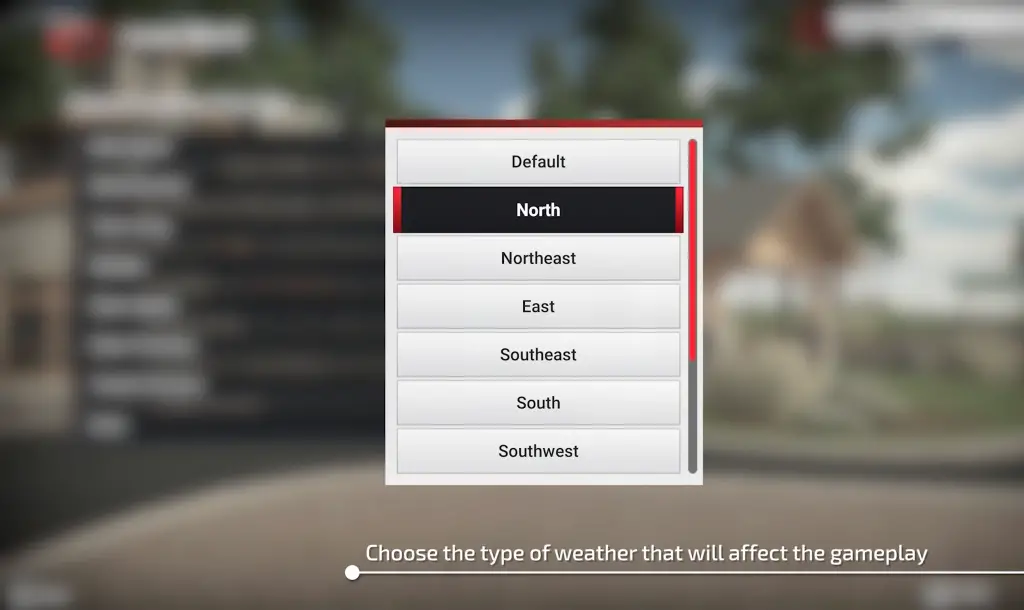
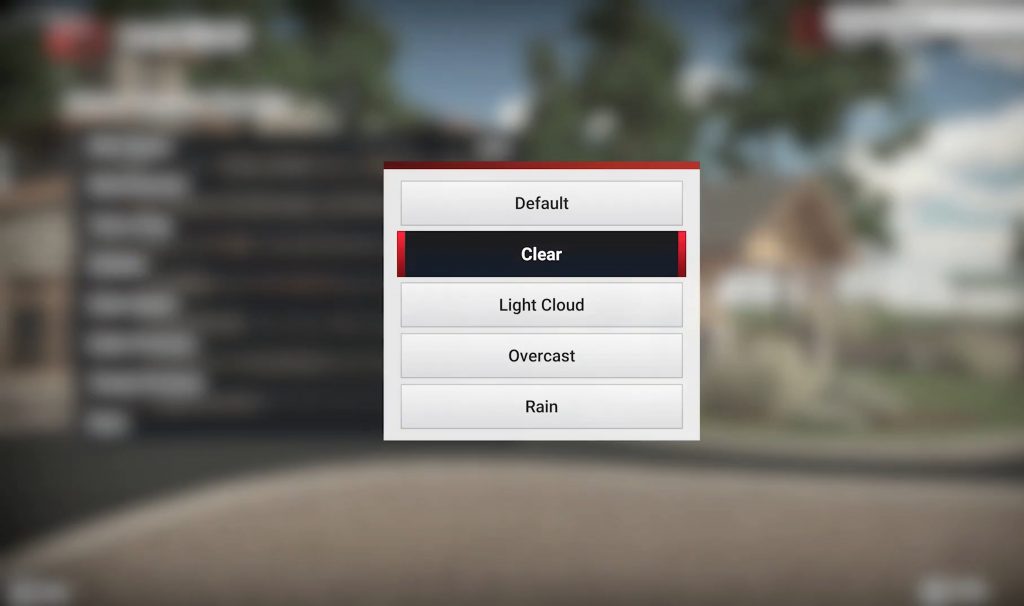
Why the defaults are lying to you (a little)
One idea unlocks every settings menu in this article: indoors, every carry number is a model output. The launch monitor measures your ball’s first moments, then a flight model computes where it would have landed — and that computation assumes some set of atmospheric conditions. The full argument about what that means for realism lives at Golf Simulator Vs Reality – 14 Tips to Improve Realism in your Golf Simulator; here’s the practical slice.
TrackMan’s own explainer lays out how its version works: Normalization strips the session’s actual conditions and re-runs the flight at reference conditions — 77°F at sea level, both user-editable — assuming a premium ball (a separate Ball Conversion layer translates range-ball data to premium-ball equivalents first). It deliberately ignores wind, gusting or swirling. The point is gapping you can trust across seasons. The modeling machinery underneath all this is its own article: How do Launch Monitors Work? – Radar vs Camera Systems.
The catch owners discover: if your home course sits at altitude, or you play summer golf in real heat, the calm-sea-level defaults quietly misreport your real-world carries — a handful of owners have measured the gap, and it can approach a full club. 💡 The one-time fix: set altitude and temperature to match where you actually play, then leave it.
Wind and weather controls by platform (2026)
| Platform | What you can set | Where |
|---|---|---|
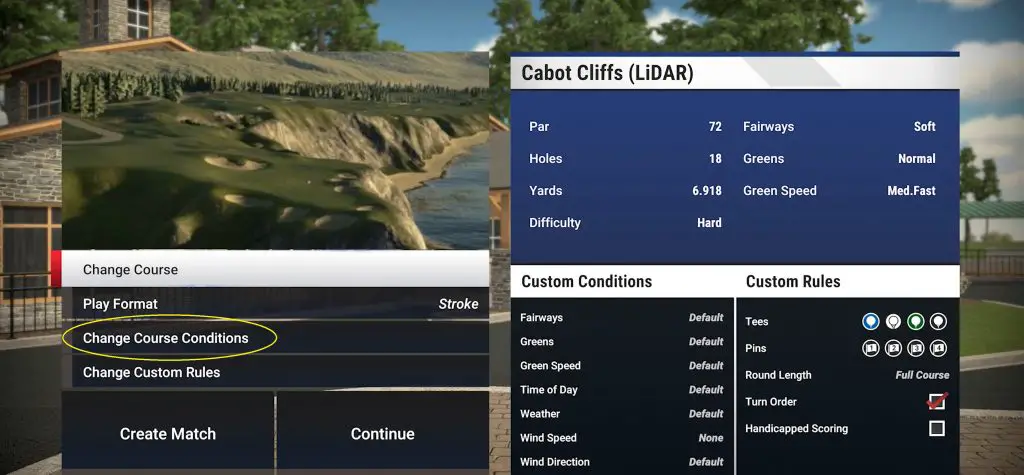
| GSPro | Wind, green/fairway firmness, stimp — per course | Course settings |
| E6 Connect | Wind, elevation, green hardness, green speed (Stimp), fairway hardness, atmosphere | ENVIRONMENT tab in setup |
| TrackMan | Normalization conditions (temp, altitude); wind in course play | Settings / Shot Analysis |
| FlightScope (Mevo+ Pro Pkg, LE, X3/X3C) | Temp, altitude, humidity, wind speed and direction, landing height | Environmental Optimizer, set at session start |
| SkyTrak family | Wind strength/direction, temperature, humidity, altitude | Session Settings (as reported in the app — menus move; check your version) |
| Foresight FSX | Course conditions at setup | FSX settings (one long-reported quirk: weather locked mid-round — check current docs) |
| Uneekor | Weather controls reported in its course software | Current-version settings unconfirmed — check VIEW/GameDay docs |
| Muni Golf (free) | Dynamic rain, wind, fog, lightning, time of day | Per its August 2026 developer update |
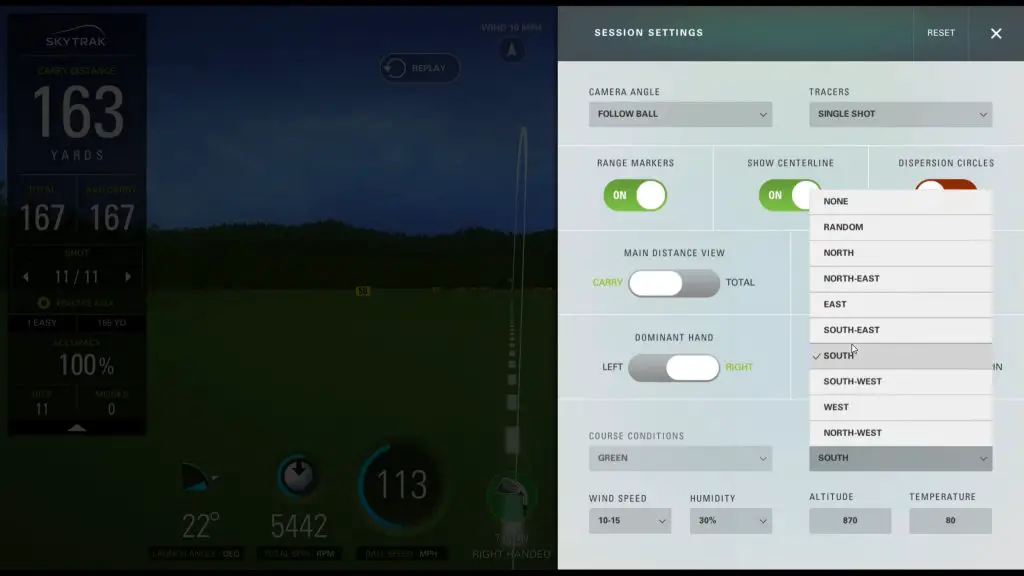
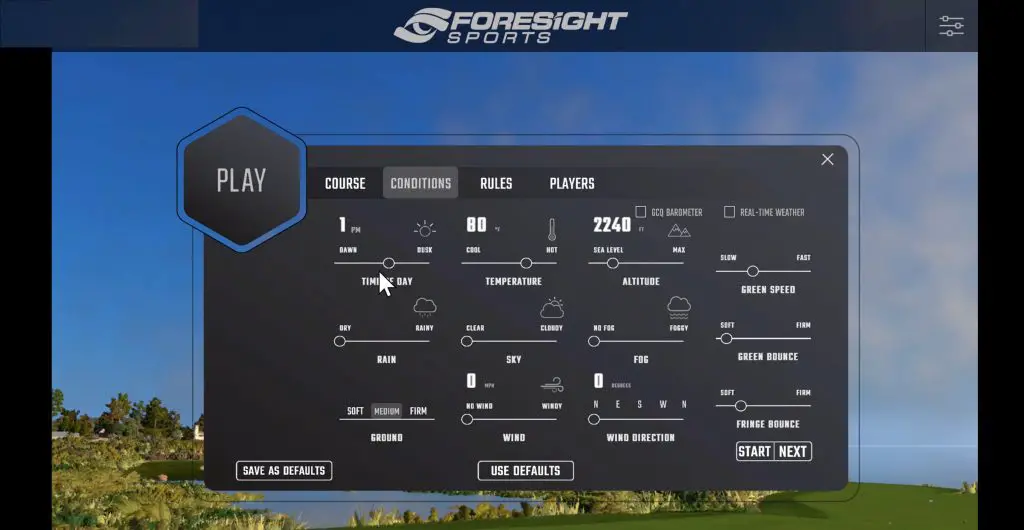
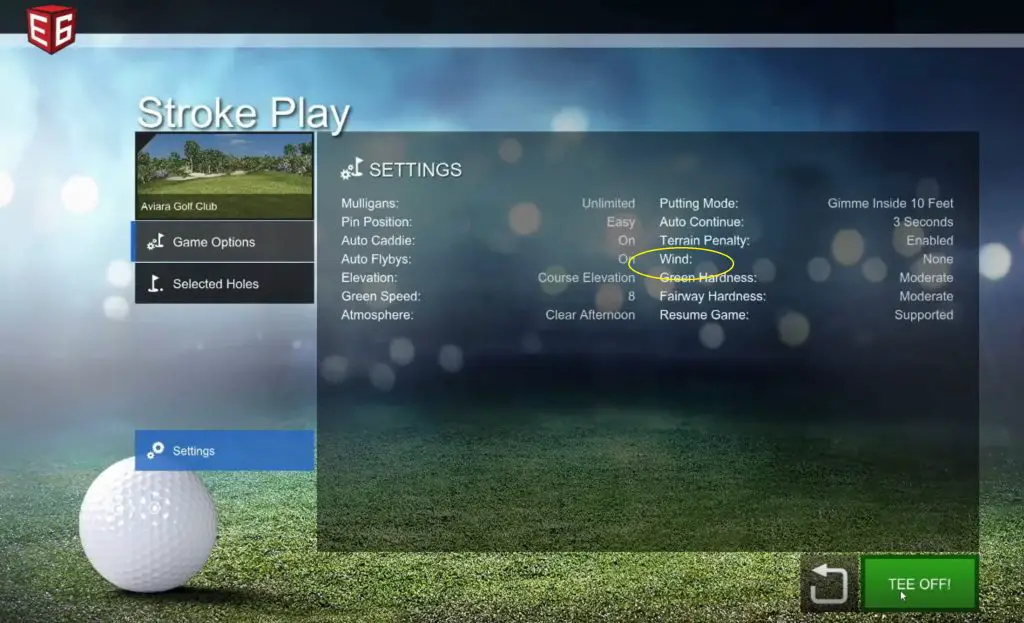
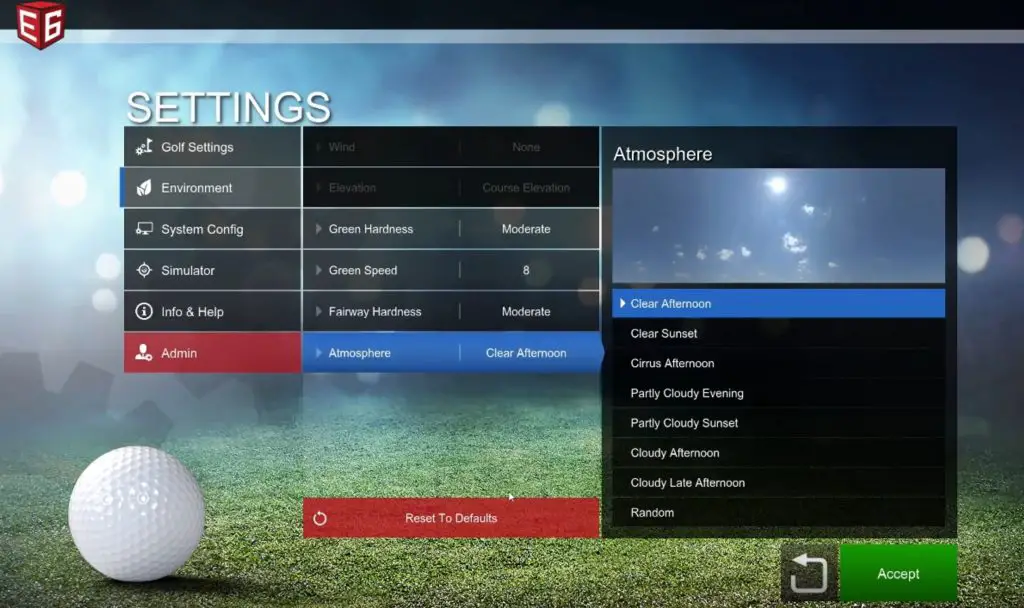
Three rows above carry hedges on purpose: SkyTrak’s menu location, FSX’s mid-round lock, and Uneekor’s current-version controls are owner-reported rather than manufacturer-documented — check your own version’s docs before relying on them.
Platform notes worth the extra sentence:
GSPro owns the realism conversation — its physics is a big reason it displaced TGC (“its developers play golf,” as the community verdict goes). The community fix-pattern for its one recurring gripe: tournament-firm default greens that don’t hold approach shots — owners soften green firmness and lower stimp per course rather than trusting defaults.
E6 Connect‘s ENVIRONMENT tab is the most complete consumer weather panel, down to a terrain-penalty toggle that changes ball physics from rough and sand. On lineage: E6 Apex is newer branding alongside E6 Connect, and how the two versions relate remains unresolved publicly — the E6 Connect manual was still live under that name at the end of August.
FlightScope‘s Environmental Optimizer exposes more variables than TrackMan’s Normalize — humidity and wind direction included — and offers two calculation modes (full-trajectory versus D-Plane impact-only). Remember the tier gate: base Mevo+ and Gen2 owners don’t get it; the Pro Package upgrade is the unlock (Mevo Plus in 2026 – Pro Package, Fusion Tracking + Face Impact Location Updates!). A demonstration of weather settings on the Mevo+:
Uneekor‘s software family renamed itself since this article first ran: Ignite is retired with the free VIEW as its evident successor, Succeed became Refine+ back in 2022, and GameDay is the current flagship course-play title (Uneekor Software Options – Comparison and Best Value Tips). You can learn lots more about the different software options available for the Uneekor QED and EYE XO here in my dedicated article.
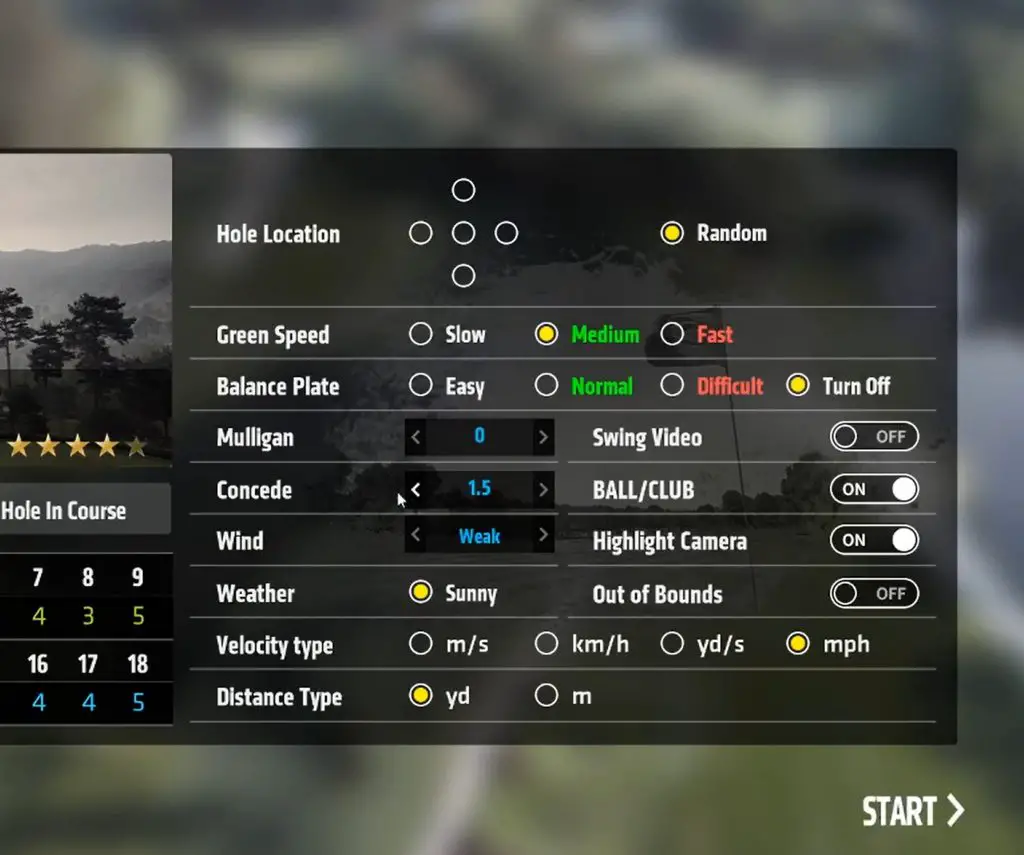
TGC 2019 leaves the table: no longer in active development or mainstream purchase, though legacy installs soldier on.
How players actually use these settings
The newest trend in the settings menus: players adding difficulty on purpose. One GSPro player documented their approach in August — deliberately layering wind, firmer fairways, faster stimp and tougher pins over recommended course settings to close the gap with real golf, playing rounds at course altitude, and listing “weather and conditions” among what still transfers worst. Nobody in the thread argued the wind should come off; the debate was over how much harder to go.
The formalization signal: a proposed open indoor-handicap standard published in July counts Wind Setting as a first-class difficulty input alongside green speed and gimme distance — wind is becoming a measured variable, not a novelty toggle.
The honest counterweights, from the same community: greens that don’t hold real-world spin remain the top realism complaint (the firmness/stimp fix above), and a skeptic camp holds that no settings menu replicates real conditions — wind you can’t feel, lies that are always flat, greens you can’t read. They’re not wrong; they’re describing the ceiling.
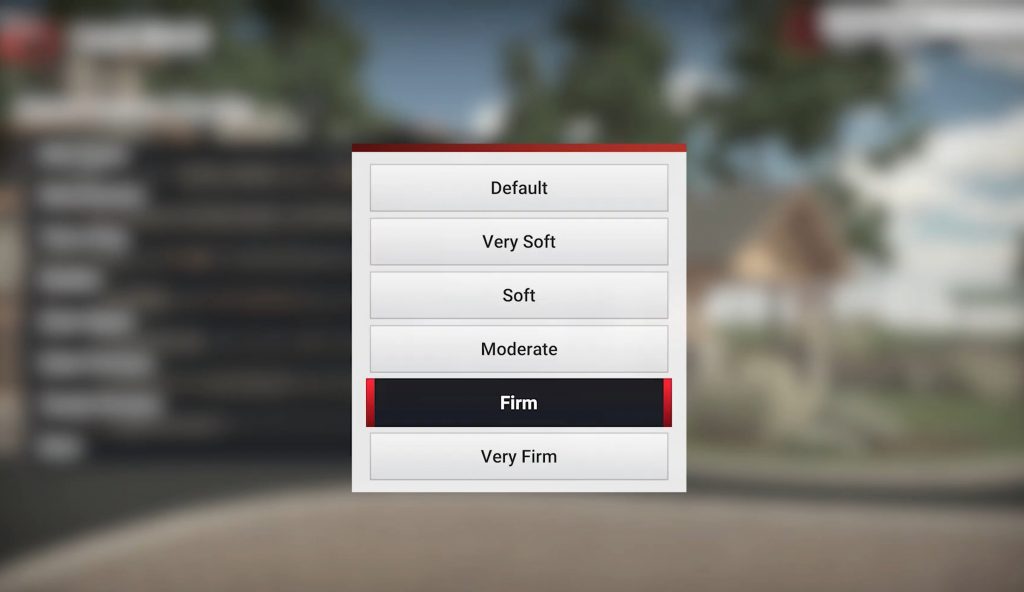
Ground hardness matters here too — firm settings change bounce and rollout dramatically. I would also really recommend practicing your game in very firm and fast conditions, particularly if you’re planning a round at a links course soon!
Real weather, part 1: the cold garage
Cold changes your numbers before it changes your comfort. Owners consistently report shorter measured carries in a cold bay with the same swing — and the community can’t agree on why: one camp blames the cold ball’s compression, the counter-argument blames cold, less-flexible muscles. No consensus exists; both fixes are the same anyway (warm the ball, warm the golfer).
What the winter-sim crowd actually does: preheat the space for 20–60 minutes before a session rather than heating continuously, insulate before buying a bigger heater, and let swinging warm the rest. Propane heaters earn their popularity with real caution attached — carbon monoxide worry is constant in those threads, managed with CO detectors and cracked doors. Treat that seriously. The full heating playbook lives at Garage Golf Simulator – 13 Key Challenges + Tips & Tricks and Golf Simulator Sheds – Size, Cost, Options & Ideas.
💡 One radar-specific quirk: a heater’s airflow crossing a radar unit’s beam path can cause misfires — owners angle the heater away while playing.
Real weather, part 2: humidity, condensation, and your electronics
The mechanism: warm, moist air meeting cold surfaces — your impact screen, launch monitor lens, projector optics. UK unheated garages see it worst from October to March, but the physics travels.
The owner consensus splits cleanly: cold storage alone doesn’t kill gear — plenty of owners report launch monitors and projectors surviving years in unheated garages through heat, cold and damp — while rapid warm-up is the real risk window. Bring a freezing unit into a warm room and water forms on every cold surface, optics included. Let gear acclimatize; heat the space gradually.
Check your unit’s actual tolerance band — they vary more than owners assume:
| Device | Operating band |
|---|---|
| FlightScope Mevo Gen2 | 0–40°C, 30–70% humidity (storage −10–55°C) |
| Garmin R10 | −10–55°C (charging 0–45°C) |
| Mevo+ / Mevo | Li-ion caution: no below-freezing or excessive-heat exposure |
| Typical BenQ projectors | Warranty void outside 0–35°C, 10–90% humidity |
| Uneekor overhead units | Indoors only, by explicit instruction |
Summer earns a line too: the hot months kept generating struggling-garage threads of their own this year — heat load is real (a golfer alone radiates a couple hundred watts, a projector as much again), which is why ventilation and mini-splits keep coming up. Comfort bands cited for home sims run roughly 59–72°F at 40–60% humidity — estimates from retail guidance rather than lab data, but sane targets.
Real weather, part 3: wind outdoors
Simulated wind moves pixels; real wind moves equipment. In one June outdoor test, a gust blew the tester’s net down and it landed inches from their launch monitor — the near-miss that convinced them protective enclosures earn their keep. A UK father-and-son marquee build fields the same questions — pegging plans with meter-long metal poles against winter wind, and a commenter’s blunt mold warning for damp climates. And in a neat symmetry: the same June tester’s Mevo+ visibly corrected shot trajectories for real wind as it blew — the flight model meeting actual weather in real time. The full outdoor playbook: How to use Skytrak Outside (see our 11 Point Checklist).
Golf Simulator Wind & Weather FAQs
Should I practice with wind on?
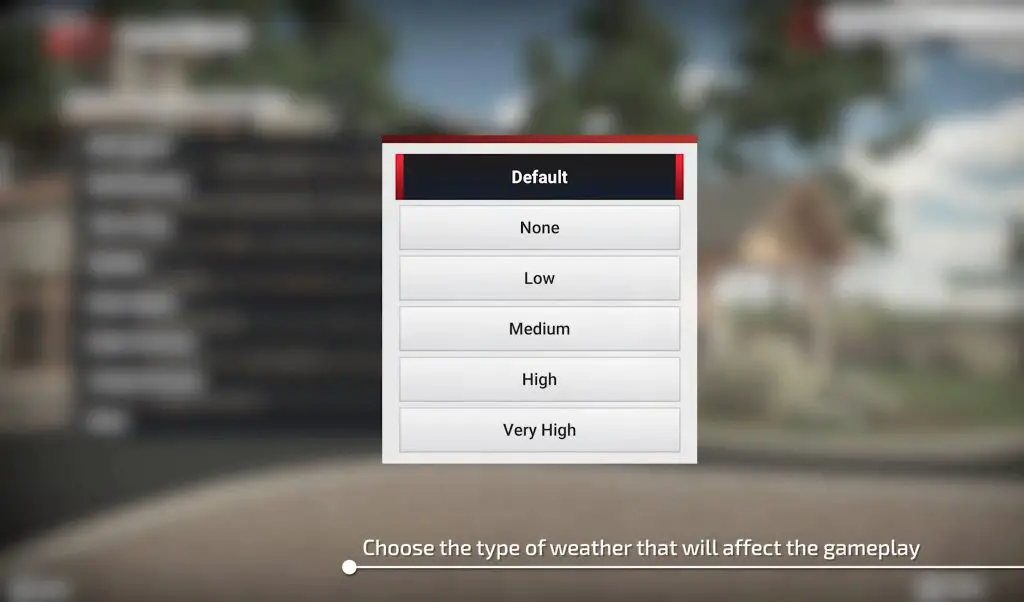
A small but visible camp now says yes, deliberately — calm defaults make sim golf easier than real golf, and added wind is their answer to the transfer problem. Start light and vary direction.
Why are my simulator distances different from real life?
Usually the reference conditions. Sims compute carries at calm, sea-level defaults unless told otherwise — set your altitude and temperature to your home course and the gap typically closes.
Can my simulator simulate rain?
Mostly no — wet weather lives in firmness settings (soft fairways, slow greens) rather than falling rain. The exception is new: Muni Golf’s free software added dynamic rain and fog in August 2026.
Which software lets me change the wind?
All the majors — GSPro and E6 per course, TrackMan and FlightScope through their environmental tools, SkyTrak in its session settings. The table above maps each.
Does a cold garage really change my numbers?
Yes — owners consistently measure shorter carries in the cold, whatever the cause (ball compression versus stiff muscles remains an open debate). Warm both and the numbers return.
Will winter damage my launch monitor?
Cold storage generally won’t; condensation from rapid warm-up is the risk. Acclimatize gear slowly and check your unit’s published operating band — they differ widely.
Set your conditions once, honestly — altitude, temperature, and however much wind you can stand — then go earn the numbers in whatever weather your garage is having.
Bushnell Launch Pro vs SkyTrak ST MAX (2026)
Golf Simulator Packages vs Building Your Own: Which Is Better Value?
ABOUT THE AUTHOR
Hello! My name is Alex and it is my mission to bring you all the information you need to build your own home golf simulator! I hope mygolfsimulator.com helps you on your journey to better golf at home!
LEGAL INFORMATION
On this site, you'll find articles on all aspects of building a golf simulator. I will also link to other sites where you can buy some of the simulator components. Some of these links may be affiliate links, which means if you click them I gain a small commission at no extra cost to you. This really helps out me and my site so thank you in advance! mygolfsimulator.com and all related social media accounts are property of Awonline LTD.