Uneekor EYE XO Accuracy Guide – Data, Error Margins, Setup & Calibration
Posted in Launch Monitor Data, Launch Monitors
How accurate is the Uneekor EYE XO? Very — by the spec Uneekor published at launch and by the owner record. Uneekor’s launch-era tolerance figures (±0.3 mph ball speed, ±100 rpm spin) no longer appear on its current pages, but a reviewer’s side-by-side against Trackman backs the spin numbers, and the unit’s reputation for few misreads has held for years. The honest 2026 caveats: club data draws far more owner distrust than ball data, one unresolved misread case exists above ~115 mph of club speed, and newer sticker-free rivals have reframed what “premium overhead” means. 👉 Quick Verdict.
In a Nutshell
Very accurate for ball data: the tolerances Uneekor published at launch (±0.3 mph ball speed, ±100 rpm spin) are backed by a reviewer’s Trackman side-by-side on spin and launch. Treat the EYE XO’s club data as useful but less trusted, because that is the record’s most-corroborated complaint.
👉 Trust the EYE XO’s ball data — Uneekor’s launch-era tolerances are specific, and the side-by-side record supports them. Treat the club data as useful but less trustworthy; that’s the record’s most-corroborated complaint. Use the stickers, keep the mount inside its 9–10 ft band, and know the two 2026 asterisks: very fast swings have one unresolved misread report, and the XO2’s third camera is where Uneekor’s accuracy attention went.
| What Uneekor published at launch | What the record says |
|---|---|
| Ball speed ±0.3 mph, spin ±100 rpm, spin axis ±0.2° | One reviewer’s Trackman side-by-side: spin “virtually identical, within 100 RPM” — supports the class |
| Launch angle ±0.5°, launch direction ±0.25° | Same side-by-side: launch within half a degree |
| Club speed ±0.5 mph, club path ±0.3°, face angle ±0.25° | The record’s biggest pushback: owners question club data far more than ball data — the record’s most-corroborated complaint |
| Misread reliability | A strength for years — with one unresolved high-speed case and a chrome-wedge caveat |
Jargon, once: photometric = camera-based capture of the ball and club at impact. Spin axis = the tilt that turns backspin into a draw or fade. Club stickers = the bar-and-dot decals Uneekor’s cameras read for club data. Misread = a shot registered wrongly, or not at all.
How this has changed
- The price collapsed. The original was written in the EYE XO’s ~$10,000 era; it now sells for $6,499 on Uneekor’s store, standalone (struck from $7,999) or as the AI Studio bundle (struck from $9,878), with the XO2 at $10,999.
- The XO2’s accuracy framing arrived: a third camera that one commenter credits with closing the gap to Foresight’s top tier — a characterization, not a manufacturer spec.
- The generation-behind talk hardened: three separate threads this summer describe Uneekor’s overhead line as trailing sticker-free rivals like VTrack and ProTee VX. That’s how commenters describe development attention — not a measured fact — and the record on it has grown since this site’s XO-vs-GC-Quad comparison was researched.
- A high-swing-speed misread case entered the record, unresolved — detailed below.
- Family context: Uneekor deprecated the QED with no advance notice, and that lifecycle anxiety now shadows Uneekor accuracy discussions.
The launch-era specs — still the article’s spine
Uneekor was one of the few manufacturers at any price to publish tolerance specs rather than adjectives. The figures below are the ones Uneekor published at the EYE XO’s launch, as the original version of this article recorded them. Uneekor’s current product page, help-center spec sheet and manual print no tolerances (21 October 2026), so read them as the launch claim, not a current spec:
| Metric | Tolerance published at launch |
|---|---|
| Backspin / topspin | ±100 rpm |
| Side spin | ±50 rpm |
| Spin axis | ±0.2° |
| Ball speed | ±0.3 mph |
| Launch angle | ±0.5° |
| Launch direction | ±0.25° |
| Club speed | ±0.5 mph |
| Club path | ±0.3° |
| Club face angle | ±0.25° |
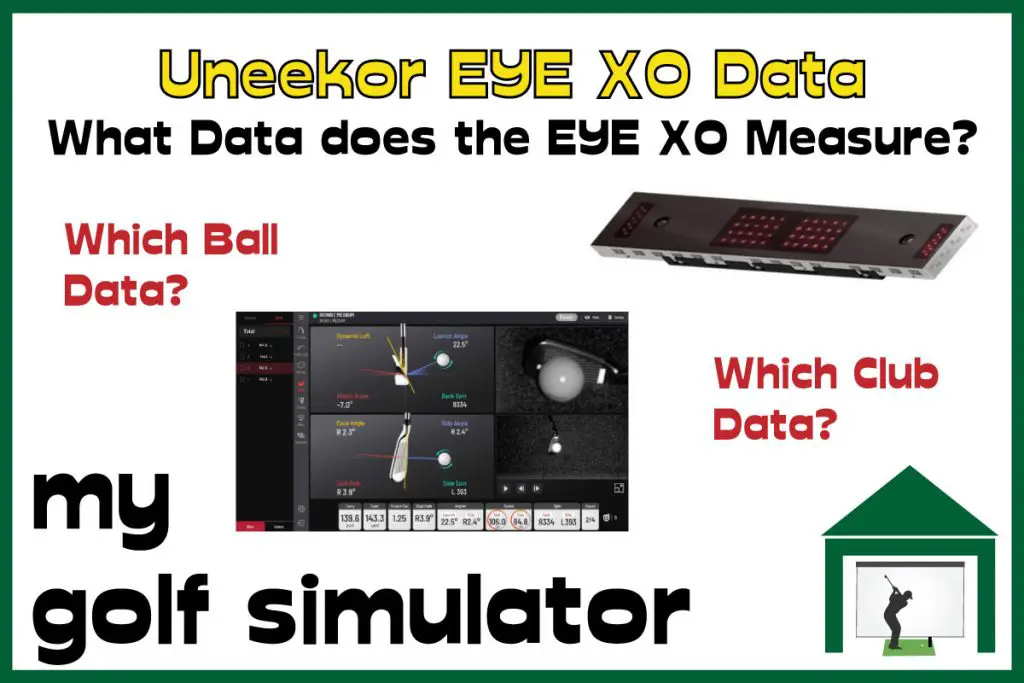
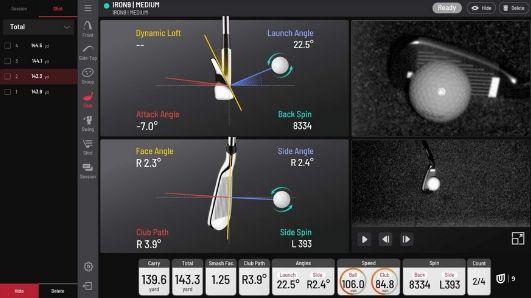
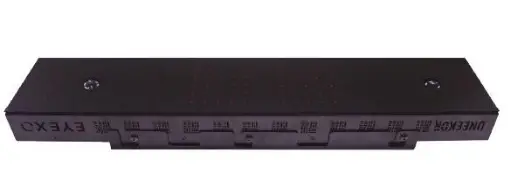
The hardware behind the claims: photometric capture via dual high-speed cameras running around 3,000 frames per second — roughly 25–30× faster than a smartphone’s slow-motion mode — watching the hitting zone from above. Ball data needs no marked balls; club data is where the bar-and-dot stickers come in. The ball-data rows above hold up best against independent testing; the club-data rows draw the most owner pushback — covered properly in the 2026 record below.
You can learn lots more about the ball and club data measured by the Uneekor Eye XO in my dedicated article here: Launch Monitor Data – 33 Parameters Explained
The corroboration record
- The Trackman side-by-side. One reviewer compared the EYE XO’s spin measurements with unmarked balls against Trackman sessions at a teaching facility: “The numbers are virtually identical, within 100 RPM on spin rates and half a degree on launch angles,” from wedges through driver. One reviewer’s personal testing, shot count undisclosed — framed exactly so.
- XO2-class comparison claims exist but stay unverified: figures like a claimed 0.5% ball-speed margin against GC Quad and a 1.5% margin against Trackman 4 circulate from single review sources with no disclosed conditions — treat them as unconfirmed at time of writing.
- The mount-band conditionality is Uneekor’s own. The manual attaches its 9–10 ft mounting band to a plain warning: “Failure to meet these requirements will result in accuracy issues.” Accuracy on this unit is installed, not just bought.
I am a member of numerous golf simulator groups in forums and on social media. I often hear golfers complaining about misreads, setup and accuracy problems with their Skytrak, Mevo Plus or other launch monitors. There are very rarely such problems with Uneekor’s launch monitors. That community observation still holds up in the record — now with the asterisks below attached.
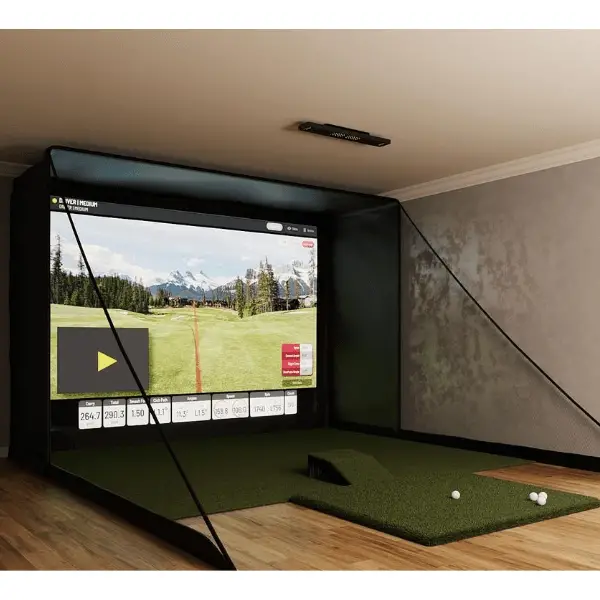
I believe that the Uneekor Eye Xo is a premium launch monitor that should be considered alongside the Trackman and GC Quad.
The 2026 record — the honest section
Club data is the record’s most-corroborated complaint. Owners repeatedly question the club numbers — path, face angle, club speed, smash factor — as unreliable or inflated, occasionally producing physically impossible readings, and trust them far less than the ball data (11 reports from 10 owners and reviewers, concentrated on the newer XO2 but describing the same sticker-based club-tracking system the original XO uses). Stickers are required for best club accuracy, and readings degrade if a sticker gets covered.
Worth reconciling honestly: an older 30-shot 9-iron study found the EYE XO’s attack angle, path, and lie angle “very similar” to a Trackman 4 — so the record holds both a small positive test and a broad owner skepticism. Both belong in the picture. If your buying case depends on fitting-grade club data, that’s the line to read twice.
The high-speed case, unresolved. A single-digit handicap reports the EYE XO “very accurate up until the club speed passes ~115 mph. Then it starts showing crazy misreads with trajectory… showing the ball is launching at like 5 degrees and carrying 80 yards.” Ball speed still registered correctly — only the launch conditions went wrong — and the owner ruled out the obvious fixes: “I’ve tried both with and without the stickers, no difference,” plus different balls and black tees to eliminate reflections. One counter-report in the same thread: a friend swinging 116 mph reads correctly “95% of the time.” One case versus one counter, unresolved. The community’s advice — escalate past first-tier support to Uneekor’s deeper technical staff — is advice, not a resolution.
The smaller print, itemized. Two further patterns belong in an honest accuracy record:
- Short game is the consistent soft spot even where full-swing ball data is trusted: flop shots, high-lofted wedges inside ~30 yards, and low-launch high-speed draws are the shot types owners report misreading or reading long/short (4 reports from 4 owners and reviewers, on the XO2).
- A minority reports sensor-frame quirks: club data that feels inconsistent to golfers arriving from Foresight or Trackman hardware, and a putting line that reads relative to the sensor rather than the line actually hit — straight putts occasionally rendered as pushed or pulled (4 reports from 3 owners).
The generation-behind chorus. Across three independent threads: “vtrack and protee are sticker less and any ball, uneekor is a full generation behind now and 3x the price.” Another commenter, on the sale-priced XO2: “Protee and VTrack are much better than the XO2. Quicker to detect ball, larger hitting area, only subscription fee is for GSPro, better camera integration (imo).”
The underlying argument is about development focus — rivals’ flagships get the attention. Nobody in the record defended stickers as an accuracy advantage; they’re treated as friction, not precision. This is commenter characterization of a market direction, not a measured accuracy verdict — but it’s the air the XO now sells in.
XO vs XO2 on accuracy
What’s documented about the XO2:
- Same tolerance class, per review sources: ±100 rpm backspin, ±0.5° launch angle, ±0.3 mph ball speed (Uneekor’s own XO2 spec sheet prints no tolerances).
- A third camera — “Brings its accuracy on par with GCHawk/Falcon,” in one commenter’s words, a characterization rather than a spec.
- Putting data off the face: ball speed, launch direction, and putter-face spin, per review sources.
What isn’t documented: no public matched test of XO against XO2 exists. Spec-versus-spec, not a shootout — the same honest gap the site’s comparison guide states plainly: Uneekor EYE XO Vs Foresight GC Quad – 18 Key Comparisons
The accuracy playbook
Accuracy problems on this unit are usually installation problems. In order:
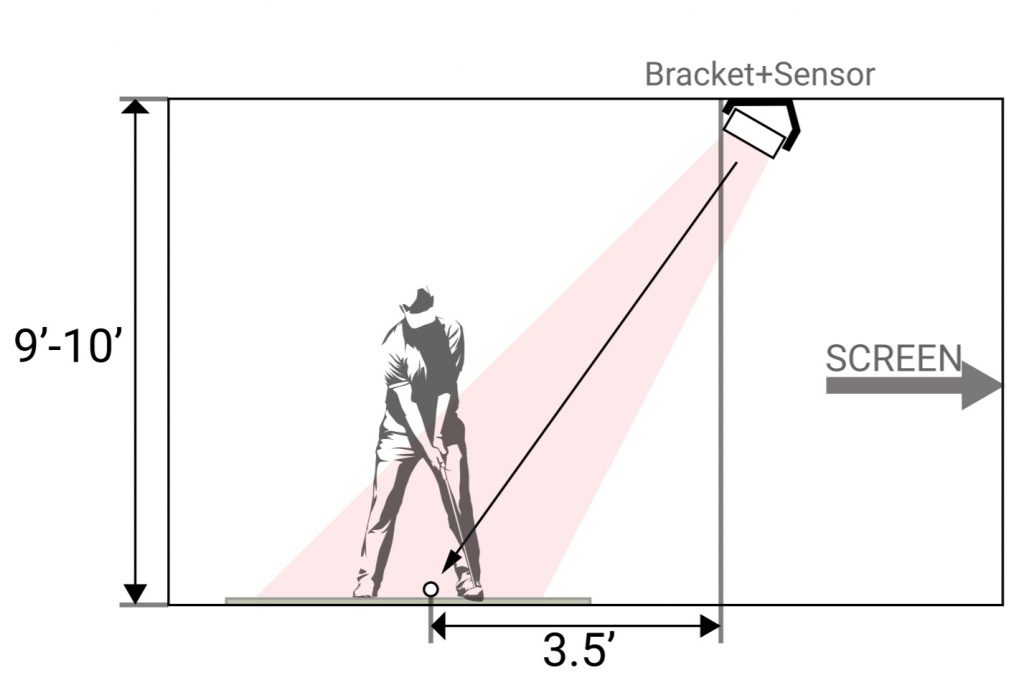
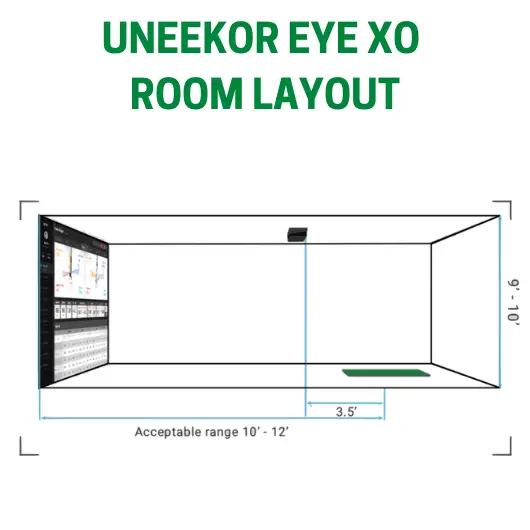
- Mount inside the 9–10 ft band, measured to the sensor — the manual’s own warning above is attached to exactly this requirement.
- Position it 3.5 ft in front of the tee, measured to the front/middle of the device — not the bracket. (Its QED sibling mounted behind the tee; the XO mounts in front. Don’t mix the two conventions.)
- Mount before you place the mat. Owners describe the alignment guidance as genuinely confusing — the manual, customer service, and the calibration software can each point at a different “center” (bracket, camera sensor, or calibration-defined hitting zone), and because the hitting zone can’t be moved in software, the unit’s position dictates the mat’s, not the other way around (8 reports from 6 owners, on the XO2 — the mount-first sequence is sound practice on the XO too).
- If you’re getting misreads, re-check position and recalibrate first — against the instructions, before anything else. Most misread stories end here.
- Stickers on for club data, applied per the guide, and replaced when worn or covered.
- Watch reflective clubfaces. Chrome wedges bouncing infrared back at the sensor are the record’s one repeat misread trigger — corroborated on the XO2 (6 reports from 5 owners and reviewers) and matching what XO owners have reported for years; black tape on the face, or a non-chrome wedge, fixes it.
- Keep the lighting steady: no flickering fixtures and no bright lights aimed at the sensors. (Swing Optix cameras, if you add them, carry their own lighting requirements.)
- Ethernet direct to the PC beats wireless for a unit this data-dense.
- Garage installs: mind the temperature, not too anxiously. Prospective buyers worry about summer heat and sub-spec winter cold, but owners report years of trouble-free operation across wide swings — from the 30s to over 100°F — and Uneekor support confirms cold-end operation as long as the unit stays dry and warms up gradually (8 reports from 7 owners). A pre-session heater solves the comfort problem and the condensation risk in one move.
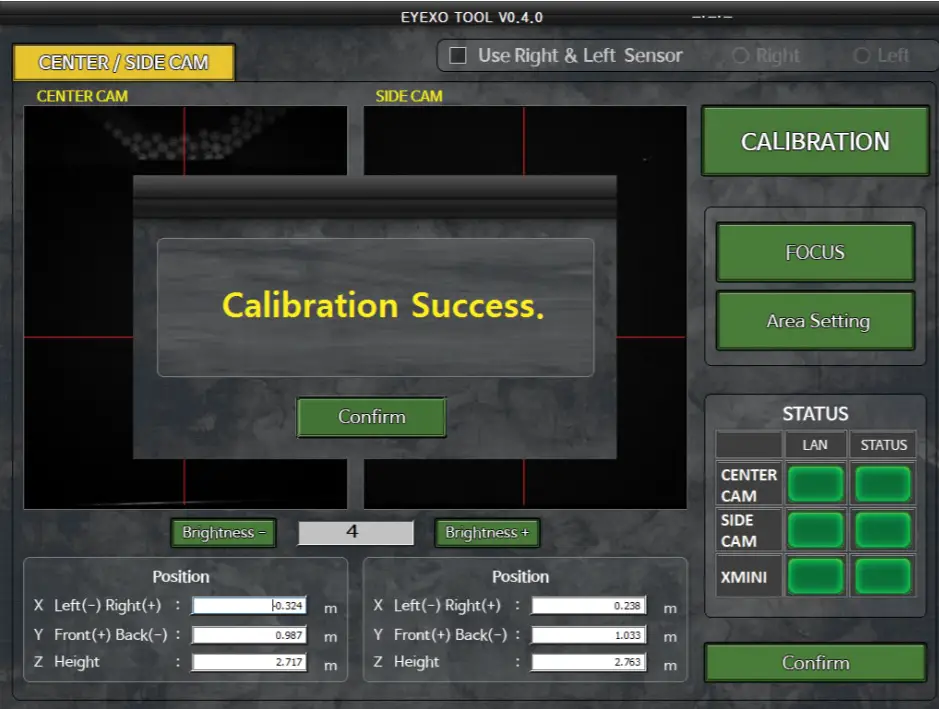
Calibration is straightforward, but here’s a fantastic video from Golf Simulator Videos on Youtube showing you how to do it step-by-step.
Full room geometry, ceiling bands, and width guidance live in the dedicated guide: Uneekor EYE XO Space Requirements
I believe the Uneekor EYE XO is the Best Value Launch Monitor on the Market
I believe it is worth the $10,000 price tag all day long! That verdict was passed when the EYE XO actually ran ~$10,000. Today the same unit bundles for roughly a third less ($6,499 for the AI Studio bundle at Uneekor on 21 October 2026), which makes the value claim arithmetically stronger — even as the competitive picture sharpened around it.
The counter-voices ship too: “Uneekor is overpriced and for the cost not worth it,” says one commenter flatly, and the sticker-free rivals’ case from the 2026 record above is the serious version of that argument. A real-world price anchor from the summer: a full XO sim kit sold at $9.9k in a June sale (from a $12.5k list), while a used XO with Swing Optix held $6,500 — a narrow new-versus-used gap for hardware this far into its cycle.
💡 Buying used? Budget the paperwork: the original owner must formally unregister and transfer the unit, Uneekor is reportedly slow on transfer requests, the warranty doesn’t carry to a second owner, and there’s a real transfer fee — roughly $100 for the XO plus ~$50 per accessory license (3 reports from 3 owners).
If the launch-era tolerances, the misread reputation, and the overhead mounting fit your room and your buying case, click below to take the plunge on a launch monitor that will provide years of high-end, highly accurate golf simulation. And if sticker-free club data matters more to you than a proven record, read the rivals’ case first — it’s the strongest it has ever been.
Uneekor EYE XO accuracy FAQ
Does the EYE XO really hit ±100 rpm on spin?
That’s the spec Uneekor published at launch (its current pages print none), and the one Trackman side-by-side in the record supports the class — “virtually identical, within 100 RPM.” No large independent lab test exists, so the honest answer is: the spec is credible and unrefuted, not independently proven.
Do I need the club stickers?
For ball data, no — unmarked balls work fine. For club data, yes in practice: the bar-and-dot stickers are recommended, included, and the club numbers degrade without them (or with a covered sticker).
Why is my fast swing misreading?
One documented, unresolved case shows exactly this above ~115 mph club speed. The tell: ball speed stays correct while launch conditions go wrong. Re-check position and calibration first, then escalate past first-tier support — the deeper technical staff handle cases like this.
Is the club data as accurate as the ball data?
No — and that’s the most-corroborated owner complaint in the record, concentrated on the newer XO2 but describing the same sticker-based club system the XO uses. Ball data is the EYE XO’s proven suite; club data is useful directional information that owners trust less, sometimes much less. One older small study found club-adjacent metrics close to Trackman, so the record isn’t uniformly negative — but buy it for the ball data.
Is the XO2 more accurate?
Same tolerance class in review-reported figures, plus a third camera one commenter credits with reaching Foresight-tier accuracy — a characterization, not a spec. No matched XO-vs-XO2 test exists.
Is it still worth it against VTrack and ProTee VX?
The record’s live argument. Sticker-free and newer versus cheaper-than-ever and proven: the rivals detect faster and skip the stickers; the XO answers with its launch-era published tolerances, a long misread-reputation, and a 35% lower price than its own launch era. Both cases are real — the room, the budget, and how much you care about club data decide it.
The bottom line
The specs were always the EYE XO’s spine, and they’ve aged better than its market position: the launch-era ball-data tolerances still read like a dare to the competition, the price fell by a third, and the 2026 asterisks — club-data trust, one fast-swing mystery, sticker-free rivals — are the honest print under a verdict that still favors the unit. Buy it for the ball data, install it by the manual, and it will out-measure its price.
Bushnell Launch Pro vs SkyTrak ST MAX (2026)
Golf Simulator Packages vs Building Your Own: Which Is Better Value?
ABOUT THE AUTHOR
Hello! My name is Alex and it is my mission to bring you all the information you need to build your own home golf simulator! I hope mygolfsimulator.com helps you on your journey to better golf at home!
LEGAL INFORMATION
On this site, you'll find articles on all aspects of building a golf simulator. I will also link to other sites where you can buy some of the simulator components. Some of these links may be affiliate links, which means if you click them I gain a small commission at no extra cost to you. This really helps out me and my site so thank you in advance! mygolfsimulator.com and all related social media accounts are property of Awonline LTD.