Protee VX Space Requirements
Posted in Launch Monitors
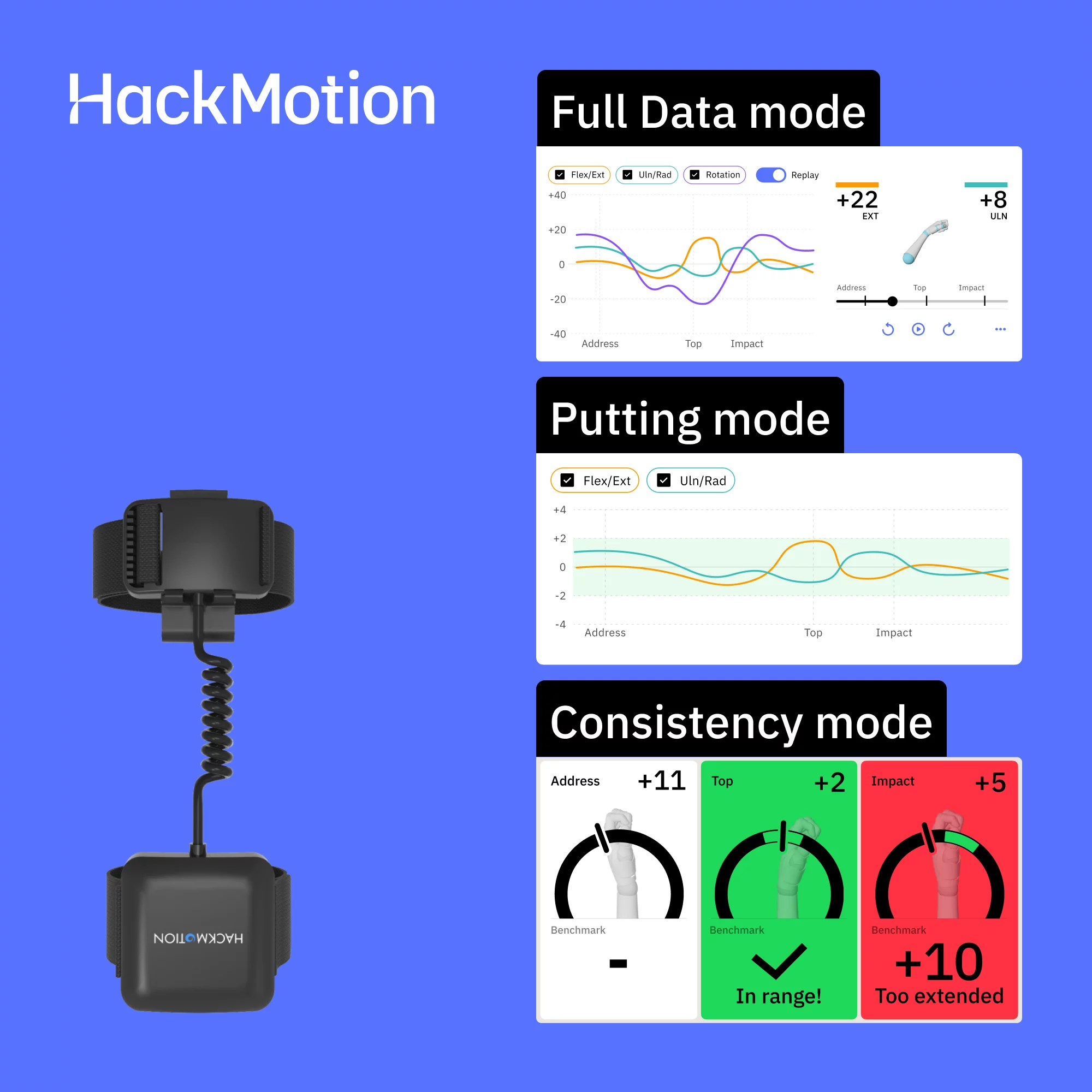
The ProTee VX mounts 9–10 ft above the mat and 3 ft 4 in–3 ft 7 in ahead of the ball, and wants 8 ft of clear space to your left, right and behind you — that is all the manual says about space. It sets no tee-to-screen distance and publishes no room size. The rest is the site’s arithmetic from those inputs, plus what owners report in 2026 about ceilings under 9 ft, driver carry, and a June outage.
In a Nutshell
The ProTee VX mounts 9–10 ft above the mat and 3 ft 4 in–3 ft 7 in ahead of the ball, wants 8 ft clear to each side and behind, and sets no tee-to-screen distance. On the site’s arithmetic that is a bay about 17–19 ft long and 10–15 ft wide. The manual’s minimum ceiling is 9 ft and 10 ft is recommended; ProTee’s support calls 8 ft 6 in low but workable.
👉 A VX bay works out to about 17–19 ft long (8 ft behind you, 8–10 ft to the screen, a foot behind it), 10 ft wide at minimum and 15 ft for a centered aim, under a ceiling of 9 ft as the realistic minimum and 10 ft recommended — and the unit itself sets no tee-to-screen distance.
- Under 9 ft: owners run it at 9 ft, and one at 8 ft 3 in above the mat, each a single report. The manual’s floor is 9 ft; ProTee’s own tests call 8 ft 6 in low but workable and 8 ft 4 in too low.
- Wired, not Wi-Fi: a 10 m Cat6 cable to a USB-to-Ethernet adapter on a USB 3.0 port.
- No subscription: ProTee Labs is free and Windows-only; GSPro or E6 is licensed separately.
- Two 2026 caveats: driver carry reads short for some owners, and a June activation outage stuck units on “Looking for Updates” (six owners, rising).
Jargon, once: overhead launch monitor = a ceiling-mounted camera looking down at the ball. Setback = how far ahead of the ball it hangs. Hitting area = the mat position the manual measures from. ProTee Labs = the VX’s free practice software, unlocked by an activation code. GSPro / E6 Connect = course-play software the VX feeds shots into. RCT = a radar-reflective ball some radars need; not the VX.
About the author. Alex White, founder of mygolfsimulator.com, is an expert on the space requirements of launch monitors like the Protee VX. With over half a million words personally written on golf simulators, including in-depth analysis of numerous launch monitor indoor space needs over four years, Alex combines practical experience and extensive knowledge. His expertise is rooted in personally designing, constructing, and consulting on multiple golf simulator rooms, frequently addressing the challenges of space constraints.

How this has changed since 2023
- June 2026: a software update left many units stuck on “Looking for Updates”; owners’ workaround was to start ProTee Labs with the internet disconnected, then reconnect.
- July–August 2026: owners report driver carry reading short; a forum test and a reviewer land on opposite sides of the gap — handled in the accuracy section.
- 2026 pricing: the list price came down and the SwingBay package is widely discounted — figures in the price section.
- The comparison moved: ProTee’s cheaper VTrack arrived, and Uneekor’s subscription for third-party software pushed buyers toward the VX.
- Unchanged: the manual’s mount numbers. TGC 2019 is gone from the software list.
Where the VX mounts
| Configuration | Mount height above the mat | Setback ahead of the hitting area |
|---|---|---|
| Minimum | 275 cm (9 ft) | 100 cm (3 ft 4 in) |
| Maximum | 305 cm (10 ft) | 110 cm (3 ft 7 in) |
The two numbers pair: the higher you mount, the farther forward it sits. The plate’s arrow points toward the impact screen and sits parallel to it; the unit slides in until the index plunger clicks.
One owner’s numbers, with the mat 8 ft from the screen: “The ProteeVX is 3’ forward from the center of the hitting mat.”
The contrast that matters: the VX hangs in front of you. So do Uneekor’s EYE XO and XO2, at 3.5 ft ahead of the tee — only the Uneekor QED mounts 3.5 ft behind it, at the same 9–10 ft height. The Foresight GCQuad is a floor unit beside the ball.
Cabling. The box holds a 10 m (32 ft) Cat6 cable and a USB-to-Ethernet adapter, which goes into a blue USB 3.0 port. That settles this summer’s unresolved Reddit question about Wi-Fi — the connection to the unit is wired, and only the PC’s own internet can be wireless.
Room length: the site’s sum
| Segment | Figure | Source |
|---|---|---|
| Behind the hitting area | 8 ft | ProTee manual |
| Tee to screen | 8–10 ft | Site convention; the VX itself needs none |
| Behind the screen | 1 ft or more | Site guidance |
| Total | 17–19 ft | Computed |
The VX reads the ball and club in the space between the mat and the unit, so the tee-to-screen figure is the site’s safety and bounceback convention, not a VX requirement; owners run camera units at 6–9 ft from the screen (14 reports), which is what makes a 17 ft room workable. By class, overhead units need about 14–18 ft of depth and radar units 16–21 ft; the manual’s generous 8 ft rear clearance puts the VX at the top of the overhead band.
Longer figures circulate for overhead bays — 10–12 ft to the screen and 7 ft behind the golfer; the author’s view: I don’t think the entire 10-12 feet of tee-to-screen distance, nor the full 7ft behind the golfer are necessary, and I think the longer distance is suggested for reasons related to safety and bounceback. The sums above use the manual’s 8 ft behind the hitting area and the site’s 8–10 ft to the screen.

Wedge clearance: the length worry owners actually voice is wedges clearing the screen. Standing farther back makes a miss more likely, not less, so the fix is a screen tall enough for your wedge apex, not a longer room (8 reports).
Room width
| Layout | Width | Source |
|---|---|---|
| Offset aim | 10 ft | Site convention |
| Centered aim, both-handed play | 15 ft | Site convention |
| The manual’s literal clearances | 16 ft-plus | 8 ft each side of the hitting area, ProTee manual |
The manual’s 8 ft each side is a swing clearance, not a room spec — taken literally it describes a 16 ft-plus bay, more than most home rooms have and more than the site asks for. The site’s rule: 10 ft with the aim offset toward one wall, 15 ft for a centered aim. If your swing is broad or you are tall, you will require more room. For a smooth simulator experience, I usually suggest at least 15 feet of room width.

Both-handed households get the overhead advantage: Labs can detect handedness automatically, and nothing moves — unlike a floor unit that has to be re-positioned for a left-hander (Rapsodo MLM2Pro Space Requirements).
Ceiling height
Measure above the mat. The manual’s 9–10 ft is measured above the mat, and a hitting mat takes 2–2.5 in off a raw ceiling reading: a room that measures 9 ft floor to ceiling gives roughly 8 ft 9.5 in above the mat — under the manual’s minimum.

| Ceiling above the mat | Verdict | Evidence |
|---|---|---|
| 8 ft 3 in | Below spec, working for one owner | One owner reports no misreads with patterned balls (single report); ProTee’s own testing calls 8 ft 4 in too low and does not recommend it |
| 8.5 ft | Only for shorter, flatter swings | The site’s swing exception; ProTee’s testing calls 8 ft 6 in low but workable, with a ball like the TP5 for correct spin on high-speed shots, and found no issues at 8 ft 8 in |
| 9 ft | The manual’s minimum; the site’s realistic minimum | A secondhand report calls it “pretty comfy”; one commenter would be “a little nervous before dropping $10k+” |
| 9 ft 4 in | Proceeding | One prospective buyer with 9 ft 4 in was proceeding, ProTee’s site still quoting 9 ft as the minimum |
| 10 ft | Recommended | One owner’s 6 ft 7 in friend “has no issue swinging” (single report) |
Living with a low ceiling. Scraping the ceiling is a rite of passage in low rooms (12 reports), and the fear of it corrupts the swing. Take note that other overhead launch monitors have been successfully mounted at heights lower than 9 feet. I can’t promise that data accuracy won’t be an issue (or that you won’t hit the unit with your swing) because this is lower than the recommended height.

In theory, you could hit your ProTee VX or projector with your ball—especially if you sky a driver—but in my research on forums and the internet, I’ve found that most people don’t find it to be as big of a problem as they first thought.
Before you mount your ProTee VX or projector, try placing cardboard boxes where they would go. Then, hit balls as high as you can. Sky a shot with an old driver and a tall tee and then hit the highest flop shot you can manage. If you miss the boxes even when trying, you’ll have every reason to be confident when swinging with the real deal mounted.
The community runs the same test: “You could even tape a cardboard box to the ceiling where the VX would sit just to see if it gets in your head during a full swing.” Raising rafters is real money; the ceiling ladder is at What’s the Minimum Golf Simulator Ceiling Height?.
Setup details that touch the room
- First-use calibration with the supplied plate from ProTee Labs; recalibrate any time if results drift.
- One ball in the play area at a time; the status reads “Ready for shot” once the unit sees it.
- LED ring lights on each camera switch on when the software needs them.
- Balls: No stickers or dots required on the golf balls when using the Protee VX. You don’t need specific brands of balls (such as Titleist RCT). You can use any premium golf ball of your choice; my favorite is the Titleist Pro V1. One owner runs patterned Truvis balls exclusively.
- Lighting: no minimum is published; the low-light complaints concern the optional swing cameras, not the launch monitor (three reports).
- Putting: ProTee publishes no putting-specific setup guidance.
What the VX gives you
Twenty numbers on the Labs summary screen:
- Ball data: ball speed, launch, spin, carry, apex, offline, total, run, descent.
- Club data: club speed, attack angle, dynamic loft, path, face, lie, face-to-path, smash factor.
- Impact: height and width on the front-view panel.
Then the video: the VX provides slow-motion replays of your club striking the golf ball, taken from the overhead cameras. This was previously a feature only seen in premium overhead devices such as the Uneekor EYE XO/XO2. I’m so impressed that this technology is now available at this price.
ProTee Labs is a free perpetual license, Windows-only, unlocked with an activation code from your reseller. Course play needs GSPro or E6 Connect, licensed separately (Launch Monitor & Golf Simulation Software – Compatibility Guide for 2026). There is no CSV export or API; ProTee’s support center confirms shot data and video cannot be downloaded. The PC floor per ProTee: 64-bit Windows 10, an i7-8xxx-class processor, 8 GB of RAM, an RTX 3060-class card, broadband and 5 GB of space.
Accuracy and reliability, as owners report it
Ball data. The strongest pattern is satisfaction: owners call the VX reliable and would buy it again (12 reports from 11 owners); GCQuad owners put its ball data near parity, and a reviewer’s indoor testing puts it within 1–2 % of a Foresight GC3.
Driver carry. A forum test had VX carry roughly 10 % shorter than a TrackMan 4, and two owners this summer said the same in different sizes — “It’s about 5% short with driver.” and “It’s around 10 yards or so short.” One added 2,000 ft of elevation in Labs to get the numbers they expected; the other, playing through GSPro, pushed back: “if anything it overestimates carry.” Check carry against a course you know.
Club data. Attack angle, path and club speed are inferred rather than tracked, and owners trust them less than the ball numbers (nine reports): “I love my proteeVX but the club data is just horrid. Ball data rocks”.
Spin. When one owner posted a 3,400 rpm driver number, five commenters blamed strike, shaft and ball rather than the unit: “I don’t think you should be blaming the LM.” (the LM being the launch monitor).
The June 2026 outage. Units sat on “Looking for Updates” for days, one of them shutting an indoor-sim business for a night; the workaround owners found: “Disconnect your Internet, startup protee labs, then reconnect your Internet”. One owner’s lesson: “every brand relies on subscriptions and always being on the internet to work.” Against that, two owners report six months and two-plus years of otherwise trouble-free use.
Price, bundles and warranty
Price. The VX is $6,500 at Carl’s Place, Shop Indoor Golf and Rain or Shine Golf with no struck price (21 October 2026; reviews earlier this year described a markdown from $7,000), and the SwingBay package with an enclosure runs $9,999 on sale at Rain or Shine Golf (was $12,026). Check the ProTee VX at Carl’s Place. There is no subscription — Labs is bundled free, and owners cite that against Uneekor’s move to charge for GSPro access (seven reports); comparison sites use the same line against the Trackman iO, listed from $13,995.
Warranty. One year, limited, for the original purchaser through an authorized reseller; it excludes accident, misuse, outdoor use and negligence, and is void on units bought through auction sites. Dealer bundles add a 5 × 5 ft Fairway Series mat (about 1 in, holds a real tee) or a 4 × 7 ft SIGPRO.
VX vs other overhead units on space
| Unit | Where it sits | Setback | Ceiling or depth | Note |
|---|---|---|---|---|
| ProTee VX | Overhead | 3 ft 4 in–3 ft 7 in ahead of the ball | 9–10 ft mount height | No tee-to-screen requirement |
| Uneekor QED | Overhead | 3.5 ft behind the tee | 9–10 ft | Measured from the sensor front, not the bracket |
| Uneekor EYE XO / XO2 | Overhead | 3.5 ft in front of the tee | 9–10 ft | Drop mount if the ceiling is outside the range |
| Foresight GCQuad | Floor, beside the ball | 22 in from the hitting zone | Comfortable room about 18 ft deep | No ceiling dependence |
| Trackman iO | Overhead | Per its installation manual | 270–320 cm mount bands; 8 ft 2 in minimum tee-to-screen | Use the manual, not the no-minimum marketing line |
| Radar floor units (Mevo+, KIT, R10) | Behind the ball | 6–9 ft behind | 16–21 ft of depth | They track the ball’s flight, so they need the most room |
Radar is the class that eats depth. The detail pages: Uneekor QED Space Requirements, Foresight GC Quad Space Requirements – Length, Width & Height, Trackman Space Requirements – Indoor and Outdoor, and the master guide at How much space do you need for a Golf Simulator?.
ProTee VX space requirements FAQ
Can the VX go under a 9 ft ceiling?
The manual’s minimum is 9 ft above the mat. One owner runs it at 8 ft 3 in without misreads; the site treats 8.5 ft as workable only for shorter, flatter swings. ProTee’s support center reports no issues at 8 ft 8 in, calls 8 ft 6 in workable with a ball like the TP5, and does not recommend 8 ft 4 in.
How far ahead of the ball does it mount?
3 ft 4 in at a 9 ft mount height, 3 ft 7 in at 10 ft — the two numbers pair.
How far from the screen should you stand?
The VX sets no distance. The site’s convention is 8–10 ft for safety and bounceback.
Can lefties and righties share it?
Yes. ProTee Labs can detect handedness automatically, and the unit does not move.
Cable or Wi-Fi?
Cable: the supplied 10 m Cat6 into a USB-to-Ethernet adapter on a USB 3.0 port.
Is there a subscription?
No. ProTee Labs is a free perpetual license; GSPro or E6 Connect are paid separately.
Does it need special balls?
No stickers, dots or RCT balls — any premium ball.
What PC does it need?
64-bit Windows 10, an i7-8xxx-class processor, 8 GB of RAM, an RTX 3060-class card, broadband and 5 GB free.
Summary
The manual’s minimums are 9–10 ft above the mat, 3 ft 4 in–3 ft 7 in ahead, and 8 ft clear to each side and behind. I recommend 21ft+ of room length, 15ft of room width and 10ft+ for an optimal, comfortable golf simulator experience in which you can achieve a centred aim and accommodate golf simulator extras such as seating or practice aids.
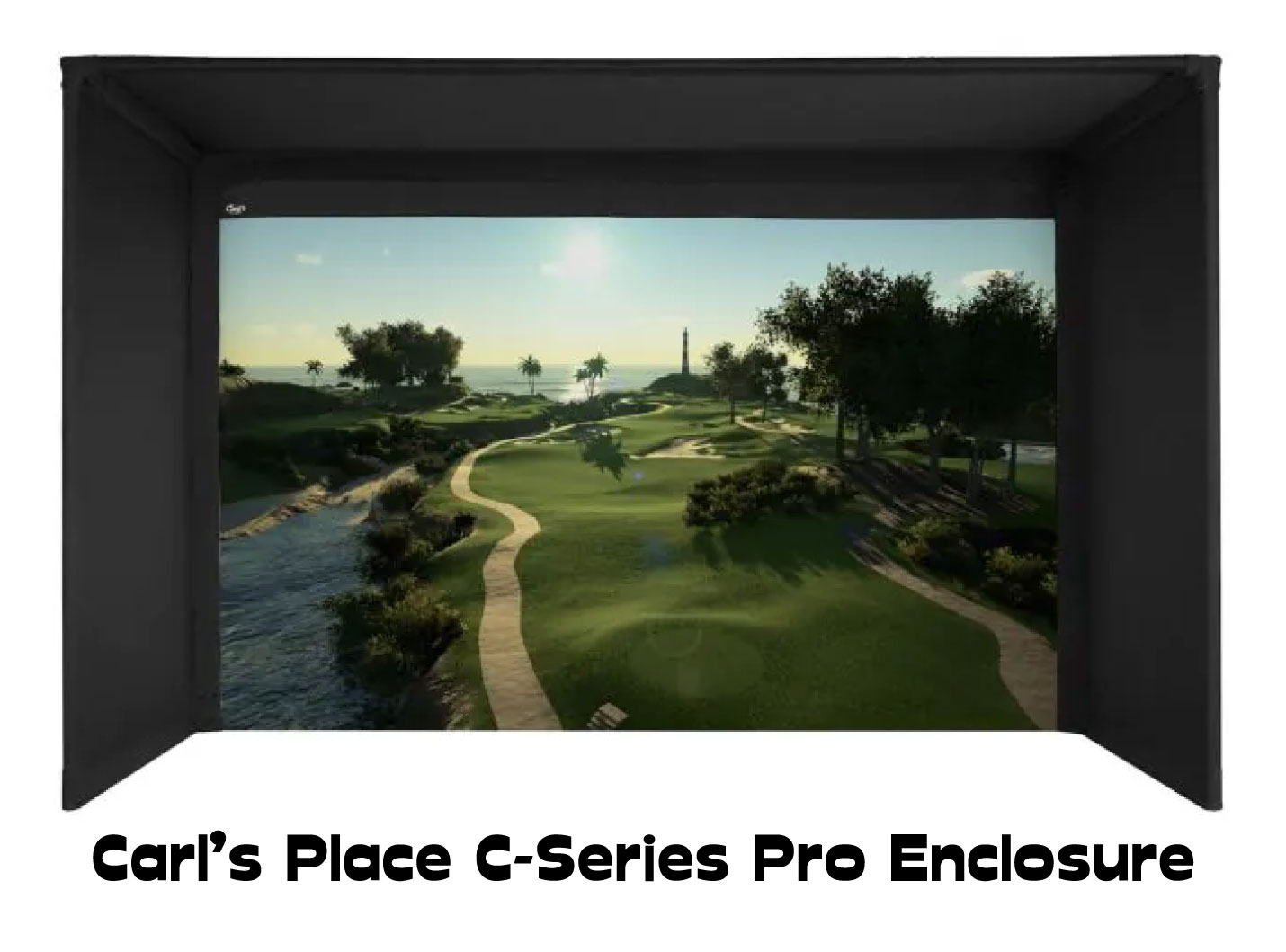
Carl’s Place Pro Golf Enclosure Review (2026): What’s in the Box, Real Cost and Owner Reports
Is SkyTrak Portable? Battery, Direct Mode and Range Days (2026)
ABOUT THE AUTHOR
Hello! My name is Alex and it is my mission to bring you all the information you need to build your own home golf simulator! I hope mygolfsimulator.com helps you on your journey to better golf at home!
LEGAL INFORMATION
On this site, you'll find articles on all aspects of building a golf simulator. I will also link to other sites where you can buy some of the simulator components. Some of these links may be affiliate links, which means if you click them I gain a small commission at no extra cost to you. This really helps out me and my site so thank you in advance! mygolfsimulator.com and all related social media accounts are property of Awonline LTD.