Golf Simulator Control Box – Complete Guide
Posted in Golf Simulator Software, Your Swing Studio
A golf simulator control box puts the software actions you use mid-round — club selection, mulligan, camera-view toggle, tee reset — on physical buttons at the hitting bay, so you never walk back to the PC between shots. Owners consistently name that walk as the friction that kills session flow (3 owners). In 2026 there are four ways to solve it: a retail box ($140–$300, now sold in software-specific versions), a DIY build (~$60–$140), a macro pad you remap, or a tablet app for $10 or less. Which route fits you depends on budget and how you play — here’s the honest map.
In a Nutshell
A golf simulator control box puts club selection, aim, mulligan and view changes on physical buttons at the hitting bay, so you never walk back to the PC between shots. For most golfers a $30 wireless keyboard or a ~$10 tablet app does the same job; buy a retail box ($140–$300) when you want real buttons with a club in hand, and buy the version mapped to your sim software.
👉 For most golfers, a $30 wireless keyboard or a ~$10 tablet app solves the walk-back problem. Buy a dedicated control box when you want club-in-hand control with real buttons — and buy it for your software, because retail boxes are now sold in GSPro-specific and SkyTrak-specific versions with the button mapping locked to that title.
| Route | Typical cost | Honest caveat |
|---|---|---|
| Retail box (Roxor, Club Keyboard) | $140–$300 | Software-specific SKUs — match the box to your sim title |
| DIY build (arcade kit / Raspberry Pi) | ~$60–$140 | One builder’s verdict: “not really much savings over an Etsy buy” |
| Macro pad / Stream Deck | ~$50–$150 | You do the remapping yourself; no golf-specific labels |
| Tablet app / keyboard | $0–$30 | Touchscreens and shortcuts work — just not with a club in your hand |
Jargon, once: hotkey mapping = tying a physical button to a keyboard shortcut the sim software already understands. RF dongle = a small USB radio receiver (distinct from Bluetooth — some “wireless” boxes are RF-only). Macro pad = a small programmable keypad. SKU = a specific product variant; control boxes now ship as per-software SKUs. GSPro = the simulation software many boxes are now mapped to. SkyTrak = a launch monitor family sold with its own control-box SKUs.
How a control box works
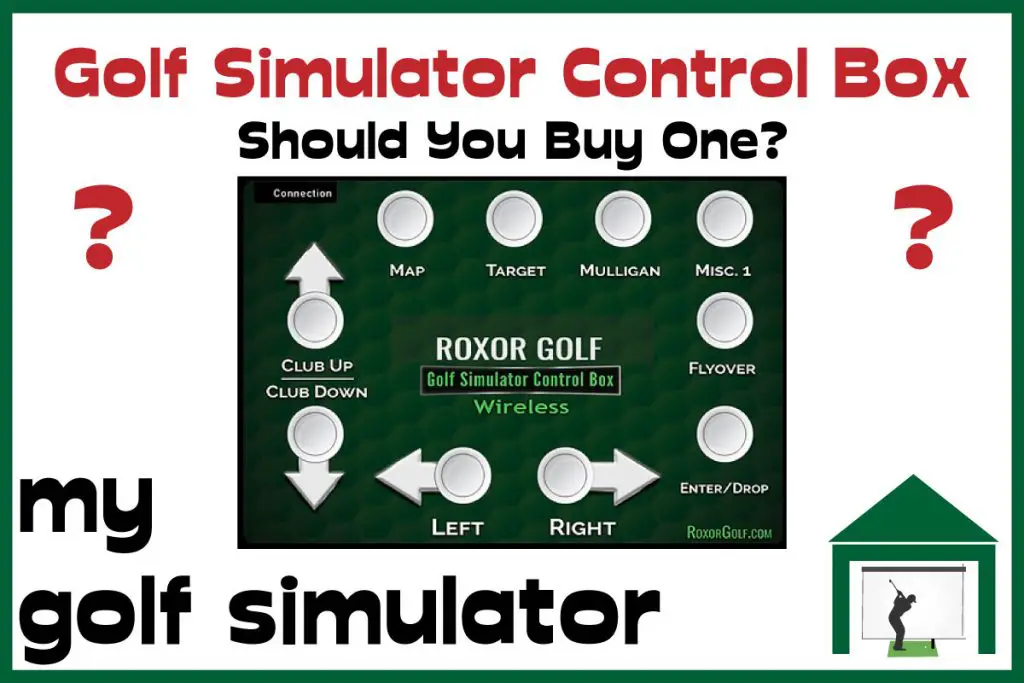
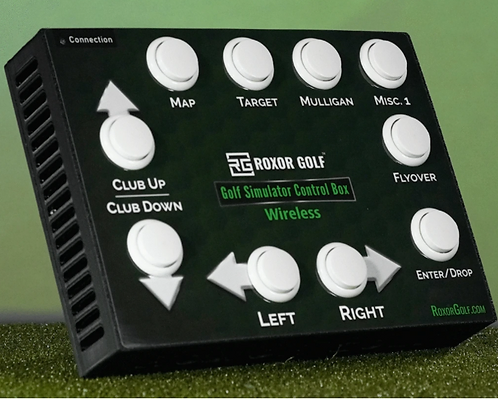
Under the hood, nothing exotic: the box is a keyboard in disguise. Each button sends a keystroke the simulator software already recognizes — the same hotkey mapping you could do from a real keyboard, moved onto big, labeled, golf-glove-friendly buttons. Wired boxes plug in over USB; wireless ones use an RF dongle (the Roxor “GSPRO (Wireless)” SKU is explicitly RF, not Bluetooth, while other Roxor wireless SKUs sell as Bluetooth — the RF unit needs one open USB port, runs on a 3×AAA pack, and reaches about 30ft).
One thing the original version of this article got wrong, and the correction matters at checkout: control boxes are not universally compatible with every sim program anymore. Retail boxes are sold per-title — Roxor’s lineup is mostly GSPro-prefixed SKUs plus SkyTrak variants, Club Keyboard sells GSPro-specific and SkyTrak-specific models, and Indoor Golf Outlet’s house-brand box is GSPro-only. The button mapping is tied to the named software, and GSPro itself is never included in the box.
The launch-monitor half of the old claim survives, with the right scoping: the box talks to the software, not the launch monitor. Any launch monitor that drives your sim title works with a box mapped to that title.
And the benefit is real, if simple: the settings and the round stay under your control at the bay. As the original put it: “The last thing you need is your 7-year-old changing all the settings by accident!” One owner, who wrote his own software workaround for GSPro’s stubborn menus, summed up the payoff: “the control box lets me play a whole round with nothing but my golf club in hand.”
Route 1 — Retail boxes ($140–$300)
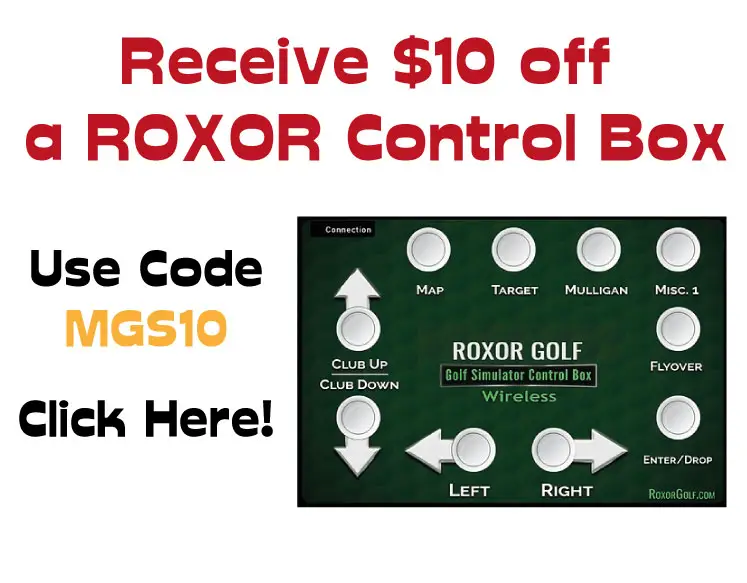
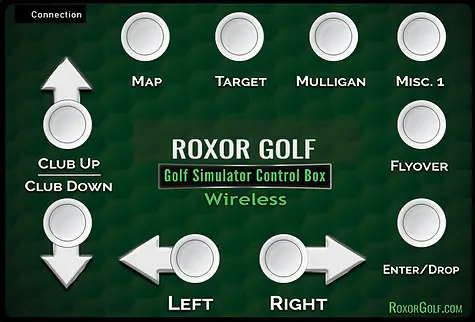
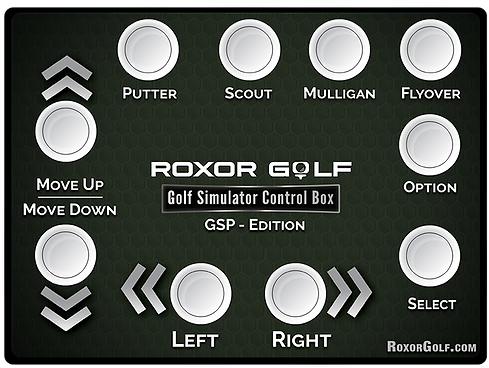
The author’s tested pick stands from the original article: “I recommend the Roxor Control Box , which features 10 fully customizable buttons and a range of design options. It is fully compatible with all golf simulation programs and launch monitors.” That last sentence dates from the universal-mapping era — today that promise holds for the SKU matched to your software, because Roxor boxes are sold per-title now. Design and color options remain on some SKUs.
The current retail map, as of 21 October 2026:
| Box | Seen at | Notes |
|---|---|---|
| Roxor GSP Plug & Play (wired) | $140 | GSPro mapping |
| Roxor GSP-TB / GSP-Edition / MAG14 | $160–$300 | Wired and wireless variants |
| Club Keyboard Classic 2 → Elite/Pro 2 | $199.99–$299.99 | GSPro and SkyTrak SKUs |
| Retailer house brands (e.g. Indoor Golf Outlet) | varies | GSPro-only, 3D-printed, hand-built in the USA |
What the community adds:
- Roxor has had zero fresh discussion on r/Golfsimulator this summer — no complaints, no praise, just quiet.
- One buyer called ClubKeyboard the “gold standard” — phrased as a question, and nobody in that thread confirmed actually buying one.
- bacustomproducts.com and an Etsy seller called Matt both draw repeat independent recommendations, and the pattern behind them is instruction quality and responsiveness from small vendors (6 owners).
- Wireless reliability draws scattered complaints (3 owners) — battery drain, and one account of a melting charge cable. Wired is the boring, dependable choice.
- The Roxor wireless SKU carries a 6-month warranty on the retailer’s current listing.
The original’s closing endorsement also stands, as the author wrote it: “I recommend the Roxor Control Boxes. They’re well priced and provide excellent functionality for all launch monitors and golf simulator software programs. Roxor is a veteran-owned small business, and every control box is handmade. Roxor offers excellent customer support too!” The same scoping applies — buy the SKU built for your software, per the table above. Veteran-owned checks out against current listings (Roxor is a Disabled Veteran Owned Business); “handmade” remains the author’s own description of Roxor’s process, not independently re-confirmed here.
Route 2 — DIY builds (~$60–$140)
The DIY story got much clearer this summer, because one builder documented his costs end-to-end:
- digitaljoel’s Raspberry Pi Pico 2 build, tracked across two threads in early August: “I’m $150 in to building my own from scratch” mid-build, then the finished verdict — “All in about $140, so not really much savings over an Etsy buy, but this is 1/1.”
- A second builder in the same thread undercut that: “I’m in this for 60$ and the buttons light up, not necessary but cool.”
- A third put it at “$50 all in”; a fourth called the DIY route approachable “if you’re ok with a soldering iron, wood and software.”
- The cautionary tale: one owner bought a ~$50 Arcade Stick F300 to program himself — “Got it programmed but game doesn’t recognize it.” Same owner, two threads, still stuck.
Arcade button kits and Arduino-class boards are the common parts bin (4 owners). Two commenters said they’d buy ready-made open-source plans if someone published them — demand nobody has met yet. One builder shared a free layout-prototyping tool so you can test a button arrangement on screen before you drill holes.
The honest DIY summary: it’s a fun project with real customization, and it saves serious money only if you keep the parts list minimal.
Route 3 — Stream Decks, macro pads and gamepads (~$50–$150)
A programmable macro pad does everything a control box does, minus the golf labels.
- Stream Deck is the macro pad owners mention most (5 owners) — though the praise is older; nobody named it fresh this summer, so the newer picks in Route 4 are worth a look too.
- A wireless gamepad — one owner floated the idea but hadn’t tried it.
- Mini Bluetooth keyboards — another owner tried them and found the experience “clunky” before switching to an iPad.
If you already own a macro pad, this route costs you an evening of hotkey mapping and nothing else.
Route 4 — Tablets, apps and the $0 floor
The budget end got genuinely good:
- iPad apps are a popular control surface (5 owners for the GameGlass/iPad approach).
- Touch Caddie, an iPad app, was recommended fresh this August: “I want to say it’s like $10.”
- One builder put his own control app free on the Windows Store and runs it from an iPad on a stand.
- The $30 Amazon wireless keyboard remains the baseline: “Works great if you remember the shortcuts.”
- The true $0 answer, from one owner: paper labels stuck next to the keys you actually use.
One skeptic’s take deserves its line: a plain keyboard is fine, and a box is a luxury. That’s a fair reading of this whole guide — the box buys convenience, not capability.
This is the question nobody could answer in 2021, and owner threads have now settled most of it. Ranked by how often owners report reaching for each button:
- Aim left/right — the consensus top buttons, named first in every usage account.
- Mulligan — second for casual play: “the top 3 buttons that are used are the aiming buttons and the mulligan. I rarely use fly by or heatmap, but they were the two best buttons i could think of.”
- Club up/down — core for most players who discussed mapping.
- Fly-over — the agreed least-used button across accounts.
- Heatmap — contested, one report each way: one owner uses it “the most,” another rarely touches it.
- The counterpoint: one tour-style player takes no mulligans at all (“play SGT tour” — the Simulator Golf Tour circuit) — usage depends on how you play.
- The sleeper: the builder who started the thread nominated hide-bushes — “hide the bushes is the one I probably use most after aiming…”
One genuine software gap, flagged as such: GSPro’s menus still aren’t keyboard-navigable. One owner wrote a custom AutoHotkey script (a free Windows automation tool) specifically to work around it. Until the developers address it, boxes control the round, not the menus.
Setup and compatibility
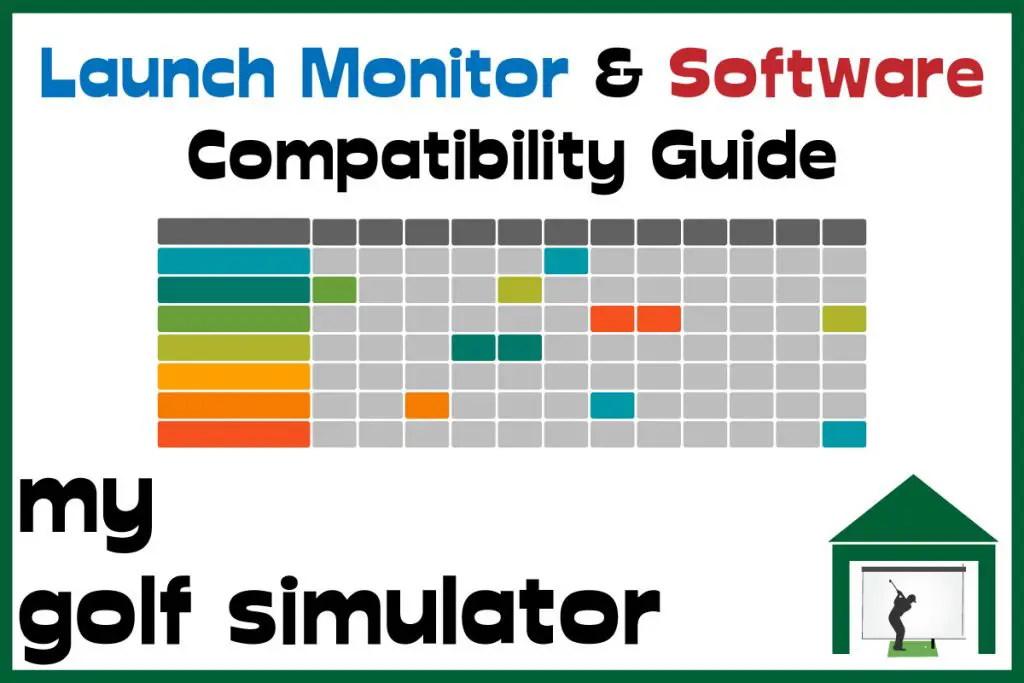
Setup is genuinely plug-and-play on current retail boxes: plug in the USB cable or RF dongle (no Bluetooth-style pairing on the RF dongles — plug in and go, per the one unit documented), confirm your software SKU’s mapping, and hit balls. For the deeper software-by-software picture: “Check out my dedicated post all about launch monitor – simulation software compatibility here.” Launch Monitor & Golf Simulation Software – Compatibility Guide for 2025
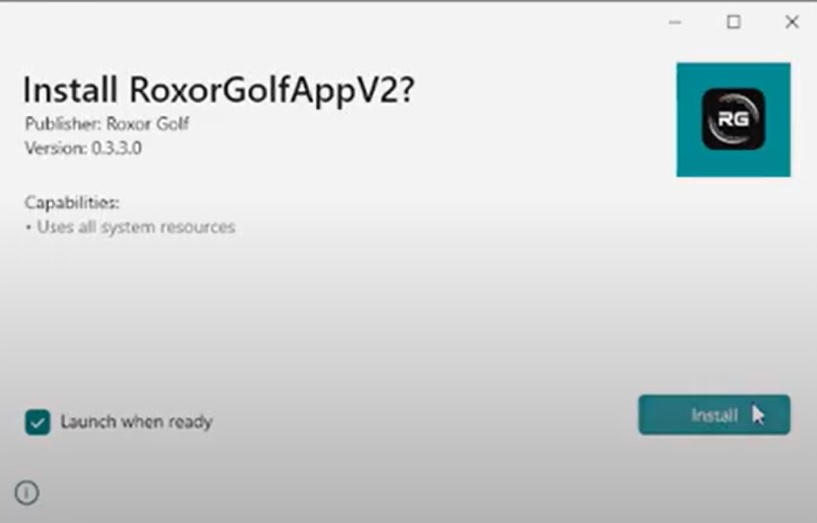
For visual setup help: “Here’s a video from Roxor Golf on Youtube showing you how to set up a control box with TGC 2019. There are many more useful setup and tip videos on Roxor’s channel page.” TGC 2019 predates most of today’s SKUs — the channel remains the vendor’s setup resource, and the same steps apply to current SKUs.
One live gap worth knowing: a buyer asked this July for a box that works across GSPro, Uneekor GameDay and the upcoming PurePlay — and nobody answered. Since then, cross-platform boxes have started to appear: Elite Sim Golf now lists Club Keyboard controllers sold for both GSPro and PurePlay (21 October 2026), though none listed there covers GameDay.
FAQ
Does a control box work with any sim program and any launch monitor?
The box types keystrokes, so anything keyboard-drivable can work with remapping — but retail boxes ship mapped to a named title (GSPro or SkyTrak SKUs), so buy the version for your software. Launch monitors are the easy half: the box talks to the software, so whatever monitor drives your sim title works.
What about E6, Awesome Golf, GameDay or PurePlay?
One retailer’s collection page claims its Roxor/Club Keyboard lineup covers GSPro, E6 and Awesome Golf — that’s marketing copy, unverified SKU-by-SKU, so confirm the specific listing before buying. The GameDay/PurePlay question was asked in the community this summer and went unanswered. Club Keyboard’s GSPro and PurePlay controllers have since reached retail; GameDay is still a gap.
Wired or wireless?
Wired for reliability. Wireless works (RF dongle, ~30ft range) but carries the reliability caveats covered in the retail-box section above.
What’s the cheapest way to solve this?
Paper labels on your keyboard ($0) → a $30 wireless keyboard → a ~$10 tablet app → a ~$60 DIY build. The retail box is the premium tier, not the entry point.
Is GSPro included with a control box?
Never — GSPro is always a separate purchase.
Summary
- You want zero fuss and real buttons: a retail box in your software’s SKU — Roxor remains the author’s tested pick (Roxor Control Box).
- You like projects: DIY lands at $60–$140 and fits your hand exactly — just budget honestly.
- You already own a macro pad: remap it tonight.
- You want it solved for $30 or less: keyboard, app, or paper labels — the walk back to the PC is optional at every price.
Bushnell Launch Pro vs SkyTrak ST MAX (2026)
Golf Simulator Packages vs Building Your Own: Which Is Better Value?
ABOUT THE AUTHOR
Hello! My name is Alex and it is my mission to bring you all the information you need to build your own home golf simulator! I hope mygolfsimulator.com helps you on your journey to better golf at home!
LEGAL INFORMATION
On this site, you'll find articles on all aspects of building a golf simulator. I will also link to other sites where you can buy some of the simulator components. Some of these links may be affiliate links, which means if you click them I gain a small commission at no extra cost to you. This really helps out me and my site so thank you in advance! mygolfsimulator.com and all related social media accounts are property of Awonline LTD.