Foresight GC3 Data – What Data does the GC3 Measure?
Posted in Launch Monitor Data
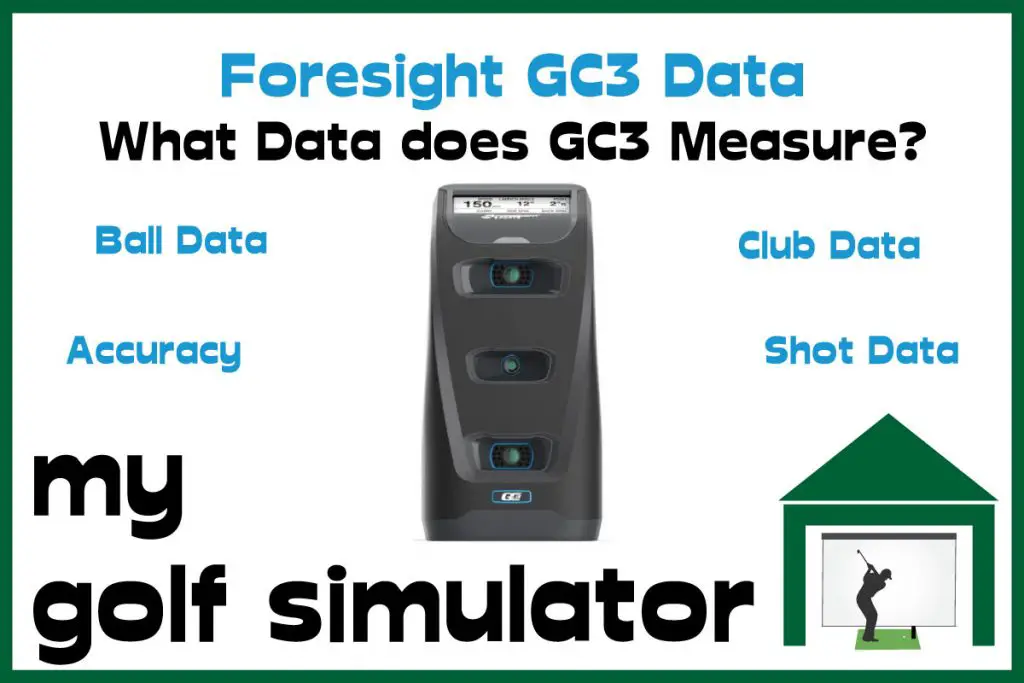
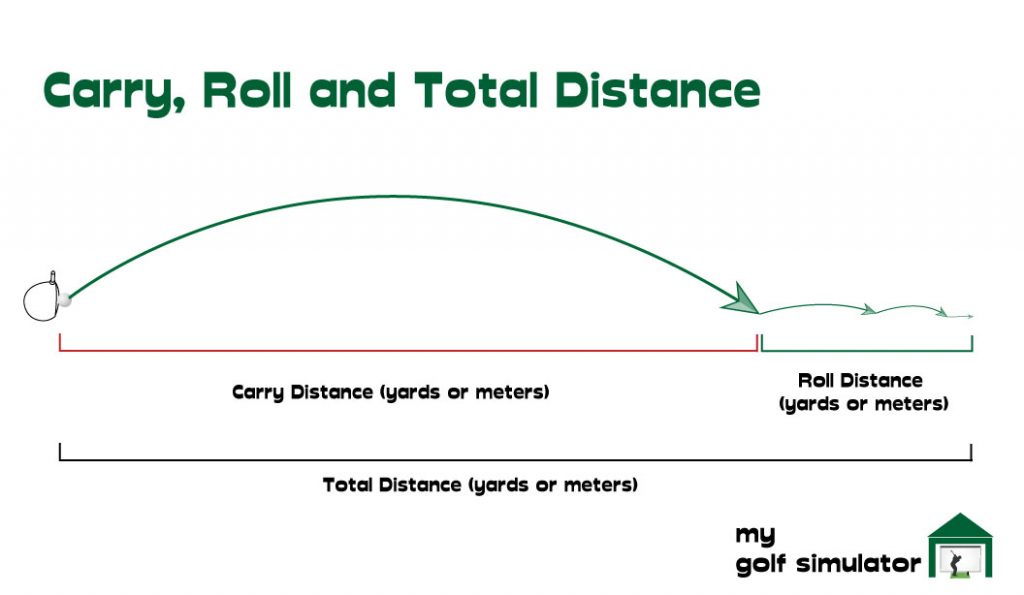
What data does the Foresight GC3 measure? Its three cameras directly measure five ball parameters — ball speed, launch angle, side angle, total spin, and spin axis — and, with a club sticker applied, three club parameters: club head speed, club path, and angle of attack. Smash factor is derived from two of those, and carry, total distance, and trajectory are modeled by software from the measured launch conditions. That’s the clean answer the spec sheets blur.
2026 has added context you need before buying, though: the GC3 lists at $6,999 but sold at $3,999 on 20 October 2026, the subscription-tied GC3S variant has been quietly phased out, and Foresight has launched Foresight+, its subscription plans. All covered below — along with two corrections to what this article used to claim.
In a Nutshell — the Data Table
The GC3’s three cameras measure five ball numbers (ball speed, launch angle, side angle, total spin and spin axis) and, with a club sticker, three club numbers (club head speed, club path and angle of attack). Carry, total distance and trajectory are modeled by software from those measurements.
👉 Before you buy new, read the subscription section below: new units now ship with a Foresight+ trial, and GSPro needs the Gold plan.
In this guide: In a Nutshell · Measured vs modeled · Ball data · Club data & stickers · What it doesn’t measure · The subscription question · Software & fine print · Accuracy · How this changed · FAQ
Jargon, once: photometric means camera-based measurement (as opposed to radar); a club marker is the small reflective sticker the cameras track on your clubface; measured vs modeled is the difference between what the cameras actually see and what software calculates from it.
| Parameter | Measured or modeled? | Sticker needed? |
|---|---|---|
| Ball speed | Measured | No |
| Launch angle (vertical) | Measured | No |
| Side angle (horizontal) | Measured | No |
| Total spin | Measured — read from the dimple pattern | No |
| Spin axis | Measured | No |
| Club head speed | Measured | Yes |
| Club path | Measured | Yes |
| Angle of attack | Measured | Yes |
| Smash factor | Derived (ball speed relative to club speed) | Yes (needs club speed) |
| Carry & total distance, apex, trajectory | Modeled by software from measured launch conditions | — |
👉 Bottom line: the GC3 measures what matters most directly and models the rest. The honest gap against Foresight’s four-camera GCQuad tier is club face detail and putting analysis — not ball data.
Measured vs Modeled — Why It Matters
Why does the measured-vs-modeled split matter? A measured number is the cameras reporting what actually happened; a modeled number is only as good as the physics engine guessing the rest. Indoors, where the ball flies just fifteen feet before it hits a screen, almost everything you see past ball speed and spin — carry, apex, total distance — is that guess.
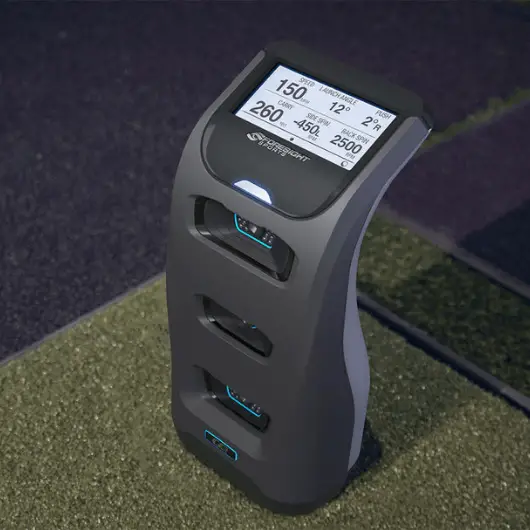
The GC3’s three cameras (Foresight’s “Triscopic” system) photograph the ball through its first stretch of flight and read spin straight off the dimple pattern, no marked balls needed, with data on the display in under two seconds. That measured foundation is exactly why camera units built this way have become the reference class for indoor use — and exactly why the model built on top of it earns its own scrutiny (see Accuracy).
Ball Data in Detail
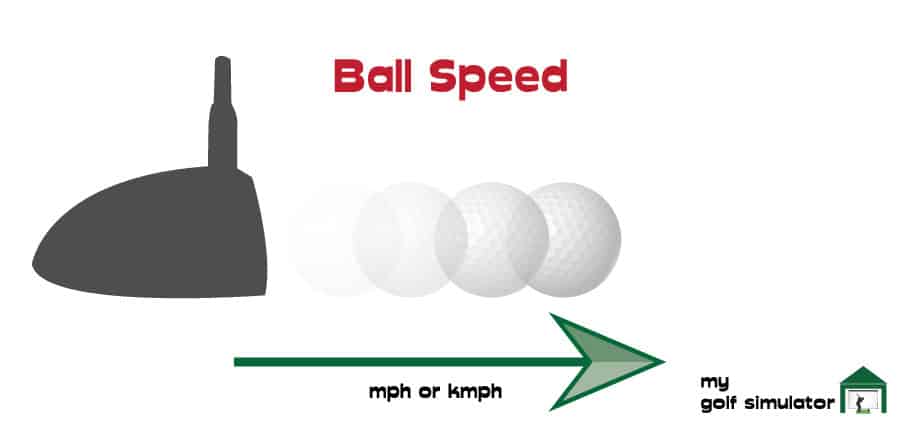
- Ball speed — the speed as the ball leaves the face; the single biggest input to carry. Higher ball speed, all else equal, means longer shots.
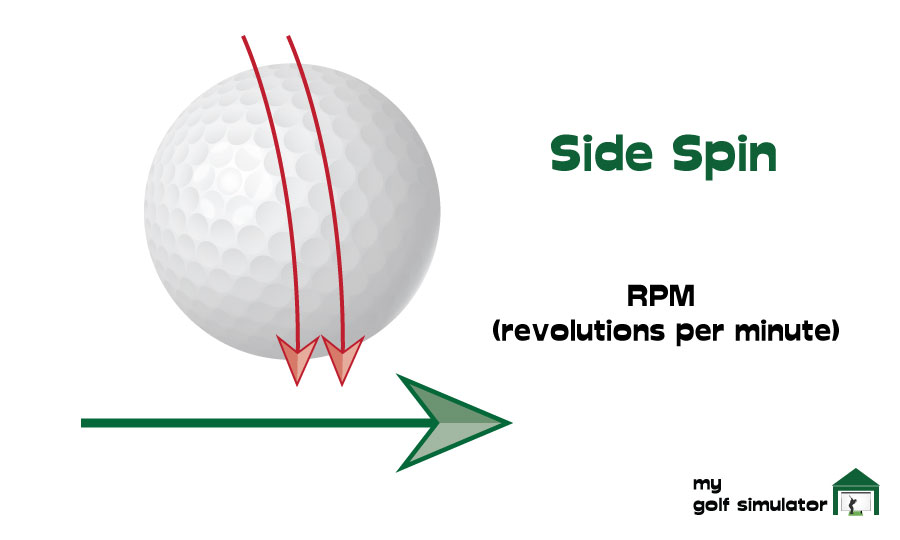
- Total spin and spin axis — the ball only ever spins in one combined direction; the spin axis describes the tilt of that rotation (a leaning axis is what curves a draw or fade), while total spin is the rate. The GC3 measures both rather than inferring them.
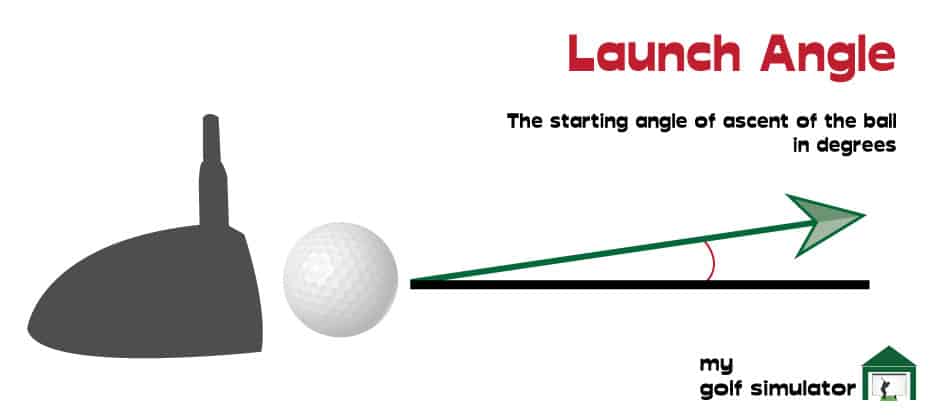
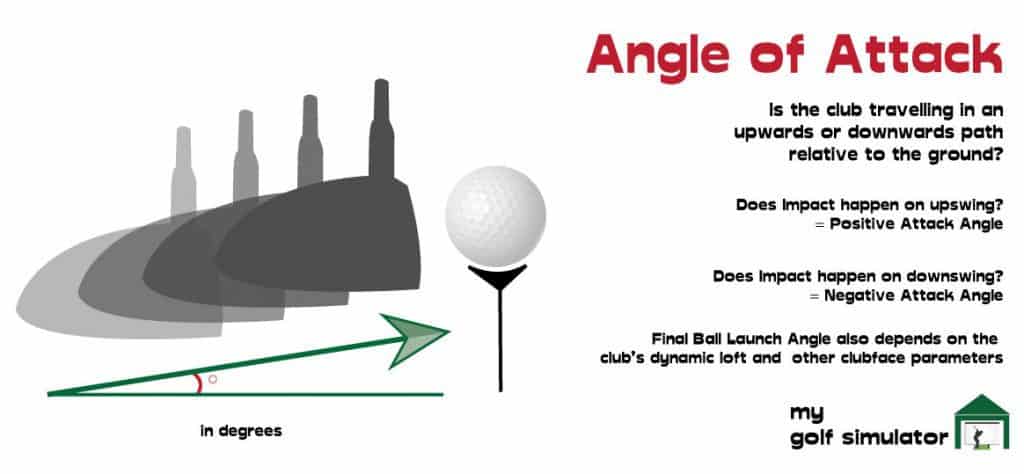
- Launch angle — the vertical take-off angle relative to the ground. You should find your launch angle always reads slightly lower than your dynamic loft (the club’s effective loft at impact, not the number stamped on the head) — a useful sanity check that has survived every version of this article.
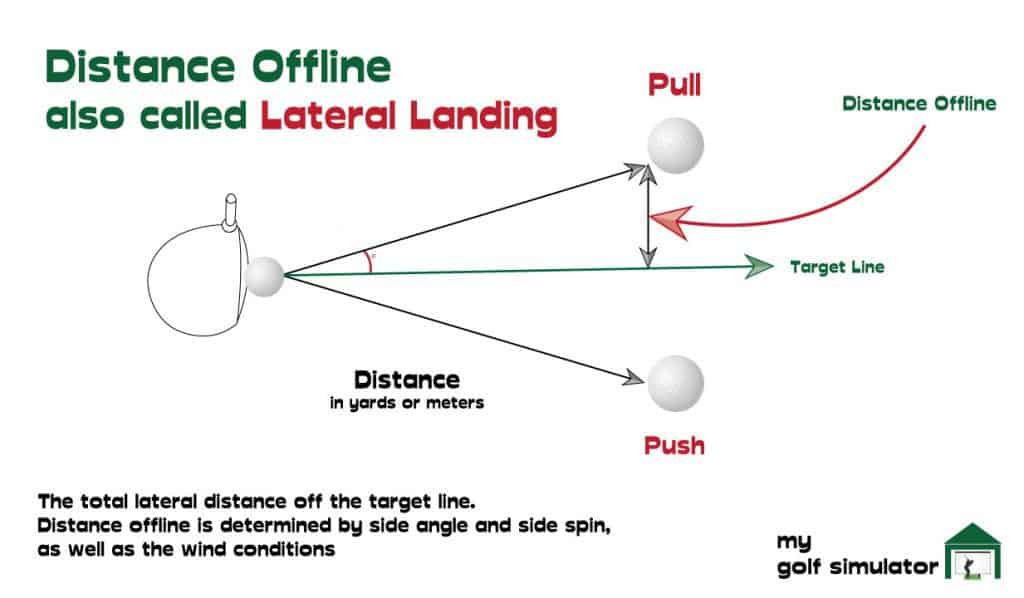
- Side angle — the horizontal start direction, called “push/pull” in Foresight’s FSX software; the same parameter goes by lateral landing or azimuth elsewhere.
💡 Ball condition matters more than you’d expect: scuffed or cracked balls measurably cost distance (around 10–15 yards on a driver), and premium balls hold up best under heavy use (4 reports, 3 owners). Any standard ball works fine for tracking — very bright or very dark balls are the documented exception the cameras occasionally struggle to see.
Club Data and the Sticker Rules
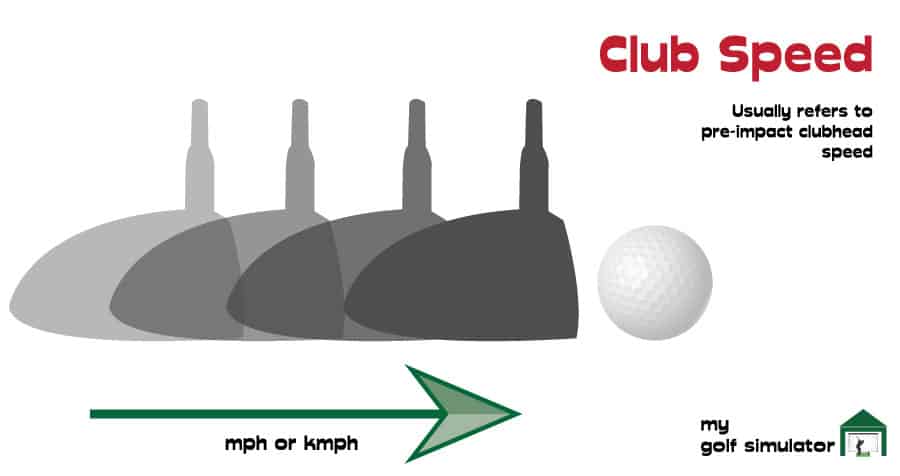
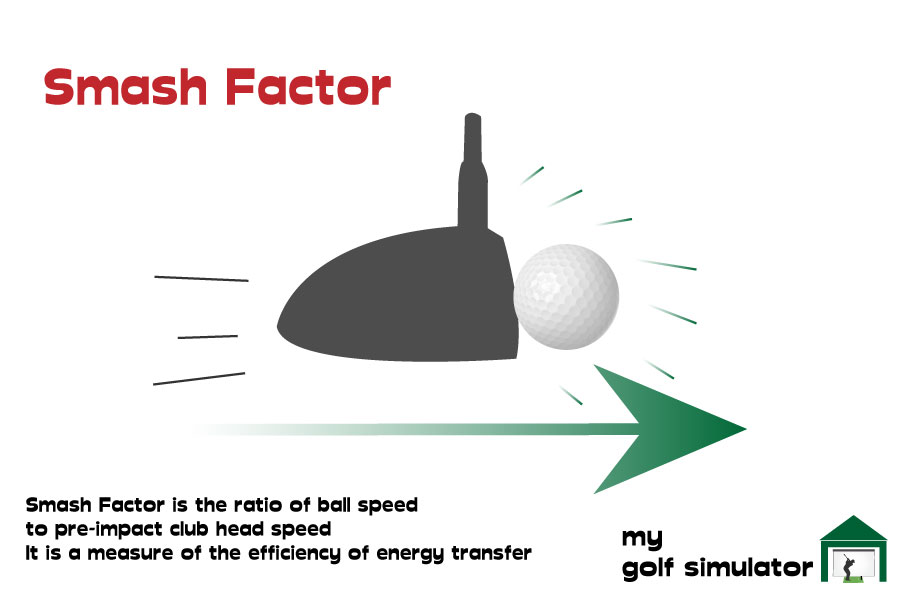
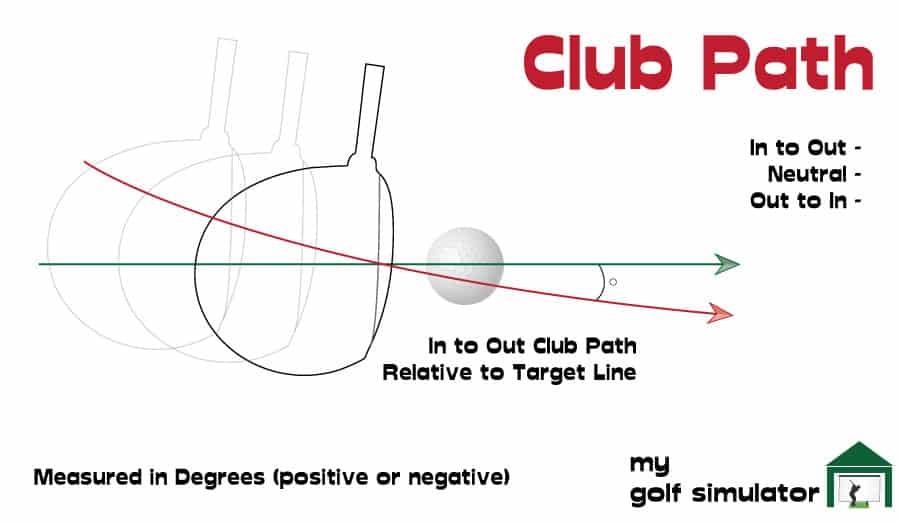
With a club marker applied, the GC3 measures club head speed, club path, and angle of attack: club path is the direction the clubhead is traveling at impact (in-to-out or out-to-in relative to the target line), and angle of attack is whether it’s moving up or down as it strikes the ball. It also derives smash factor — ball speed divided by club speed, a measure of striking efficiency. (One Foresight spec page actually lists smash factor among the measured club data — the more consistent read across Foresight’s own sources treats it as calculated from ball speed relative to club speed, which is what this guide uses.) The markers are simple reflective stickers — one per club, a 28-pack ships in the box — and I recommend using them whenever you’re playing in your GC3 simulator. The club data isn’t just extra numbers, it’s what makes the shot model’s job easier. (An old curiosity about what the cameras can surface during putting gets its answer in the next section.)
Two things this article’s earlier version couldn’t tell you:
- “You don’t pay extra for club data” now has an asterisk. It’s true of the standard full bundle. But ball-data-only GC3s exist (Foresight’s public product page no longer shows that configuration, so it’s mostly a used-market question), and unlocking club tracking on one of those costs $1,750 as a one-time add-on. If you’re buying — especially used — confirm which configuration you’re looking at.
- Which GC3 is it? The lineup has confused enough buyers that it deserves a table (owners themselves call the tiers confusing — 6 reports, 5 owners):
| Version | Club data | Subscription | Status |
|---|---|---|---|
| GC3 (full) | Included | None on existing FSX licences; new units ship with a 30-day Foresight+ trial (see below) | Current — $3,999 sale, list $6,999 (20 October 2026) |
| GC3 ball-only | $1,750 one-time unlock | None | Not on Foresight’s public product page (October 2026); check any used unit |
| GC3S | Gated behind Gold ($499/yr then; $599/yr on Foresight+ today) | Required for club/sim access | Phased out — no longer sold standalone; installed units still supported |
What the GC3 Does NOT Measure
| Capability | GC3 | GCQuad | QuadMAX |
|---|---|---|---|
| Ball data (full set above) | ✓ | ✓ | ✓ |
| Club speed / path / angle of attack | ✓ (stickers) | ✓ | ✓ |
| Face angle | See note | ✓ | ✓ |
| Face-to-path | See note | ✓ | ✓ |
| Impact location | See note | ✓ | ✓ |
| Putting analysis | ✗ | ✓ (optional add-on) | ✓ |
The face-data note, honestly: the long-standing understanding — which this article originally stated flatly — is that face angle and face-to-path are reserved for the four-camera GCQuad tier. Foresight’s own current comparison materials don’t settle the per-tier split cleanly, and a small group of owners describe “face angle” among the club data they use on the GC3 (4 reports, 3 owners). I’m leaving this as a documented ambiguity rather than a hard claim in either direction: plan your purchase on the three confirmed club parameters, and treat anything more as a bonus if your software surfaces it.
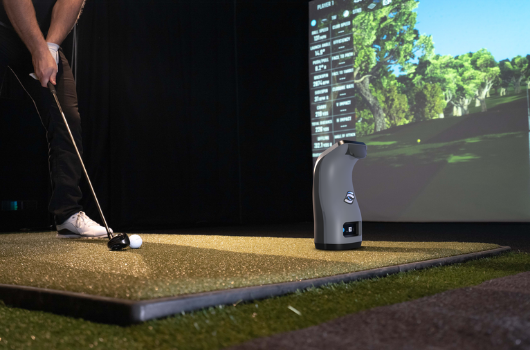
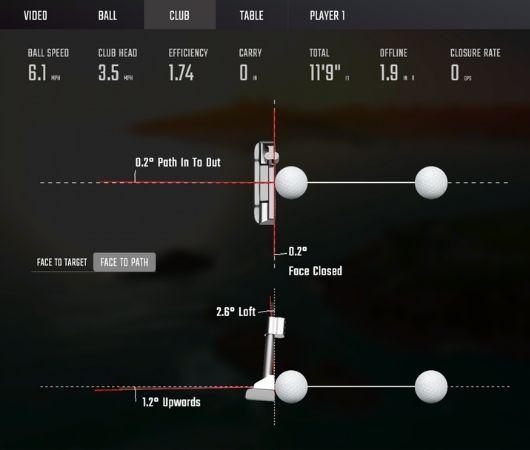
The putting correction, plainly: the old version of this article said you could putt on the GC3 “on a level comparable with other launch monitors.” Foresight’s own comparison materials — four convergent sources — say otherwise: the GC3 has no putting analysis capability, and the $2,500 Essential Putting Analysis add-on is a GCQuad product. You can roll putts in sim software and the software will do its best; there is no putting measurement suite here, and if putting analysis matters to you, this isn’t the unit. (Interestingly, in testing on Youtube Channel Golf Simulator Videos, the GC3 gave numbers for parameters including face-to-path when putting was tested. It is unclear whether this was supposed to happen, was a feature of club sticker placement, or was a sign of potential future updates.)
The Subscription Question — 2026’s Big Story
The GC3’s core value case, in owners’ own framing, has always been simple: buy it once, subscribe to nothing (4 reports, 4 owners). The bundle this article first described included FSX Play, FSX 2020, FSX Pro, 25 courses and club data with no recurring fee; Foresight’s GC3 page no longer lists that software (20 October 2026). In 2026, three things are moving around that promise — each with its own evidence grade:
1. The GC3S is gone from the lineup. Foresight’s product page for the subscription-tied variant now redirects to the standard GC3, and it’s absent from the site’s launch monitor navigation — a sales phase-out, with the installed base still supported. Reddit chatter in late August said the same thing (“who would buy that over the BLP as it costs $1,200 more and is essentially the exact same device,” as one commenter put it). For used-market buyers the GC3S mechanics still matter: it required Gold ($499/yr then, $599/yr on Foresight+ today) to keep club and sim access, transfers cost $500, and there’s no path to convert one into a subscription-free GC3.
2. Foresight’s subscription software is now live. Customer emails went out in late July and again in mid-August, and Foresight has since published the plans on its Foresight+ page (read 20 October 2026). What that page says:
- Silver is $199 a year and Gold $599 a year, with optional Course Pass ($295) and Course Pass Pro ($595) add-ons, all billed annually.
- Every new Foresight device includes a 30-day Foresight+ trial; the GC3 page lists 30 days of Gold with Course Pass Pro in the box.
- GSPro is supported only for Gold members, with GSPro’s own subscription on top. Existing FSX licences carry on: “Have an FSX license (Play, Pro or 2020)? It will keep working.”
Owners on legacy FSX 2020/Play were right that existing licenses are unaffected (“If you opt to keep the existing 2020 and play nothing changes,” per one measured commenter). What the page doesn’t say is whether a GC3 bought today keeps usable software after the trial without a plan, so if you’re buying new, ask the dealer before money moves.
3. The repricing looks deliberate. The GC3 went from a $5,999 bundle in August to a $3,999 sale in October (list still $6,999), while the same-hardware Bushnell Launch Pro moved up to $2,999.99. Two commenters in one August thread captured the relationship better than any spec sheet, in disagreement worth preserving: one called the Bushnell “just a stripped down 7k gc3”; a second corrected him — “It’s just a different pricing model. The Bushnell requires subscription.” The correction is the accurate frame. I break this matchup down in full in my Bushnell Launch Pro comparison Bushnell Launch Pro Data – What Data does Bushnell Launch Pro Measure?.
Software, Display and the Fine Print
The FSX suite existing owners have is genuinely complete — FSX Play, FSX 2020, FSX Pro, 25 courses, Foresight’s app for setup and rounds; new buyers get Foresight’s newer Premier software and app through Foresight+. The community reality, though: most owners move to GSPro — third-party golf simulation software, reached through a community-built launcher — for graphics and gameplay, a consistent pattern across owner reports. Full sim play is Windows-only: Mac owners report multi-day debugging via CrossOver — software that lets Windows programs run on a Mac — to get GSPro running, and some choose simpler competitor units specifically to dodge that hassle (5 combined reports, rising).
The fine print worth knowing before it surprises you — each an easy detail to miss:
- 45-day online validation. The GC3 must touch the internet at least once every 45 days (Wi-Fi, USB, or Ethernet) or its supporting apps and software are blocked until it does — you get a 5-day warning, and the unit itself keeps working standalone.
- Install the right FSX variant. Foresight’s “FSX Subscription” software build is scoped to the LaunchPro product line (Launch Pro/GC3S). Installing the wrong variant on a full GC3 removes access — a documented gotcha, not a hypothetical.
- Error codes have a grammar. On-device codes are letter+number: “C” prefixes are camera initialization faults, “L” prefixes are infrared LED board faults — both typically factory-service territory — while O/P/W codes usually clear on restart. A fresh August thread matched the pattern: an L1 error after a firmware update turned out to be a hardware failure (a battery in one corroborating case), repaired under warranty.
- The display is a transflective LCD touchscreen (readable in sunlight); connectivity is USB-C, Wi-Fi, and Ethernet, with Bluetooth listed on Foresight’s EU page but not its US page — a regional-documentation quirk I’ll flag rather than resolve.
Accuracy — the Benchmark and the Asterisk
The praise first, because it’s overwhelming: the GC3 is the unit other launch monitors get benchmarked against, and owners and reviewers treat its accuracy as the trusted reference standard (14 reports, 12 owners). Reviewers routinely validate budget units against it, and upgraders from SkyTrak- and R10-class units describe the jump as night and day. Club-data owners call it transformative for diagnosing swing faults — one R10 upgrader described the club data as letting him “swiftly address my swing issues” — and the wider pattern is that owners who invest in club data find it hard to go back from.
👉 The asterisk, which this article owes you: a rising cluster of owners reports club and ball speed reading roughly 20 mph low indoors, persisting across replacement units and support tickets (9 reports, 4 owners, rising).
Two more owner clusters describe the same pattern, and a smaller group separately reports no-read rates climbing from under 1% historically to 5–20% — suspected firmware-related. One affected owner’s summary: “the whole reason I bought it was to have amazing accuracy indoors, so to have it be so far off in speed after months of trials and error is frustrating.” Another found the same unit read fine outdoors — deepening the indoor mystery. Community troubleshooting that has actually helped: cross-checking against a cheap radar for a second opinion, and switching hitting-mat surfaces to cure glare-related misreads.
Three more honest notes. Foresight support experiences are polarized — sub-two-hour case resolutions (“the best service I’ve ever had from a company”) sit alongside a strict no-refund policy that has soured owners stuck with problem units (6 reports, 5 owners). The ball-flight model, not the sensors, can overstate carry on low-spin, high-launch shots, though owners agree the hardware itself can’t be gamed for vanity numbers. And no independent lab-grade accuracy test of the GC3 exists in my evidence — “tour-level precision” is reviewer language, not a measured tolerance.
How This Changed (2022 → 2026)
- Current pricing: $6,999 list, on sale at $3,999 on 20 October 2026; the August $5,999 bundle (rangefinder, Wingman speaker, extended warranty) has gone, and the box now carries a 2-year warranty and a 30-day Foresight+ Gold trial.
- The GC3S launched, confused buyers, and was phased out of the lineup.
- Club data went from “always included” to “included unless ball-only” — the $1,750 unlock now exists.
- The FSX era is giving way to Foresight+ subscriptions (Silver $199, Gold $599 a year); existing FSX licences keep working.
- The E6 integration this article once predicted never arrived — the real-world map stayed FSX plus community-driven GSPro.
- The putting claim got corrected (see above), and the used market matured: roughly $500 to transfer ownership officially (4 reports, 3 owners), with informal account handoffs also reported working.
FAQ
Do I need club stickers?
For club data, yes — one reflective marker per club, 28 in the box. Ball data needs nothing on the ball.
Can the GC3 do putting?
It has no putting analysis capability — that’s GCQuad territory (a $2,500 add-on there). Sim-software putting works as well as the software makes it; the measurement suite doesn’t exist.
Does the GC3 need a subscription?
Not on an existing FSX licence: Foresight says those keep working. New units ship with a 30-day Foresight+ trial, GSPro needs the $599-a-year Gold plan for Foresight+ members, and Foresight’s pages don’t say what a new GC3 keeps after the trial without a plan, so ask the dealer before you buy.
Is the GC3 worth it against cheaper monitors?
The most-argued question in my evidence, and the math has teeth: prospective buyers increasingly run the break-even numbers against the same-hardware Bushnell Launch Pro and conclude the ~$6–7k upfront cost is hard to justify (11 reports, 10 owners, rising, all from before the October sale at $3,999). Others point to the Eye Mini and Square as the real value threats, and owner calculations put the breakeven against a subscription unit around 6–7+ years. What the premium actually buys: no subscription on an FSX licence, the accuracy-benchmark reputation, measured club data, and a mature ball-flight model — not raw speed accuracy, which $200-class units now approximate within a few percent, reviewers find. If those four things are your priorities, it’s still the safe pick; if not, the cheaper math is genuinely defensible.
GC3 vs Bushnell Launch Pro?
Same Foresight hardware family, different pricing model: GC3 = pay once (no plan needed on an FSX licence; confirm what a new unit keeps after its trial); BLP = cheaper entry, subscription-gated data. The GC3S sat between them and is gone. I break the full matchup down in my Bushnell Launch Pro comparison Bushnell Launch Pro Data – What Data does Bushnell Launch Pro Measure?
Is a used GC3 smart?
Owners report the hardware lasts a decade or more, and buyers who vet their sellers call it a reliable buy — the evidence for both is consistent across owner threads. Budget the friction, though: ~$500 for an official transfer, no warranty past 3–4 years, and software licenses that may need repurchasing.
💡 Verify configuration (ball-only vs full) before money moves.
Can I take it to the range?
Yes — grounded portability is a genuine strength; owners take it to the range and course and report it reading reliably in direct sunlight (4 reports, 4 owners). Two limits worth knowing:
- It only triggers on ball impact, so swing-speed-only training needs a separate radar.
- Foam-ball practice reads well for short irons but shows unrealistic drops with woods.
Can I switch it between right- and left-handed golfers?
This is the grounded-unit tax: switching hands means physically moving and re-aiming the unit each time — a recurring frustration in shared setups, and the stated reason at least one lefty owner wishes he’d bought overhead (5 reports, 5 owners). Overhead units and behind-ball radar handle both hands without repositioning.
How much space does it need?
Retailer guidance (Foresight publishes no official figure): roughly 10ft × 10ft × 9ft minimum, 12ft × 15ft recommended. The unit sits about 2ft from the ball, level with the hitting surface — I run the full room math in my GC3 space guide Foresight GC3 Space Requirements.
Final Thoughts
The GC3’s data story hasn’t changed: five measured ball parameters, three measured club parameters with stickers, and modeling mature enough that the industry measures other units against it. What 2026 changed is everything around the data — pricing, the subscription landscape, and the honesty this article owes you about the indoor speed-reading cluster and what the premium does and doesn’t buy. Measured data with no subscription remains a rare combination, at least on an existing FSX licence; at $3,999 on sale (20 October 2026) rather than ~$6,000, the case against the Launch Pro is much closer than it was.
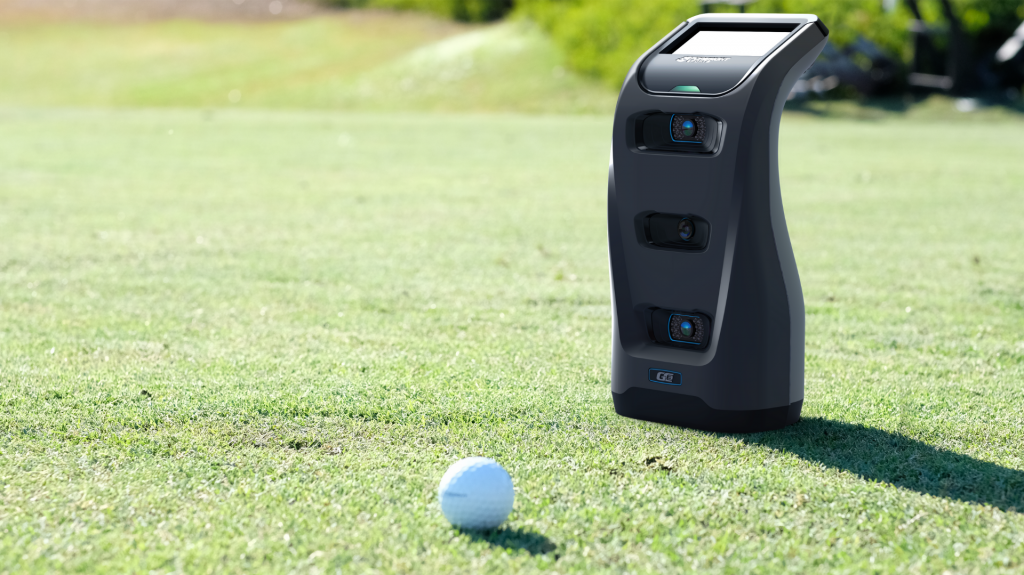
Check current pricing and bundle contents at Shop Indoor Golf. Still weighing which launch monitor fits your setup? I walk through how every sensor type works in How do Launch Monitors Work? – Radar vs Camera Systems, cover all 33 data parameters in Launch Monitor Data – 33 Parameters Explained, and map every unit’s software options in Launch Monitor & Golf Simulation Software – Compatibility Guide for 2025.
I hope you have found this guide useful — may every number on your screen be one the cameras actually saw.
Carl’s Place Pro Golf Enclosure Review (2026): What’s in the Box, Real Cost and Owner Reports
Is SkyTrak Portable? Battery, Direct Mode and Range Days (2026)
ABOUT THE AUTHOR
Hello! My name is Alex and it is my mission to bring you all the information you need to build your own home golf simulator! I hope mygolfsimulator.com helps you on your journey to better golf at home!
LEGAL INFORMATION
On this site, you'll find articles on all aspects of building a golf simulator. I will also link to other sites where you can buy some of the simulator components. Some of these links may be affiliate links, which means if you click them I gain a small commission at no extra cost to you. This really helps out me and my site so thank you in advance! mygolfsimulator.com and all related social media accounts are property of Awonline LTD.